Neighbor News
Progressive Lisa McCormick blames President Donald Trump and Senator Cory Booker for rising inflation
Anti-establishment Democrat says both parties follow a script written by billionaires as American households feel the cold, hard truth
The latest economic figures delivered a cold, hard truth to American households already feeling the squeeze: the government’s preferred measure of inflation is climbing again, stubbornly sticking above the Federal Reserve’s target.
According to data released Tuesday by the Bureau of Economic Analysis, the personal consumption expenditures index rose at a 2.8% annual pace last quarter, up from 2.1%. The core measure, stripping out volatile food and energy, grew at 2.9%.
In the grand theater of American politics, where the script is too often written by billionaires and performed for their amusement, this persistent rise in the cost of living has been met with a familiar chorus of deflection and denial from the highest offices.
Find out what's happening in Jersey Cityfor free with the latest updates from Patch.
President Donald Trump, when confronted with voters’ affordability concerns, suggested they were a “hoax” before later grading his own economic performance an “A+++++.”
Meanwhile, in New Jersey, an anti-establishment progressive Democrat is aiming her fire not only at the president but also at a member of her own party, weaving a narrative of a nation fractured into two distinct and unequal realities.
Find out what's happening in Jersey Cityfor free with the latest updates from Patch.
Lisa McCormick, who is mounting a primary challenge against Senator Cory Booker, dismisses the political pageantry surrounding the economy as a grotesque distraction from a fundamental class war.
“Booker is not on our side,” McCormick said. “He has accepted money from four dozen billionaires, he supported Republicans, and he utterly failed to stop Trump’s tyranny at every turn. Theatrics are not going to save us.”
McCormick’s rhetoric is a throwback to a more confrontational era of economic populism, directly invoking the legacy of the New Deal and Huey Long. Her proposed remedy is stark: a cap on personal wealth at $100 million.
“This would essentially tax the billionaires out of existence and eliminate the oligarchy,” said McCormick, arguing it would fund a balanced budget, erase national debt, and finance universal needs. “America operated under a system like this for 50 years, and it built the greatest middle class in history.”

Yet the affordability crisis, as McCormick frames it, extends beyond quarterly inflation metrics into the bedrock costs of American life: housing, healthcare, childcare, and higher education. Here, she argues, both political establishments have failed, offering working families little more than “the dangerously antiquated ‘bootstraps’ narrative” while systemic barriers remain.
The Trump administration points to its record of tax cuts, deregulation, and energy production as a path to higher productivity and wages. However, its signature legislative achievements have centered on transferring trillions of dollars in tax cuts to corporations and the wealthy, coupled with profound cuts to social safety net programs like Medicaid and SNAP. The administration has simultaneously overseen a historic expansion of immigration enforcement.
This dichotomy, McCormick asserts, lays bare the “two Americas” described decades ago by Martin Luther King Jr.—one of “concentrated opulence” and another of generational poverty. “Today, the War on Poverty has become a war on the poor,” she said.
As the 2026 midterms loom, the political peril for the party in power is clear. Polls consistently show a majority of Americans struggling with the cost of necessities, with many skipping medical care or prescribed medications due to cost.
President Joe Biden’s inability to convincingly address these concerns is widely seen as a primary factor in his defeat.
Now, President Trump faces the same furnace blast of economic anxiety. His dismissal of voter concerns echoes his predecessor’s missteps. To avoid a similar electoral reckoning, he would need to pivot sharply—to provide leadership on healthcare reform, to further roll back inflationary tariffs, and to unequivocally respect the Federal Reserve’s independence. History suggests such a pivot is unlikely.
For her part, McCormick believes salvation lies not in appealing to the political center but in mobilizing a multiracial coalition of the economically marginalized.
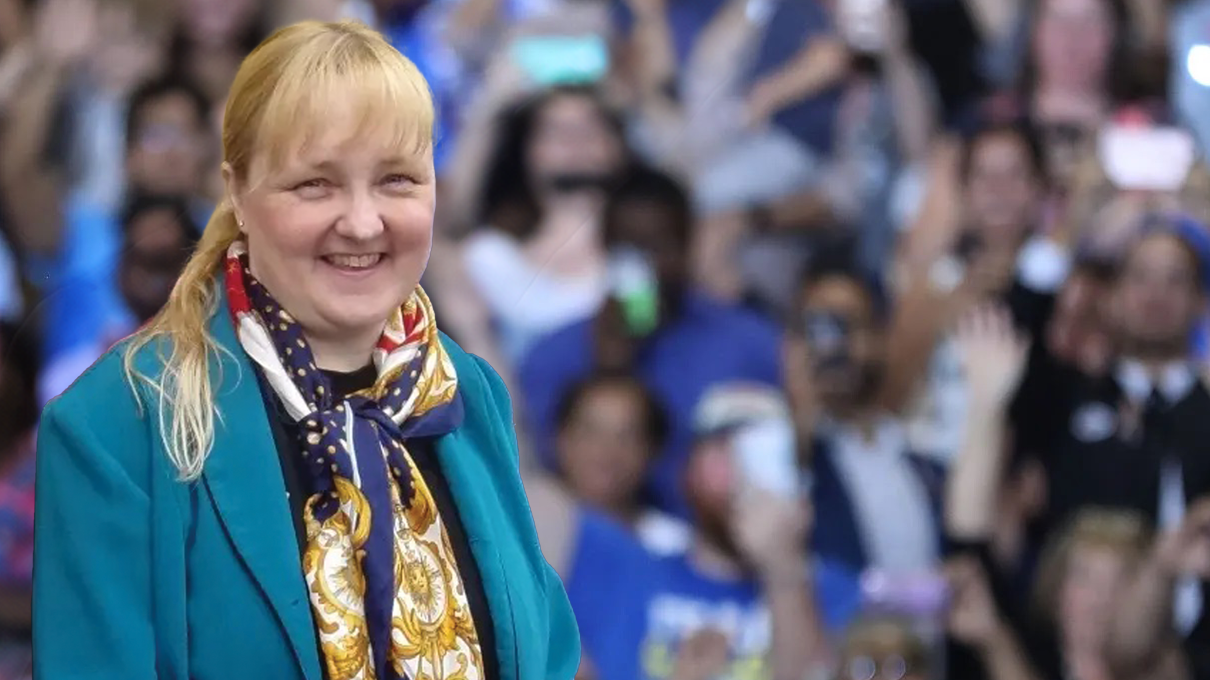
“If there is a blue wave in November 2026, voters will have to make smart choices in June to avert a restoration of the failed Biden playbook,” said McCormick.
The inflation report is more than a dry statistic. It is a pulse reading of an economy and a polity under stress.
In one America, it is a minor inconvenience. In the other, it is the tipping point toward financial ruin.
The question for 2026 is not simply which party will control Congress, but which of these two visions of the nation will define its future. The silence from the corridors of power, broken only by the chirping of self-congratulation, suggests they still do not hear the alarm.