Seasonal & Holidays
America Turns 250. It’s Time to Make Patriotism Belong to Everyone Again
by Stephen Clifford


This July 4th, America celebrates its 250th birthday.
Across the country, communities will gather for fireworks, parades, concerts, and backyard barbecues. But after the fireworks fade, I hope we’ll ask ourselves a more difficult question:
Have we unintentionally made patriotism something our children are afraid to embrace?
Find out what's happening in Livingstonfor free with the latest updates from Patch.
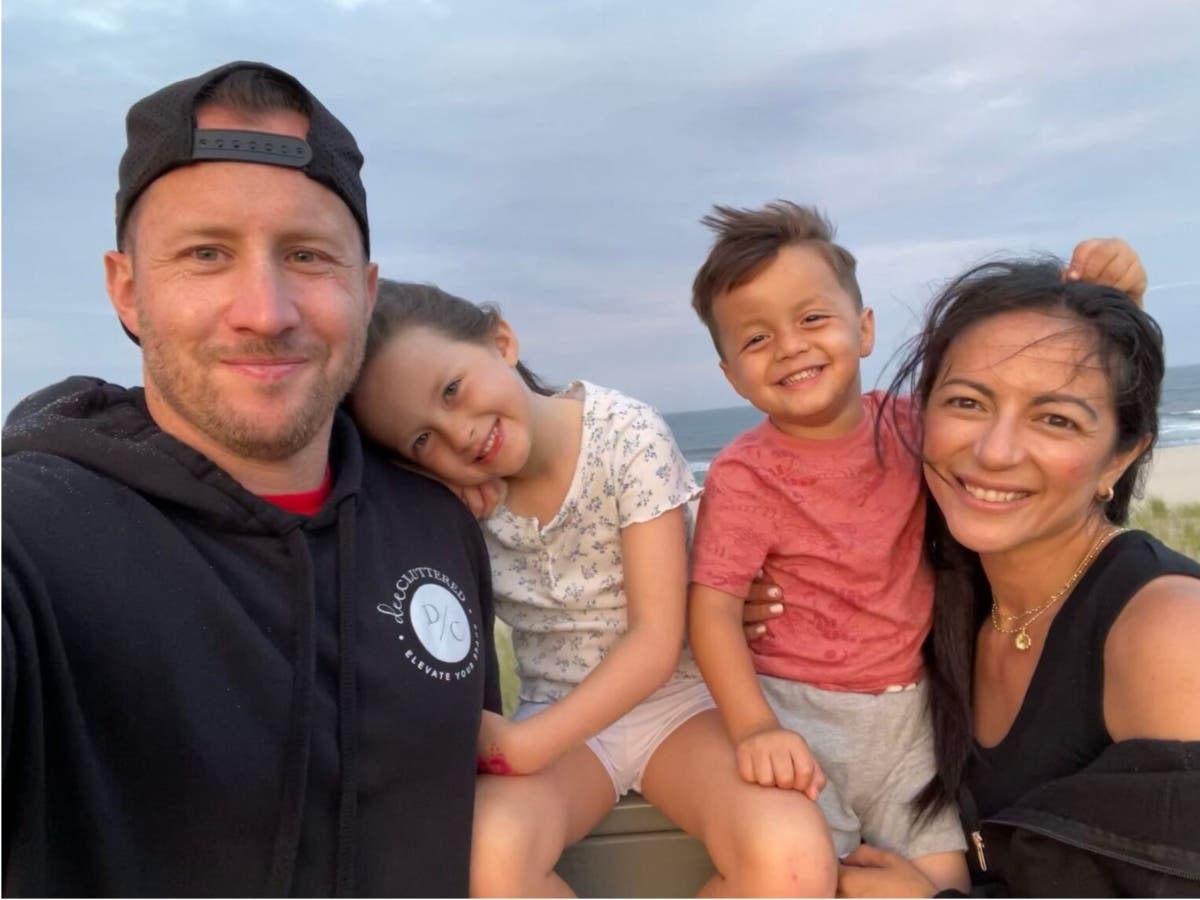
As a father of two, youth coach, and children’s author, I’ve spent years talking with families and schools about raising resilient, confident kids. Over the past year, however, a different conversation has found me.
Parents, teachers, principals, and members of school boards have all asked me some version of the same question:
Find out what's happening in Livingstonfor free with the latest updates from Patch.
Do you know any children’s books that celebrate America?
Not political books, but books that simply help children understand America’s story…its courage, sacrifice, innovation, perseverance, and the people whose choices continue to shape our lives today.
At first, I thought they just hadn’t looked very hard. Then I started looking myself. They were right.
What struck me wasn’t that these books were difficult to find. It was who was asking. These weren’t activists trying to make a political point. They were moms and dads looking for meaningful bedtime stories. Teachers trying to bring history to life. Principals searching for resources that build character alongside curiosity. Their requests weren’t driven by politics. They were driven by a desire to help children understand the country they’ll one day inherit.
That realization led me to a much bigger conclusion: America doesn’t just have a shortage of patriotic children’s books. We’ve developed a shortage of confidence in teaching our children why this country is worth loving in the first place.
Somewhere along the way, patriotism became tangled up in politics. The greatest loss isn’t that Americans disagree about their country. It’s that too many people have begun to assume love of the country itself must belong to one political viewpoint.
Flying an American flag, celebrating Independence Day, or expressing gratitude for our country can now feel, to some people, like making a political statement instead of a civic one.
I believe that’s a loss. Patriotism shouldn’t belong to one political party. It shouldn’t belong to one ideology. It should belong to every American. Loving your country doesn’t require believing it’s perfect. It means believing our nation’s story is worth knowing, our freedoms are worth appreciating, and every generation has a responsibility to leave America stronger than they found it.
I learned that lesson at home.
My father served as a United States Marine Corps First Lieutenant. He taught me that freedom carries responsibility. My mother spent more than twenty years teaching fifth grade. She taught me that history wasn’t simply about memorizing names and dates. It was about understanding the people whose choices continue to shape the opportunities we enjoy today.
Those lessons stayed with me.
Today, my wife and I are trying to pass them down to our own children. In fact, they ultimately inspired me to write the Forgotten Wisdom Books children’s series, using stories from American history to help children connect timeless values with the people who lived them.
Because children don’t become resilient simply because adults tell them to “have grit.” They become resilient by enduring challenging situations and being inspired by learning about people who chose the harder path. The path to longer term commitment. The path through all that struggle is still not guaranteed, but worth it by what you endured.
They don’t learn courage by memorizing vocabulary words. They learn it by understanding the extraordinary risks taken by those men who signed the Declaration of Independence.
Children naturally imagine themselves as explorers, inventors, athletes, and heroes. That’s why stories are such powerful teachers. They don’t tell children what values matter; they allow children to experience those values through the lives of others.
Wilma Rudolph was told she might never walk normally again, after contracting polio as a child. If anyone remembers the movie Forrest Gump. Her legs were limited that way. She went on to become the fastest woman in the world. Yes, the fastest woman in the world. Her story teaches perseverance more powerfully than any lecture ever could.
Theodore Roosevelt transformed childhood bullying and a chronic respiratory illness into a life of which he was described as a ‘locomotive in human parts’. His speech on the strenuous life is legendary. Why aren’t our kids taught about this early on? He was a war hero and a recipient of the Nobel Peace Prize. A Rough Rider and a conservationalist. His story reminds children that confidence isn’t something you’re born with. It’s something you build.
Or consider Medal Of Honor recipient Lieutenant Colonel Jimmy Doolittle.
Just months after the attack on Pearl Harbor, Doolittle led sixteen B-25 bombers on a mission that many military commanders believed was a mission that had a one way ticket. They flew deep into enemy territory to strike Tokyo. Doolittle and his crews understood the risks. Courage wasn't the absence of fear. It was the willingness to move forward despite it.
After the vulnerable state the attack on Pearl Harbor left Americans....The Tokyo raid delivered something America desperately needed: hope.
Long before airplanes and aircraft carriers, Meriwether Lewis and William Clark embarked on an expedition into the vast unknown.
For more than two years, they traveled thousands of miles across unmapped terrain, facing harsh weather, dangerous rivers, disease, uncertainty, and immense hardship. They were the first Europeans to see and document a Grizzly Bear, Big Horn Sheep, Mule Deer, Coyotes and over 100 animal species. Imagine seeing a Grizzly Bear in the wild for the first time? How would you describe that sight in a letter back to President Jeffeson?
They weren't certain what lay ahead. They went anyway.
Their journey reminds us that exploration, curiosity, and perseverance have always been part of the American character. It's not behind a screen watching others do great deeds, it's doing it themselves. Daring to be great. Finding yourself as the ‘Man in the Arena.’
These stories matter because children need examples of ordinary people doing extraordinary things.
They need to understand that bravery isn't something you're born with. It's a choice you make when circumstances are difficult.
They need to see themselves in the people who built, defended, explored, and improved our country.
When children learn about courage, sacrifice, innovation, and service, they begin to understand that history isn't just about the past. It's an invitation to contribute to the future.
History gives children something advice alone never can: Examples. Examples of courage, perseverance, service, and ordinary people who accomplished extraordinary things.
Children need heroes they can learn from. Not perfect people, but courageous people who faced fear, uncertainty, and adversity, yet chose to move forward anyway. That’s what has always made history so powerful.
At its best, history isn’t simply a record of what happened. It’s a collection of human stories that remind us what’s possible. Children may never become Olympic athletes or naval heroes, but they will face these inescapable moments that require perseverance, courage, integrity, and hope. History helps prepare them for those moments. A story as old as time, but somehow forgotten.
Those unavoidable lessons transcend politics. They’re human values. That’s why I worry less about whether children can recite historical dates they are forced to remember and more about whether they understand the people behind them.
History shouldn’t simply be something children memorize for a test. It should be something they recognize in themselves.
When children see themselves as part of America’s ongoing story, history stops feeling distant. They begin to understand that citizenship isn’t something they inherit passively; it’s something they actively shape through the choices they make—from the way they treat others to the contributions they leave behind.
America's 250th anniversary offers us more than an opportunity to celebrate where we’ve been. It gives us a chance to think carefully about what we’re passing on.
They become the next generation of teachers, coaches, entrepreneurs, scientists, military members, first responders, inventors, and community leaders.
If we want our nation to become better, we must first help our children believe it is worth improving.
We cannot expect young people to carry forward the American story if we never teach them what makes that story extraordinary.
America's 250th anniversary is more than a celebration of our past.
America’s 250th anniversary gives us an extraordinary opportunity…not simply to celebrate where we’ve been, but to think carefully about what we’re passing on. An opportunity to inspire the citizens who will write out next 250 years.
I hope we pass on more than fireworks. I hope we pass on gratitude without blind allegiance. Pride without exclusion. Honest history without cynicism. And a patriotism that welcomes every child and every family to see themselves as part of America’s continuing story.
Because patriotism isn’t something we celebrate one day each July with hot dogs and apple pie. It’s something we cultivate over a lifetime through family conversations, classrooms, communities, and the stories we choose to tell.
Because children don’t automatically inherit love of the country. They inherit the stories that teach them why it’s worth caring about, and the responsibility to help write its next chapter.
Because if patriotism belongs to everyone, then every child deserves the chance to discover why.
**
Stephen Clifford is the motivational author of the Forgotten Wisdom Books children’s series, including Nothing Changes If Nothing Changes, Bring Your Own Grit, No One Stands Taller Than You, Stop Existing and Start Living, and Fear Is a Choice. Through simple but powerful lessons, the books encourage young readers to build resilience, confidence, and character in today’s comfort-first and screen-driven era.
He lives in Fairfield, New Jersey with his family. When he’s not writing or working, he can usually be found coaching youth sports, running around town, training in MMA and judo, or cheering from the sidelines at his kids’ games.
Learn more by visiting forgottenwisdombooks.com or following @forgottenwisdombooks.