Community Corner
Russ's Ravings: NJ's Broken Unemployment System Isn't New
It wasn't the pandemic that broke the system, it was always designed to fail.


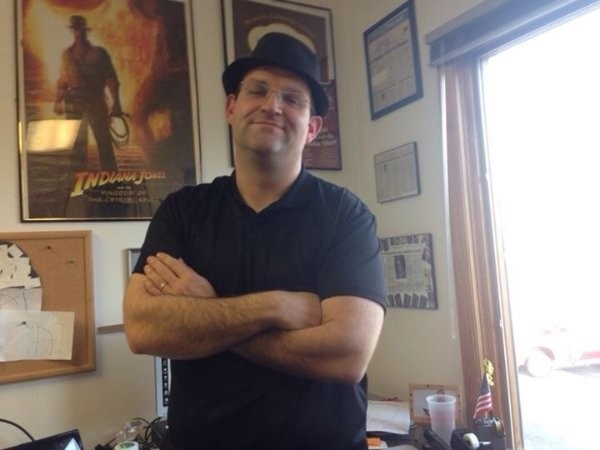
Editor's note: The following is Patch Field Editor Russ Crespolini's, hopefully, weekly column. It is reflective of his opinion alone.
Being a journalist I have been furloughed and sent to the unemployment line more times than I am comfortable with, and I can tell you from first-hand experience the system wasn't broken by the new coronavirus, or COVID-19, pandemic it has been broken for decades.
At my last job, where I worked as the editor of a print newspaper, I was furloughed a minimum of twice a year. We were always furloughed the week between Christmas and New Year's and always the week of July 4. For those of you who have been blessed to not deal with this process being furloughed means you temporarily are (if you're lucky) fired. Meaning you get sent home without pay. In our case, we had a recall date. So we were working hard the week before to prepare for the furlough and twice as hard the week after to recover from the furlough so unfortunately the only people who benefitted from this process were the owners.
Find out what's happening in Long Valleyfor free with the latest updates from Patch.
But this also mean I had a twice a year date with unemployment because my mortgage still needed to be paid and my family still needed to eat.
Thus began my trek into the unemployment system.
Find out what's happening in Long Valleyfor free with the latest updates from Patch.
To say the system is confusing, archaic and not user-friendly is being kind. Quite frankly, the system is designed to fail so that you don't get the benefits you need and put in for and paid into.
The first part of the process is when you have to open a claim. You have to essentially create your account. Assuming all of that goes well, and that is a big if, you are supposed to then certify for benefits every two weeks for the weeks previous.
Assuming all of this goes well, and that is a big if, you then have to answer a series of questions either on the phone (if you can get through) or answer them on the internet. But the questions aren't straightforward and in order to get through them "cleanly" you need to lie.
For example, one of the questions is asking if you were actively seeking work. Well, if you were furloughed and you had a recall date you weren't actively seeking work. But in order to get paid, you have to lie and say yes you were.
And this is just one example. My case was always complicated because I also teach as an adjunct professor. Well because TEACHER is part of my history they immediately deny me and make me explain to someone that I am not a member of a NJEA and I am not trying to find a way get paid when I shouldn't.
And that requires me to speak to someone. Sometimes. Sometimes it required me to fill out a mailed questionnaire.
Did I mention the system is inconsistent?
So that means you spend a lot of time redialing and often times just get a busy signal. When you are able to get through you are sent through a series of automated messages, where the voice of a prerecorded woman tells you that you can do things "more quickly and easily" through the website. Which is a lie.
Most times you end up unable to get through to anyone at all.
But back then, back in 2018, you could go to places in person. In fact, I used to go to the one in Randolph to help me. That was generally like the worst movie depiction of going to a motor vehicle agency. You registered on your way in and were funneled into a row of seats and you were told to wait for assistance. The other option was a phone bank directly across of tan prison phones that could connect you directly to the phone system.
The benefit of this was that you wouldn't get a busy signal and you would be able to reach someone eventually, but it might take a few hours. A few hours sitting cheek against this warm, less-than-sanitary relic from the 1980s. And you have to press the receiver hard to your face because the volume was always low and the room always loud.
I remember one July I entered the building and saw seated on the floor next to the security guard's desk was a woman sobbing uncontrollably. Apparently the two women who worked at the Randolph facility were on vacation that week. And no one was sent to replace them.
This woman had no car and no way to get to another office and sat there crying unsure of how she was going to pay her bills and feed her family. She had already tried the prison phone bank and been disconnected twice.
My point in all of this is how the system was before the enormous strain that has been placed on it over the last several weeks. Back then, officials estimated that 50 percent of the applicants got through "cleanly." Now, they are saying 70 percent.
And the response we've been receiving hasn't been heartening. Many messages without an explanation vaguely saying claims can't be processed. The state calling out for COBOL programmers to assist because the system is housed in a decades old mainframe that no one knows how to interface with anymore.
And calls to be patient.
Patience is running thin when the supermarket prices are high, the delivery fees are tough and bills are piling up with any relief in sight. Patience is running thin when you have to worry about utility payments to keep connected to the outside world while you are homeschooling your children. Patience is running thin when you watch businesses falling apart because they can't the support they need.
And when you are tasked with burying a loved one with an empty bank account.
This is not the time for patience to be the only messaging. Every single day, during every single briefing given by Gov. Phil Murphy, Robert Asaro-Angelo, the commissioner of the state Department of Labor & Workforce Development should be giving an update on when New Jersey residents should be seeing their money. Update on the manpower, update on the number of claims being processed and an update on when residents can be seeing some relief.
And when he's not giving the briefing, Asaro-Angelo should be answering phones or brushing up on COBOL.
Because people need the support now more than ever.
Russ Crespolini is a Field Editor for Patch Media, adjunct professor and college newspaper advisor. His columns have won awards from the National Newspaper Association and the New Jersey Press Association.
He writes them in hopes of connecting with readers and engaging with them. And because it is cheaper than therapy. He can be reached at russ.crespolini@patch.com
Get more local news delivered straight to your inbox. Sign up for free Patch newsletters and alerts.