Politics & Government
Raritan Bay Natural Gas Pipeline Rejected By Both NJ, NY
New York and New Jersey denied applications from an energy company seeking to build a massive new pipeline that would run under Raritan Bay.


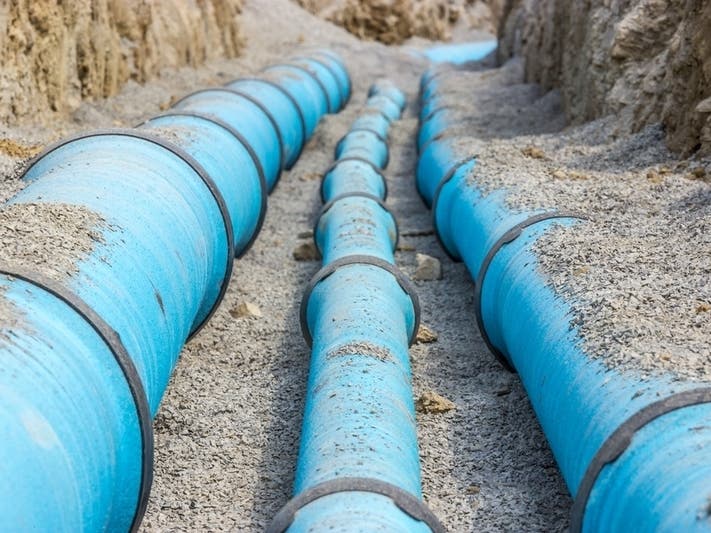

ABERDEEN, NJ — On Friday, the states of both New York and New Jersey denied all permit applications from an energy company that sought to build a massive new pipeline from New Jersey to Queens. The pipeline would have run for 26 miles underneath Raritan Bay, and the project also included a natural gas compressor station in Franklin Township.
Both the pipeline and compressor station are now dead in the water.
Patch has covered the pipeline saga for years: Alternately called the Northeast Supply Enhancement (NESE) project or the Transco pipeline, it would have carried natural gas from New Jersey to Far Rockaway, Queens, where it would supply the New York City market, hungry for cheap, plentiful natural gas for home heating.
Find out what's happening in Matawan-Aberdeenfor free with the latest updates from Patch.
The company that sought to built it is the Williams Companies, one of the nation's largest suppliers of natural gas in the world.
But on Friday, May 15, both the states of New York and New Jersey denied Williams' request, ending a multi-year debate over whether the pipeline could be built. In their decision, the New York Department of Environmental Conservation cited concerns over whether the pipeline's construction would reduce water quality and damage aquatic life in Raritan Bay. The New Jersey Dept. of Environmental Protection had similar reasoning.
Find out what's happening in Matawan-Aberdeenfor free with the latest updates from Patch.
The New Jersey Sierra Club, which opposed the project, said building the pipeline would "destroy critical wetlands" on the New Jersey side, particularly in the area around Cheesequake State Park.
Williams cannot re-apply to the state governments. Their only recourse now is to pursue the matter in the court system.
Williams owns and operates thousands of miles of underground pipelines throughout the United States, carrying natural gas — usually obtained by fracking — to all corners of the nation. They currently operate miles of pipeline that are already buried in New Jersey soil; the pipes have been there for decades. These pipelines are the main arteries to carry gas into New York City. However, those lines are at 100 percent capacity, Williams says.
Williams sought to expand the existing Transco pipeline through Old Bridge and into Sayreville. From there, the pipeline would extend 26 miles under Raritan Bay, extending to its final destination in Rockaway Beach, Queens. The pipeline would deliver natural gas from Pennsylvania fracking fields to the New York City market, which has an extremely high demand for the cheap, efficient fuel.
On land, the pipeline would be between three and seven feet under the earth. At its deepest point, the pipeline would have been buried 85 feet under the bottom of Raritan Bay. The pipeline also would have included a natural gas compressor station on the Franklin/South Brunswick border. With the pipeline killed, the compressor station will not be built, either.
A 2017 Rutgers study found that giving the OK for the pipeline to be built would bring hundreds of jobs to the Central Jersey area.
New Jersey environmental groups called it a sweeping victory.
“If approved, the project would have resulted in drastic environmental damage and locked the region into decades of continued reliance on climate-altering fracked gas," said Peter Blair, Policy Attorney for Clean Ocean Action.
Get more local news delivered straight to your inbox. Sign up for free Patch newsletters and alerts.