Schools
Anger Erupts over MTPS Plan
Superintendent Alfone cites questionable financial data in her plan to restructure Middletown schools

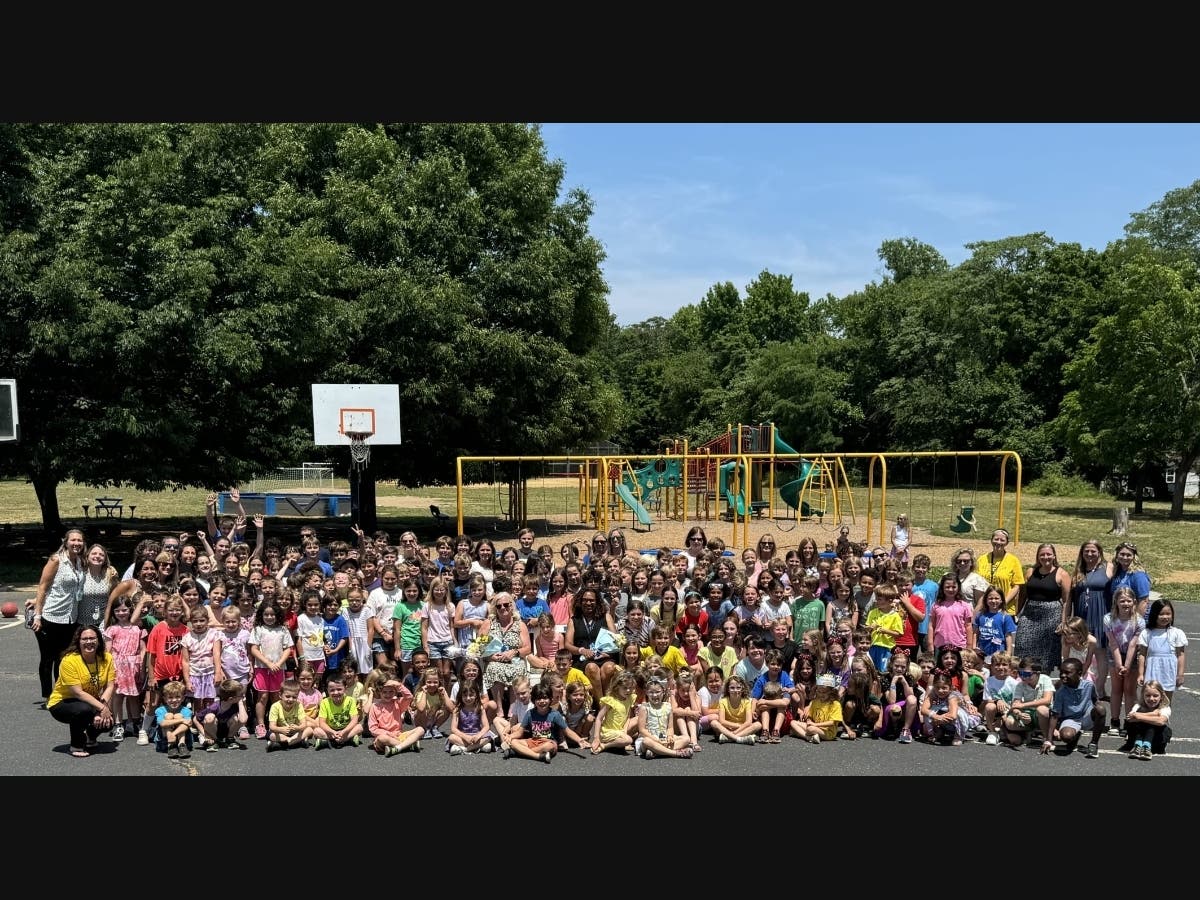
Note: A small window for public comments is being offered before the budget is finalized on April 30th. Many in the community believe more time is needed for data gathering and open discussion.
A dramatic plan for reorganization within the Middletown Public School District (MTPS) was framed as an “either/or” option at the March 18th BOE meeting. Both choices, which came as a surprise to Middletown residents, are deeply unpopular. Superintendent Alfone claims that there are currently only two paths forward for MTPS: (1) radically restructure the system by closing three schools, one of which is the best performing school in the district and among the top thirty elementary schools in the state (US News); or (2) increase class sizes, fire at least 120 teachers, and make cuts to student support and extracurriculars. No mention of cutting nonessential spending was made during Alfone’s presentation. This drastic decision will be made within weeks, as Alfone has urged the BOE to vote “yes” to approve the first option on April 30th.
The public comment portion of the March 18th meeting revealed a unified front of vehement disapproval for Alfone’s proposed restructuring. Alfone’s radical reorganization plan, which has been proposed without any community input, seeks to (1) close two elementary schools, (2) close one middle school, (3) change the feeding districts for both middle schools, (4) change the feeding districts for both high schools, and (5) close additional schools in the future. As one parent at the meeting noted, this reorganization will affect every student in the Middletown system.
Find out what's happening in Middletownfor free with the latest updates from Patch.
The plan to swiftly close three schools was presented by Superintendent Alfone with less than three hours of advance notice, to the shock and dismay of students, parents, and teachers. At the meeting, Alfone’s claim that the recent budget shortfall is due to unanticipated decreases in funding was openly rejected by community members. Typically, schools rely most heavily on funding from local property taxes, followed by funding from the state. Yet the district recently received increases in both their state funding and in their revenue from property taxes, a reality that led many community members to wonder where their tax dollars are being spent.
At the meeting, Alfone attempted to blame the budget shortfall, not on internal mismanagement, but on underfunding from the state and federal government. In reality, money from the federal government is typically significantly less than 10% of the overall allocation within NJ school systems (usafacts.org), making it a small source of revenue. Additionally, the upcoming fiscal year (2025-2026) will see a 6% increase in funding from the state, bringing the total to nearly $15,000,000 (njspotlightnews, MTPS pg. 19 of school aid chart). In terms of local revenue for the schools, Middletown residents recently saw a 3% increase in property taxes. According to township documents from 2024 to 2025, the total property tax levy in Middletown has increased to over $63,000,000, and more than half (62%) of the total property tax levy is directed towards funding MTPS (slides 4 & 3).
Find out what's happening in Middletownfor free with the latest updates from Patch.
In what many view as a misrepresentation of state funding data (slide 5), Alfone selected 2009 as her comparison, a year in which state funding was significantly higher than it has been in nearly two decades, dropping sharply in 2010 after Governor Christie assumed office. Instead of using a representative benchmark that presents an average estimate, Alfone chose to base her budget projections on an anomaly. This cherry picking of a data point for her “financial comparison” led Alfone to disingenuously claim that there has recently been a drastic decrease in funding from the state, when, in fact, funding from the state has recently increased after remaining relatively flat since 2010, with an anticipated dip after the emergency funding from COVID-19 expired. While Alfone rightly pointed to increasing costs and inflation, she failed to mention that MTPS now has fewer students to educate than it did in recent years. As a result of Alfone’s misleading report and her assessment of causes for the budget shortfall, taxpayers have real questions about the expenditures of MTPS, an issue that has prompted some to sign a petition for an independent audit.
Here’s the text:
“. . . We, the undersigned residents, parents, and taxpayers of Middletown Township, formally request an independent financial audit of the Middletown Township Public School District (MTPSD) due to serious concerns regarding financial mismanagement, lack of transparency, and potential misuse of taxpayer funds.
Reasons for the Request:
- Lack of Transparency: The public as well as some board members were unaware of a budget crisis until an abrupt announcement of a $10 million deficit at the March 18th Board of Education meeting. No prior public financial discussions suggested this crisis was imminent, raising concerns about hidden or mismanaged funds.
- Unjustified Spending and Budget Discrepancies: The district spends approximately $21,000 per student, significantly above the state’s “adequate” spending level of $15,000 per student. The administration claims massive budget shortfalls while continuing to maintain high administrative costs, with no detailed breakdown of spending provided.
- Failure to Consider Alternative Cost-Saving Measures: The district’s only proposed solution is drastic: closing schools, eliminating programs, and increasing class sizes. No analysis of administrative cost reductions, vendor contracts, or other non-instructional expenses has been presented.
- Potential Mismanagement of Taxpayer Funds: The district has refused to provide detailed financial data justifying the crisis. Multiple board members have publicly stated they were excluded from financial discussions that led to the school closure proposal.
- Community Outrage Over Lack of Public Input: The board announced the school closure plan via email only hours before a vote, preventing meaningful public discussion” (Taxpayer Petition for Independent Financial Audit).
At the BOE meeting and in a letter to parents, Alfone attempted to frame this ten-million dollar shortfall as an unexpected problem that’s prompting her to be “proactive” and “make a difficult decision.” Yet, many at the meeting pointed out that aging buildings and potentially costly repairs are not new problems. In fact, the looming threat of redistricting due to budget woes was reported five years ago in Patch.
Many parents who spoke at the March 18th meeting observed that Alfone and the BOE’s “difficult decision” is the result of a self-inflicted financial crisis that’s due to poor planning and mismanagement by Middletown’s educational leaders. In fact, all of the projects listed as “immediate infrastructure needs” (slide 12) have been notable issues for years, if not decades, had leadership chosen to pay attention to them.
The leaders of public institutions, such as schools, are tasked with proper planning and management, a responsibility that many community members believe Alfone and the BOE have failed to uphold. Outraged parents also pointed out that the BOE has routinely neglected its responsibility to lead ongoing community discussions on strategic long-term planning, choosing instead to focus their attention on politically charged (and costly) “culture war” issues, such as their campaign against CRT (which was not found to be an issue at MTPS) and their battle to infringe on the privacy rights and personal freedoms of marginalized students, a move that garnered national attention from partisan mass media outlets, as well as an avoidable Title IX discrimination lawsuit from the state. The district has also faced litigation during its recent turf repair project. According to community members, the BOE has claimed that its legal fees have been minimal and are covered by insurance, a point that strikes many taxpayers as suspect, as there was no mention of how the mounting legal fees were paid. In fact, instead of presenting a full financial report and recommendations from independent organizations, Alfone’s PowerPoint was burdened by filler. One slide contained headlines of other schools that have closed while other slides contained banalities, such as “Sometimes the hard thing is the right thing.” Taxpayers want numbers, not cliches.
In 2021, the BOE, led by Capone and Tobacco, failed to apply for state aid, a politically motivated decision that cost Middletown taxpayers four million dollars. More recently, in 2024-2025, Middletown had the opportunity to apply for additional stabilization aid from the state, yet Alfone’s presentation failed to mention the outcome of this potential savings for taxpayers. In fact, the most recent budget does not indicate that Middletown received any state stabilization aid, which leads many residents to wonder if an application for aid was completed (pg 2 “General Revenue from State Sources”). Adding to MTPS’s spending woes is the decision to put armed security in schools, a move that many believe does not improve school safety. This expense was incurred without community discussion or substantive input from independent security experts or students. There may be many other examples of nonessential spending, but such expenses remain a mystery in the absence of detailed financial reports.
After the March 18th meeting, community sources also revealed that, according to consulting done in 2019 by Schoolhouse Strategies LLC, the total annual cost to run Navesink Elementary was $2,800,000. In the itemized spending report for this school, all but $200,000 of the budget was spent on personnel. In other words, it potentially costs less to insure and maintain Navesink Elementary School than it does to pay Superintendent Alfone’s yearly salary. Additionally, if class sizes will not increase with Alfone’s proposed restructuring, it remains unclear to taxpayers how this move will save the district money in the long term, particularly when one considers the high cost of retrofitting a middle school building to meet the needs of kindergartners. Another cost will come with the bussing of children to new schools when their old schools were once were within walking distance. In fact, many in the community believe this reorganization will ultimately cost taxpayers more money that it saves, particularly when one factors in declining property values and Middletown’s diminished tax base, which many fear will be a reality when the schools are no longer an incentive for people to move to Middletown. In the absence of transparent communication, collaborative planning, proper deliberation, and informed decision-making that considers all associated data points and the possible impact of potential recommendations on students, community members and taxpayers are left to speculate about the unforeseen costs associated with this reorganization plan.
At the March 18th meeting, Alfone attempted to pitch her deeply unpopular plan to restructure MTPS as “Middletown Reimagined.” In a letter to the fifth-grade parents of the soon-to-be shuttered elementary schools, Alfone branded her financial crisis as “an opportunity” that she will use to “ignite progress.” Alfone’s attempt to positively spin Middletown’s ten million dollar budget deficit as an “opportunity” that will require her to make significant changes that are “in the interest of all children” is a clear example of Orwellian doublespeak, one that proved particularly tone-deaf, given the circumstances. Clearly, Alfone’s letter did little to persuade the hundreds of angry parents that were locked out of the meeting and left to shout “SAVE OUR SCHOOLS!” as the public comment session proceeded to be held in a cramped media center instead of the spacious auditorium at MHS North.
Those who were allowed in the building, however, had a lot to say. During the public comments, residents raised a litany of concerns and complaints to Alfone and the BOE, all of which are listed on the aforementioned petition for an independent audit. Additionally, parents at the March 18th meeting made the following points:
- The reorganization will negatively impact Middletown’s student population, particularly students who have 504s or IEPs, some of whom have already been forced to change schools. The plan may also deeply impact students who have mental health concerns. Devastatingly, the MTPS system has already had students die by suicide, making mental health an issue of urgent importance to parents. At the meeting, multiple Middletown parents noted the compounding difficulties that their kids have faced due to school closures and redistricting. They fear that their children are now facing another crisis, one that could be avoided with proper planning and responsible leadership.
- Since the district abruptly closed Port Monmouth Elementary School, it has yet to fulfill its earlier promises, which included smaller class sizes and a better playground. Currently, students at New Monmouth cannot even fully participate in their school’s gym classes due to overcrowding. No mention of this ongoing debacle or attempts to rectify the situation for the affected students were made by Alfone at the meeting, leading many parents to believe that leadership did not learn anything from their last hasty school closure. Notably, Port Monmouth parents warned the community to be suspicious of promises from the leaders of MTPS, as they continue to wait for the district to honor the promises that were made to them during the last school closing.
- It could be unsafe and unsanitary to move small children into a school that was built for adolescents, particularly when one considers the restrooms and water fountains. Properly repurposing Bayshore Middle School as the new elementary school for Navesink and Leonardo students will be a costly project that is unlikely to be completed in a matter of months. Additional costs will also be incurred for bussing, as students who once walked to school will no longer have this healthy and convenient option.
At the meeting, former supporters of Capone and Tobacco, both of whom were motivated to run for the BOE during COVID-19, claimed that they no will no longer support the duo, stating that this restructuring would be similar in its harm to a pandemic, calling the radical reorganization plan “COVID 2.0.”
In the past, members of the BOE have also been accused of ethical violations (18A:12-24.1), some of which relate to the their sworn responsibility to
- “make decisions [for] the educational welfare of children” (Article B)
- “carry out [their] responsibility . . . to see that [schools] are well run” (Article D)
- “refuse to surrender [their] independent judgment to special interest or partisan political groups” (Article F).
In addition to signing the petition for an external audit, Middletown residents can sign a petition to prevent the board from closing schools. They can also email members of the BOE or Superintendent Alfone: alfonej@middletownk12.org. And, if the BOE and superintendent fail to respond to community input and adjust course accordingly, there are other steps that concerned parents, taxpayers, and school stakeholders can take:
- Contact Middletown mayor Tony Perry,
- File a complaint with Monmouth County’s Executive Superintendent,
- File a complaint with the NJ’s Office of Fiscal Accountability,
- Start or sign a BOE recall petition (must be signed by at least 25% of registered voters),
- Urge BOE members to hold a “vote of no confidence” to remove the superintendent.
Many parents, taxpayers, and teachers have already begun to organize and fight what they believe to be a clear mismanagement of MTPS. Yet, some in the community remain skeptical that leadership will listen to the public that they are supposed to serve. Nevertheless, if the leaders of MTPS ignore their institutional stakeholders, perhaps they will pay attention to those most impacted by their radical restructuring plan: the students and teachers. With the support of a strong union, possible teacher strikes or other collective actions could be on the horizon for MTPS if leadership does not propose a reasonable alternative. This type of escalation, which may occur if the circumstances remain dire, will ultimately result in further learning loss, making the consequences of Alfone’s proposal even more severe for students at MTPS. But parents, teachers, and taxpayers are unlikely to quietly concede. Even the elementary school students are starting to organize rallies and protests at recess, a healthy sign of democratic engagement, one that points to hope for the future, even if current MTPS leadership is to fail them.