Politics & Government
1 In 10 New Jersey Inmates Will Likely Die In Jail: Report
If you're a New Jersey resident, you have a 1 in 4,226 chance of dying in prison one day, according to a recent study.



If you’re a New Jersey resident, you have a 1 in 4,226 chance of dying in prison one day, according to a recent study. And if you’re already in jail, there is a one in 10 chance that you won’t live to see your release.
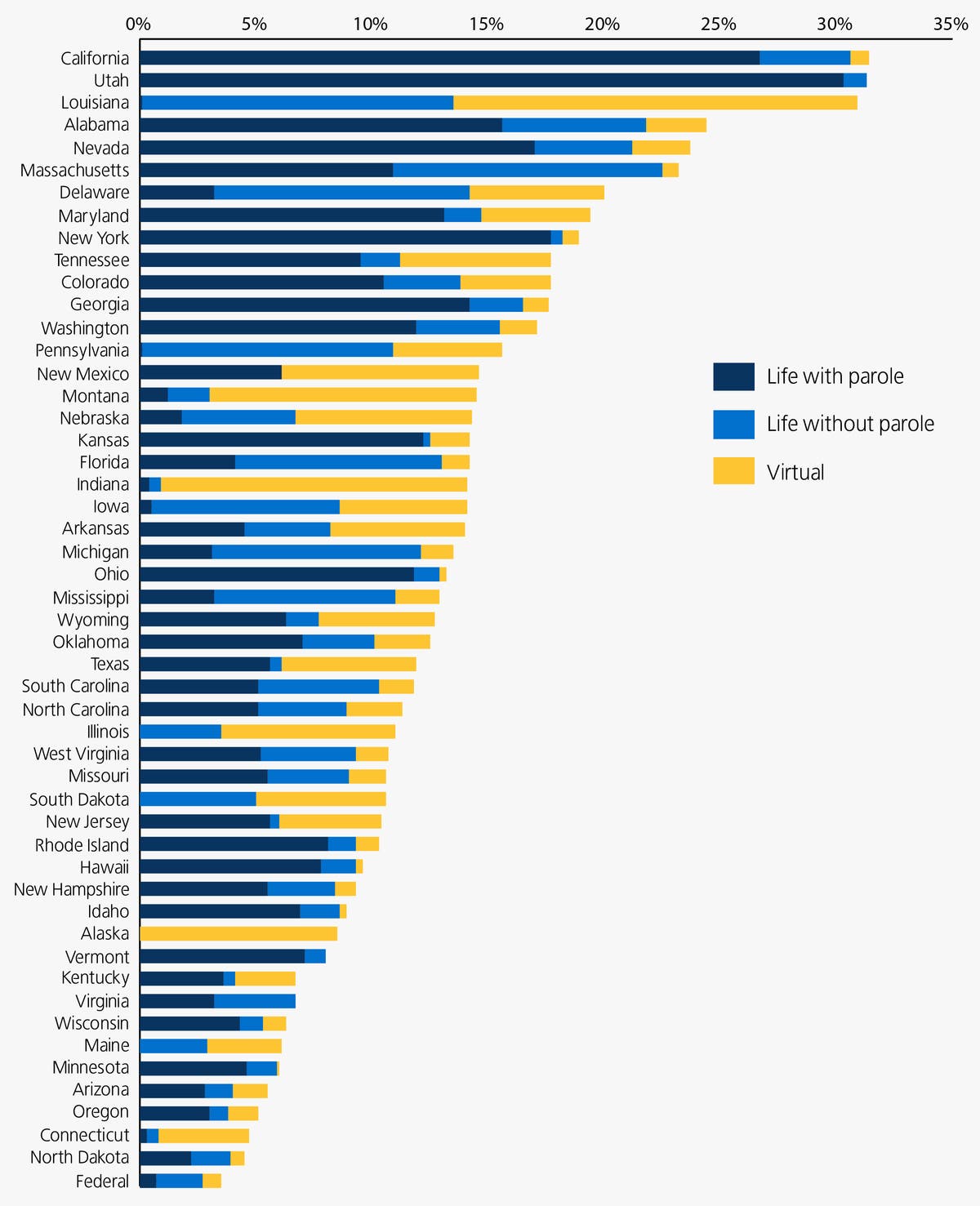
On Wednesday, prisoner advocacy nonprofit The Sentencing Project released a study that claims out of the 20,135 inmates currently incarcerated in New Jersey, 2,080 are currently serving life sentences or sentences so lengthy that they amount to “virtual life sentences.”
As a result, 10.3 percent of the Garden State’s prison population will likely die in jail, the study claims.
Find out what's happening in Montclairfor free with the latest updates from Patch.
With a total state population of 8,791,894 as of the 2010 U.S. Census, it would also mean that the average New Jersey resident stands about a 1 in 4,266 chance of drawing their last breath in prison.
See the full, state-by-state findings and read about the study’s methodology here.
Find out what's happening in Montclairfor free with the latest updates from Patch.
While the nonprofit commended New Jersey for an overall decline in its prison population - the state has led the nation with a 35 percent decline since 1999 – it’s no exception to the general trend, the study stated.
According to the study:
- 1,127 New Jersey inmates are serving life with parole
- 77 inmates are serving life without parole
- 876 inmates are serving “virtual life without parole” (a term of imprisonment that a person is unlikely to survive if carried out in full)
The Sentencing Project said that the following states had the highest number of inmates likely to die in prison:
- Utah - 2,004 inmates (31.3%)
- California - 40,691 inmates (31.3%)
- Louisiana - 11,238 - (30.8%)
“Imprisonment for those who commit serious crimes can serve to protect society as well as apply an appropriate level of punishment for the offense,” the study’s authors stated. “Indeed, public concerns about serious crime and maintaining public safety are among the drivers of support for long prison sentences. Yet there are diminishing benefits of high levels of incarceration on public safety… Lifelong imprisonment with limited or no chance for review only serves a retributive purpose and is often counterproductive for purposes of crime control.”
WHAT ARE THEIR CRIMES?
Nationally, one in 12 prisoners serving life or virtual life has been convicted of a “non-violent crime,” the study claims.
“38 percent of people serving life or virtual life sentences have been convicted of first-degree murder and an additional 20.5 percent have been convicted of second-degree, third-degree or some other type of murder,” according to the report. “About one-third of people serving life or virtual life sentences have been convicted of other violent crimes that include rape, sexual assault, robbery, aggravated assault or kidnapping.”
The number of non-violent life sentences jumps dramatically on the federal level, the study says.
“Unlike state imprisonment trends, where 15.7 percent of individuals in prison overall have been convicted of a drug offense, half of federal prisoners have been convicted of a drug offense. More than two-thirds of federal prisoners serving life or virtual life sentences have been convicted of nonviolent crimes, including 30 percent for a drug crime.”
- See related article: Don’t Make Harsher Jail Punishments For Opioid Addiction, NJ Senator Says
- See related article: Obama Visits Newark To Discuss Criminal Justice Reform In America
RACE AND ETHNICITY
“Racial and ethnic disparities are a persistent feature of prisons,” the study claims. “At the state level, African-Americans are incarcerated at five times the rate of whites, and in some states the disparity reaches 10-to-1 or higher.”
Even in the states with the lowest reported racial disparity, African-Americans are incarcerated at more than twice the rate of whites, according to The Sentencing Project.
The racial breakdown of New Jersey’s 2,080 prisoners facing death in jail is no exception, the study claims:
- Percent of black prisoners facing death in prison - 62.1 %
- Percent of white prisoners – 24.2 %
- Percent of Hispanic prisoners – 12.8 %
- Percent of “other” prisoners – 0.9 %
Send feedback to eric.kiefer@patch.com
Photo: Flickr Commons
Get more local news delivered straight to your inbox. Sign up for free Patch newsletters and alerts.