Politics & Government
NJ Antiwar Activists Say US Isn't Blameless For Ukraine-Russia
There are some big questions that New Jersey residents should be asking about the Russian invasion of Ukraine, these activists say.


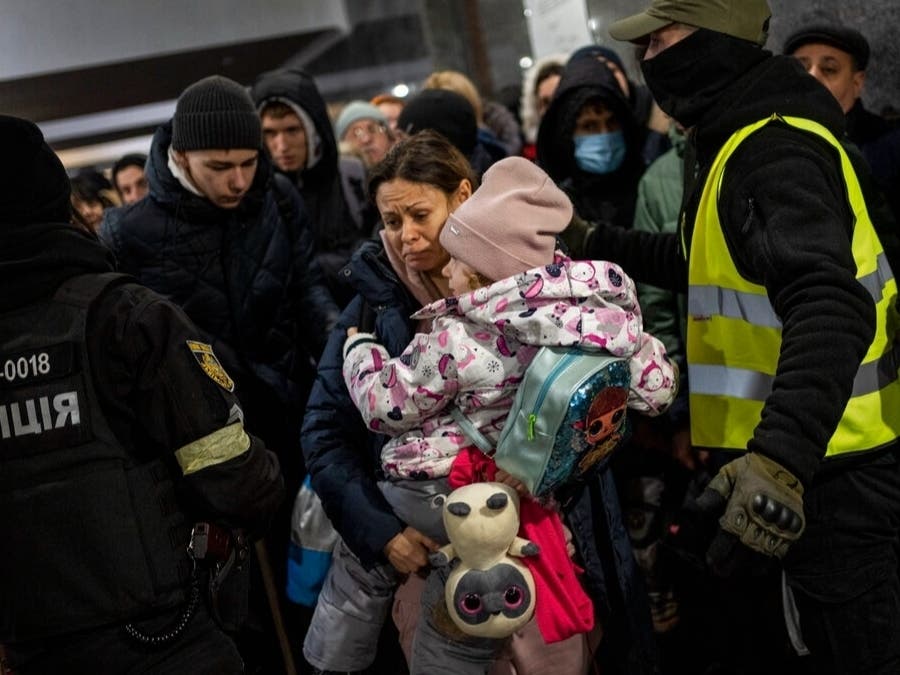
NEW JERSEY — Did the United States play a role in the escalating tensions leading up to the Russian invasion of Ukraine? Several antiwar activists in New Jersey agree that’s an easy question to answer: Yes.
But when it comes to assigning the U.S. “blame,” that’s a much trickier conundrum, some say.
Russian President Vladimir Putin has seen global condemnation after launching a full-scale invasion of Ukraine. The military conflict has already cost at least 136 civilian lives, with the true figure feared to be much higher, the United Nations reported Tuesday.
Find out what's happening in Montclairfor free with the latest updates from Patch.
The invasion of Ukraine followed a series of failed diplomatic efforts. It reportedly marks the largest military attack of one state against another on the European continent since the Second World War.
The fear and uncertainty has hit close to home for many people in New Jersey. Some Garden State residents have struggled to escape Ukraine after the invasion, including a pro athlete and a well-known dancer and business owner. Other New Jerseyans have family members living in Ukraine, and say their households are “in turmoil” with worry.
Find out what's happening in Montclairfor free with the latest updates from Patch.
Some New Jersey elected officials have been in favor of launching sanctions against Putin and Russia. On Wednesday, Gov. Phil Murphy signed an executive order that directs state agencies to identify ways to keep Garden State money away from the Russian government. The same day, the city council of the state’s largest city, Newark, voted to temporarily suspend the business licenses of Lukoil in solidarity with Ukraine.
But according to some Garden State activists, the United States has contributed to the powder keg that exploded in Ukraine on Feb. 24. And the finger pointing should start right here at home, they say.
“The U.S. has clearly blustered forward trying to encourage the idea of Ukraine joining the North Atlantic Treaty Organization (NATO), which would provide another launchpad for long-range missiles, including nuclear, near Russia’s border,” said Bob Witanek of NJAntiWarAgenda, comparing the situation to the Cuban Missile Crisis of 1962.
“This violates past pledges by the U.S. to not extend further eastward NATO membership,” Witanek told Patch. “Russia had clearly laid out its position in December 2021 … [but] the U.S. decided to challenge forward instead of recognizing Russia's legitimate concerns.”
Witanek emphasized that U.S. foreign policy doesn’t justify Russia’s choice to invade Ukraine – but it does provide context, he said.
“This situation could have been avoided, and the whole world economy and the potential for nuclear confrontation should not have been staked by the USA over the question of NATO membership for Ukraine,” Witanek argued.
He added:
“Right now, the people of the United States need to demand that the U.S. and its allies stop pouring gasoline on the fire … stop sending weapons into the fire. Instead, we need to demand support for the talks that were started between Ukraine and Russia, and reportedly will continue. Recognizing Ukraine's right to self-determination means recognizing its right to negotiate an immediate end to the hostilities directly with Russia, not to try to discredit and discourage those talks, which is the role that the U.S. has played.”
Ted Glick, a longtime North Jersey activist who was arrested at a protest for climate change in 2021, agreed that there is blame on the part of the U.S.
“After the Soviet Union dissolved, followed by the dissolving of the Warsaw Pact, the U.S. and western European powers should have ratcheted down NATO, a military alliance,” Glick said. “Instead, they did just the opposite, expanding it to include many of the countries that had formerly been part of the USSR. Given Russian history, particularly the millions killed by the Nazi invasion in World War Two, this was counterproductive and contributed to what is now taking place in Ukraine.”
Worried about rising energy and gas prices in New Jersey due to the Ukraine-Russia conflict? According to Glick, there’s a move that President Joe Biden could make to ease the pain:
“President Biden should use his powers under the Defense Production Act to dramatically increase the production of electric heat pump technology for western European countries to replace methane gas for heating, and air conditioning homes. Electricity worldwide increasingly comes from clean energy sources like wind and solar. This replacement can happen in significant numbers and before next winter if the Defense Production Act is used and production is rapidly ramped up. Doing this will both reduce western European dependence on Soviet gas and be – finally – action on the climate crisis at the scale needed.”
'CEASEFIRE, DIPLOMACY'
Other New Jersey antiwar activists have cautioned that assigning "blame" to the U.S. for Russia’s decision to invade Ukraine isn’t so clear-cut, however.
“The role of the United States unfortunately cannot be disregarded in the context of Russia's aggression towards Ukraine, as Russian leadership is genuinely concerned with NATO’s expansion,” said Adam Hockenberry, director of outreach at New Jersey Peace Action.
“The blame cannot be put on the United States for the actions taken by the Russian government to launch a full offensive in Ukraine, however, as we have continually denied Ukraine membership to NATO and President Volodymyr Zelensky himself has admitted that Ukrainian membership is nothing more than a pie-in-the-sky pipe dream,” Hockenberry said.
“The desire for NATO membership, although it may often seem as a universally supported position in Ukraine and is becoming increasingly popular because of Putin’s egregious war, is not a sentiment that is unanimously held by the Ukrainian population,” Hockenberry continued.
“Only recently has it become a more popular idea amongst Ukrainians because of the Russian threat and fear of this exact situation was building amongst average Ukrainians,” he said.
There’s also another factor to consider, Hockenberry said:
“Ukraine in NATO is Putin’s number one concern if we were to take him at his word, but he truly views himself as something of a liberator for the separatist regions of Donetsk and Luhansk and a fighter of Nazism in Ukraine, which is, regrettably, another way in which we have contributed to this conflict’s escalation. Much like we trained and supported the mujahideen guerillas (eventually morphing into the Taliban) in Afghanistan to fight against Russia, we have provided similar assistance and support to neo-nazis in Ukraine, and our record at the UN shows that.”
So moving forward, what should the United States' role be?
“The U.S. should do whatever we can possibly do towards facilitating a ceasefire and facilitating diplomacy between Kyiv and Moscow, granted we aren't in much of a position to do so without giving in to some of the more absurd demands made by the Kremlin, such as demilitarizing Ukraine as they are being bombarded and encircled by the Russian army,” Hockenberry said.
“So in lieu of that, we should open our doors and continually encourage our partners in NATO to do the same and welcome the many thousand displaced victims of this conflict into our states and provide for them, since we have done so much already to destabilize their lives,” he said.
‘WORKING CLASS WILL SUFFER’
Other New Jersey activists have also called for an “antiwar response”, arguing that the working-class people of both Ukraine and Russia will be the ones who suffer most.
Spokespeople with the North Jersey chapter of the Democratic Socialists of America (DSA) said the group stands behind a national statement on Ukraine-Russia. It reads:
“The Democratic Socialists of America condemns Russia’s invasion of Ukraine and demands immediate diplomacy and de-escalation to resolve this crisis. We stand in solidarity with the working classes of Ukraine and Russia who will undoubtedly bear the brunt of this war, and with antiwar protestors in both countries and around the world who are calling for a diplomatic resolution. This extreme and asymmetrical escalation is an illegal act under the United Nations Charter and severely threatens the livelihoods and well-being of working-class peoples in Ukraine, Russia, and across the region. We urge an immediate ceasefire and the total withdrawal of Russian forces from Ukraine. There is no solution through war or further intervention. This crisis requires an immediate international antiwar response demanding de-escalation, international cooperation, and opposition to unilateral coercive measures, militarization, and other forms of economic and military brinkmanship that will only exacerbate the human toll of this conflict.”
The statement concludes:
“The DSA reaffirms our call for the U.S. to withdraw from NATO and to end the imperialist expansionism that set the stage for this conflict. We call on antiwar activists in the U.S. and across the world to oppose violent escalations, demand a lasting diplomatic solution, and stress the crucial need to accept any and all refugees resulting from this crisis. Much of the next 10 years are coming into view through this attack. While the failures of neoliberal order are clear to everyone, the ruling class is trying to build a new world, through a dystopic transition grounded in militarism, imperialism and war.”
“At the peak of the Cold War, 14 missile bases were strategically placed between New York City and Philadelphia in New Jersey,” said Karl Schwartz, a member of the group’s New Jersey chapter.
“These now abandoned bases serve as disturbing reminders of how close our planet has come to nuclear annihilation,” Schwartz said. “We are horrified by Putin’s crimes in the Ukraine, and that is why we are also committed to challenging militarism in our own state. If we want peace abroad, we must also work for peace at home and confront New Jersey’s role in the military industrial complex.”
Schwartz said that New Jersey residents who want to make a difference can start by standing up for immigrants and refugees.
“We can stand for refugees in Ukraine and Afghanistan, Iraq, Palestine and all other countries harmed by war and imperialism, by closing our state’s ICE detention centers and being a true place of refuge for immigrants and refugees,” Schwartz said.
- See related article: NJ Bans Prisons From Making Deals To Hold Immigrants For ICE
The Central Jersey Coalition Against Endless War also made a plea for the people of Russia, many of whom have been arrested trying to protest the Ukraine invasion.
"Any actions taken against Russia's invasion should target Putin and the ruling oligarchy - not the Russian people who are not to blame for Putin's actions," the coalition told Patch in a joint statement.
The coalition said its members support the right of self-determination for Ukraine.
"Our hearts go out to the Ukrainian people forced to flee their homes by this atrocious and senseless war," the group said. "We condemn the Russian invasion of Ukraine and call on Russia to immediately cease fire and pull back its troops."
"We also believe that NATO, with strong backing from the U.S., helped provoke Russia by expanding into eastern Europe, stationing troops there and militarizing the area," the group added. "We condemn these provocations without condoning the Russian response to it."
"The U.S. and NATO should immediately give guarantees to Russia that Ukraine will not be invited to join NATO," the coalition urged. "We call on the U.S. and NATO to stop all military intervention and remove all troops and any missiles from eastern Europe, which are considered by Russia to be an existential threat."
THE BIG QUESTIONS
Here are some of the questions that New Jersey residents should be asking themselves right now, according to Adam Hockenberry of NJ Peace Action:
“The questions that New Jersey residents should ask themselves from the anti-war perspective is this: How can I contribute towards the displaced families that are fleeing the country? What information am I lacking on the background of this conflict and how can I better educate myself on it for the benefit of understanding why this has happened and what we can do to prevent future conflict? What could my support for an aggressive NATO at the defense of Ukrainians mean in the larger context of escalation? If we escalate and NATO does end up sending ground forces into Ukraine and if Russia crosses into even ‘one inch’ of NATO territory, how far away would we be from a nuclear war and what would that look like?”
Madelyn Hoffman, a former New Jersey gubernatorial candidate and co-chair of the Green Party U.S. Peace Action Committee (GPAX), said there's another question to ponder: the "big picture."
Hoffman offered Patch a joint statement from the committee, which partly read:
"To bring about peace, we believe that it is necessary to look at the big picture. How did the world arrive at this point? We need to understand the history so that we don't lapse back into the old Cold War mentality. The further we sink into that mindset, the more we risk a nuclear war. The world cannot afford a nuclear war. It would likely cause irreparable harm to our countries, to our people and to our environment."
"GPAX also finds it necessary to wonder out loud why media reports on this war go to great lengths to to describe the 'war on Ukraine' in terms different from the Saudi/U.S.-led war on Yemen, the U.S. war on Afghanistan, or Iraq or Syria, or the past war on Libya," the committee added. "Imagine if there was such international solidarity with the Yemeni people or the Afghan people during the war or the Palestinian people today?"
According to Kathy O’Leary, region coordinator for Pax Christi New Jersey, residents of the Garden State should be considering three things: our reliance on fossil fuels, our immigration policy and global nuclear disarmament.
“Ukraine has significant oil and gas reserves, and whether or not it is a significant factor in the invasion, the oil and gas reserves of Russia are helping to pay for the weaponry and fuel the rockets and vehicles of its military,” O’Leary said.
“Moving toward renewable energy sources is not only essential to combat the current climate catastrophe, it is important for peace,” O’Leary continued. “New Jerseyans should be pushing much harder and with much greater urgency for electrification of transportation and a grid-based 100 percent renewable.”
The situation also brings up the question of whether refugees are getting a fair shake in the United States and abroad, she said:
“While we are hailing Ukraine’s neighboring countries for taking in Ukrainian displaced by the conflict, Ukrainians in this country do not yet have temporary protected status [federal officials announced the U.S. is extending TPS to Ukranian residents for 18 months late Thursday, after this article was first posted]. Ukrainians also do not yet have international refugee status which would allow them to be resettled in other countries. We should also be asking ourselves some hard questions about the Syrian refugees who were left without shelter in the forest between Belarus and Poland this past winter and our own country's continued expulsion of Haitian migrants. If we can and should welcome Afghans and Ukrainians with open arms, we should also be welcoming people from other countries, particularly those for which we had a hand in destabilizing.”
O’Leary pointed out that New Jersey has a “robust military defense industry.”
“We should be asking ourselves how we are complicit in the emphasis of weapons over diplomacy, and make nuclear disarmament not only a discussion topic, but a demand we make of our legislators,” O’Leary said.
- See related article: Only 2 NJ Congress Members Vote Against US Military Budget Increase
There’s one other thought to keep in mind, she added. With America’s longest military conflict, the Afghanistan War, not even a year in the rearview mirror, the U.S. condemnation of Russia may be a case of the pot calling the kettle black.
“We need to consider how as Americans, we have ceded the moral high ground, having just gotten out of a 20-year war with a country that never attacked us, and having spent the better part of the last three decades invading countries in the Middle East,” O’Leary urged.
“It’s difficult to denounce Russian imperialism from the middle of our own empire,” she said.
Send news tips and correction requests to eric.kiefer@patch.com
Sign up for Patch email newsletters. Learn more about posting announcements or events to your local Patch site.
Get more local news delivered straight to your inbox. Sign up for free Patch newsletters and alerts.