Politics & Government
Will N.J. Get Fair Share From Federal Spending Bills? Supporters, Critics Weigh In
Mega-billions in federal funds are up for grabs. Chairman Frelinghuysen says the bills will help N.J. and the nation. Others beg to differ.


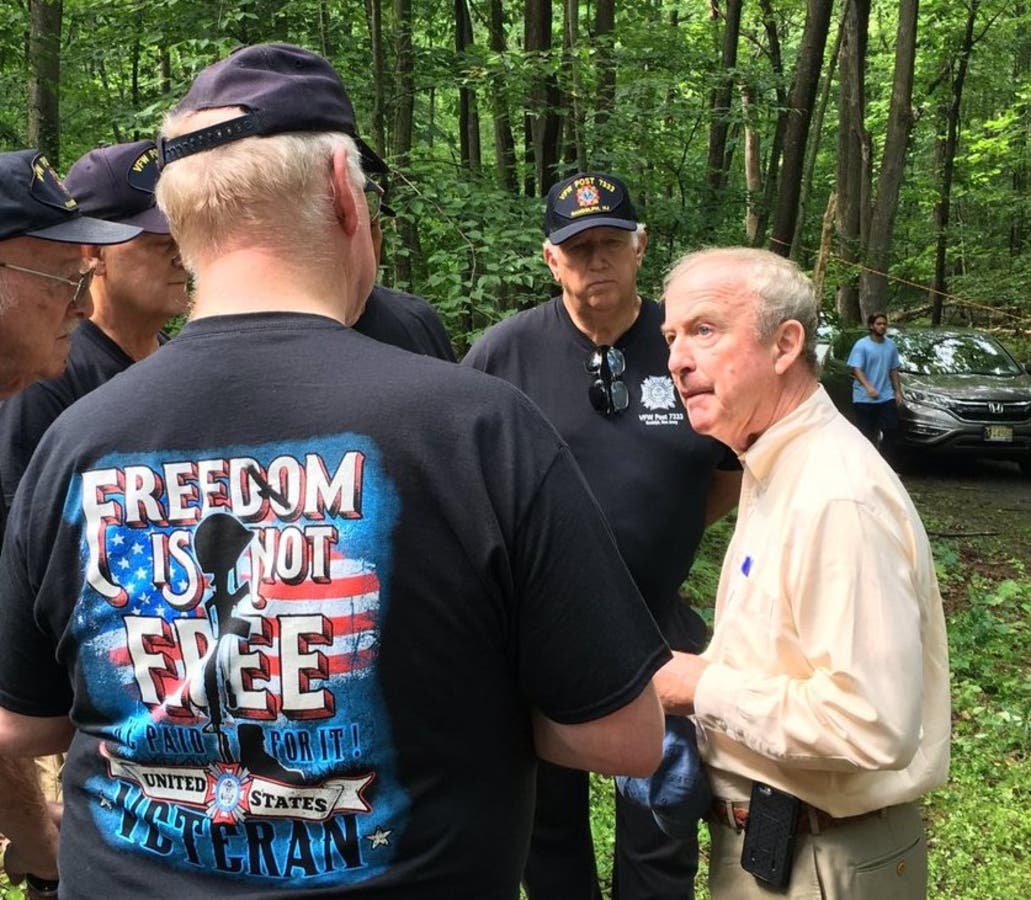
It will be up to a package of 12 proposed spending bills to keep the U.S. government open for business during the 2018 fiscal year. But how will the U.S. House Committee on Appropriations' proposed bills affect the lives of New Jersey residents?
According to Rep. Rodney Frelinghuysen (District 11), the veteran Republican congressman who chairs the committee, there are several ways that the bills will help the Garden State, including $900 million for the Gateway transportation project, millions in funding for state universities and a $28 million boost to New Jersey's Superfund hazardous waste clean-up program.
But some critics of the bills say that the spending plans will harm entities such as the Affordable Care Act and Planned Parenthood. Some have also called for less defense spending, alleging that the proposed boost to the military budget would come at the expense of education and social services.
Find out what's happening in Montclairfor free with the latest updates from Patch.
Frelinghuysen recently announced that Appropriations Committee members have approved each of the annual funding bills, several of which are up for discussion in the U.S. House of Representatives this week.
Frelinghuysen – who has encountered criticism for consistently voting in line with the GOP platform – took a jab at the Trump administration's "late" budget proposal in a statement about the bills last week.
Find out what's happening in Montclairfor free with the latest updates from Patch.
“Despite receiving the president’s budget more than three months late and waiting for months for the Budget Committee to draft a budget framework, the committee has now completed the last five of the 12 bills that fund all of the programs, agencies and offices that serve the American people and keep the government open for business,” Frelinghuysen said.
ICYMI - read my recent e-News regarding @HouseAppropsGOP approval of all FY18 funding bills! https://t.co/7JmbdfnPDZ
— Rodney Frelinghuysen (@USRepRodney) July 24, 2017
According to Frelinghuysen, here are some of the items that would benefit New Jersey if the bills pass muster.
HOMELAND SECURITY
Frelinghuysen said that the Homeland Security Appropriations bill directs $44.3 billion in discretionary funding for the Department of Homeland Security (DHS), an increase of $1.9 billion above the fiscal year 2017 enacted level.
The legislation includes $1.6 billion for “physical barrier construction along the U.S. southern border,” an appropriation that would provide funding to construct Trump’s long-promised border wall with Mexico.
- See related article: White House Proposes 20 Percent Import Tax On Mexico To Pay For Wall
The legislation also includes $2.7 billion for several FEMA grant programs, with a $630 million earmark for the Urban Area Security Initiative, which assists high-threat, high-density “urban areas” like the New Jersey-New York Metropolitan Region to build and sustain capabilities to prevent, protect against, respond to and recover from acts of terrorism.
Also included in the bill is $40.5 million in funding for “university programs,” which will be provided to all 10 DHS Centers of Excellence, including the Maritime Security Center at Stevens Institute of Technology in Hoboken.
The Homeland Security Subcommittee approves its FY18 Appropriations bill on a voice vote. pic.twitter.com/FpF2MHbb2F
— House Appropriations (@HouseAppropsGOP) July 12, 2017
EDUCATION/LABOR/HEALTH & HUMAN SERVICES
Frelinghuysen said that the Labor-Health and Human Services Appropriations bill includes $156 billion in discretionary funding, a cut of $5 billion from fiscal year 2017.
The legislation includes several provisions that will “rein in unnecessary regulations,” Frelinghuysen said.
The bill funds the Department of Education at $66 billion, which is a $2.4 billion decrease from fiscal year 2017. That amount includes $12.2 billion for IDEA special education grants to states, an increase of $200 million over the fiscal year 2017 level, which "will maintain the federal share of special education funding to states," Frelinghuysen stated.
As part of the bill, funding for the National Institutes of Health would increase by $1.1 billion for total of $35.2 billion, which will support research at universities and hospitals including St. Barnabas Medical Center in Livingston, Atlantic Health System in Morristown and the Kessler Foundation in West Orange.
The bill also contains a targeted increase of $300 million at NIH to support Cancer Moonshot, which increases support for New Jersey’s only National Cancer Institute (NCI)-designated Comprehensive Cancer Center, the Rutgers Cancer Institute of New Jersey.
The bill provides $1.4 billion for community health centers, including the Zufall Health Centers in Dover, Morristown, West Orange, Flemington, Hackettstown, Newton and Somerville, an increase of $900,000 above FY 2017, Frelinghuysen said.
Nationwide, the legislation would cut several "lower-priority, unproven or unnecessary programs," Frelinghuysen stated. Some of the cuts would include:
- A cut of $150 million in refugee programs
- A cut of $450 million for the Unaccompanied Alien Children program
- A cut of $91 million for the Dislocated Workers National Reserve
- A cut of $10 million for the Wage and Hour Division
- A cut of $10 million for the Office of Federal Contract Compliance Assistance
- A cut of $21 million for OSHA
- A cut of $14 million for MSHA
- A cut of $219 in CMS program management
- A cut of $25 million for the NLRB
DEFENSE
Frelinghuysen said that the Defense Appropriations bill includes $584.2 billion in discretionary funding, an increase of $68.1 billion above the fiscal year 2017 enacted level and $18.4 billion above the president’s defense budget request.
"As chairman, I am pleased to support New Jersey’s historic role to improve the lethality, effectiveness and safety of our troops," Frelinghuysen stated.
The legislation provides over $130 million in funding to the Armaments Research Development Engineering Center (ARDEC) at Picatinny Arsenal in Morris County as a follow-up to a recent study conducted under the auspices of the Office of Secretary of Defense.
In addition to providing operations and maintenance monies for every New Jersey military installation, the bill also:
- Provides $2.4 billion for another 15 KC-46 aircraft, a new airborne tanker that will be stationed at Joint Base McGuire-Dix-Lakehurst
- Directs the Secretary of the Air Force to explore the use of granular activated carbon for the removal of perfluorinated chemicals (PFCs) that impact water quality at Joint Base McGuire-Dix-Lakehurst and other Air Force installations
- Provides a $11.7 million increase for aircraft and vehicle purchases for the Civil Air Patrol, an organization that is active in New Jersey
INTERIOR/ENVIRONMENT
Frelinghuysen said that the $31.4 billion Interior Appropriations bill is $824 million less than fiscal year 2017, but is still $4.3 billion above the president’s budget request.
The legislation contains several policy provisions that will “rein in harmful and unnecessary regulations at the EPA and other agencies,” Frelinghuysen said.
Under the proposed spending plan, the Environmental Protection Agency (EPA) is funded at $7.53 billion, a $528 million drop from the FY 2017 level but still $1.88 billion above the administration’s recent budget request, Frelinghuysen said.
“This funding level is key to sustaining programs important to New Jersey such as the Superfund hazardous waste clean-up program,” the congressman stated. “In fact, in this legislation, Superfund is slated to receive a $28 million increase from current levels.”
New Jersey has more Superfund sites than any other state, Frelinghuysen said.
- See related article: These Are N.J.'s 105 Most Toxic Sites, And Funds To Clean Them Are At Risk
In addition, the Land and Water Conservation Fund, slated for a significant reduction under the administration’s budget, is funded at $275 million. About $10 million of that amount has been earmarked for open space preservation from “willing sellers” that will help preserve the New Jersey Highlands, Frelinghuysen said.
The National Heritage Areas program, which the Trump administration had proposed to eliminate, is level-funded at $19.8 million, including support for the Crossroads of the American Revolution area in New Jersey, Frelinghuysen said.
The FY18 Interior Appropriations bill was just approved by the subcommittee on a voice vote. pic.twitter.com/o7c5pcegwy
— House Appropriations (@HouseAppropsGOP) July 12, 2017
BUSINESS/FINANCIAL SERVICES
Frelinghuysen said that the Financial Services and General Government Appropriations bill comes to $20.23 billion, about $1.28 billion below the fiscal year 2017 enacted level.
About $120 million will go to Small Business Development Centers in the U.S., including 12 centers across New Jersey: NJSBDC at William Paterson University (Passaic County), NJSBDC at Rutgers Newark (Essex County) and NJSBDC of Northwest Jersey (Morris and Sussex County).
The Trump administration had proposed to eliminate the funding for Community Development Financial Institutions, of which there are 14 in New Jersey that receive $40 million per year. But the bill provides $190 million to help preserve these institutions, Frelinghuysen said.
COMMERCE/JUSTICE/SCIENCE
Frelinghuysen said that the Commerce, Justice and Science Appropriations bill contains $54 billion in total discretionary funding, a decrease of $2.6 billion below fiscal year 2017, but $4.8 billion more than the president’s request.
The bill includes $527 million in funding for Violence Against Women Act programs, which provides annual support to organizations such as the Jersey Battered Women Service.
The legislation provides $9 million for Court Appointed Special Advocates (CASA), which will support CASA programs across the country including CASA of Morris and Sussex Counties, CASA for Children of Essex County, Passaic County CASA, and 12 other local CASA programs in New Jersey.
The legislation funds the National Science Foundation (NSF) to the tune of $7.3 billion. In 2016, New Jersey received $163.7 million from the NSF to support research at 19 universities including Princeton, Rutgers, Stevens Institute of Technology, New Jersey Institute of Technology and Montclair State University.
- See related article: Montclair State Approved As ‘Public Research University’
ENERGY/WATER
Frelinghuysen said that the Energy and Water Development Appropriations bill totals $37.56 billion, about $209 million below the fiscal year 2017 enacted level and $3.65 billion above the president’s budget request.
The legislation includes funding for:
- A New Jersey Back Bay study ($449,000) to continue research to bring relief from back bay flooding
- The Green Brook Sub-Basin ($20 million) to continue construction on a series of channel modifications, levees with limited floodwalls and dry detention basins
- The Passaic River Flood Warning System, which assists the public and emergency managers forecast and prepare for riverine flood events
TRANSPORTATION
Frelinghuysen said that the Transportation-Housing and Urban Development bill reflects an allocation of $56.5 billion in discretionary spending, which is a $1.1 billion cut from fiscal year 2017 but a $8.6 billion improvement from the Trump administration’s budget request.
Funding includes more than $900 million for the Gateway Rail Tunnel project from New Jersey into New York, which includes a proposal for a new Hudson River Tunnel that would serve public transportation (NJ Transit) and inter-city passenger rail (Amtrak).
“Rebuilding the Hudson Tunnels is of vital importance to my home state of New Jersey and our region,” Frelinghuysen said.
“From 2002-2014, the number of New Jersey residents commuting to New York City grew by more than 35 percent,” the congressman stated. “However, New Jersey residents have been plagued by perpetual delays and decaying infrastructure commuting, and reverse commuting, into New York City.”
- See related article: N.J Rail Tunnel Project Would Cost $13B - And It May Never Happen
- See related article: 'Summer Of Hell' At Penn Station: Here's Everything You Need To Know
The Committee is now considering amendments to the FY18 Transportation, Housing and Urban Development Appropriations Bill. pic.twitter.com/JtJ4xbD5bA
— House Appropriations (@HouseAppropsGOP) July 18, 2017
PRAISE AND CRITICISM
Frelinghuysen has drawn both criticism and praise for his role in shaping the spending bills.
A recent Daily Record editorial gave Frelinghuysen a thumbs up for including $900 million in the transportation bill to keep the Gateway rail tunnel project moving forward.
“This is what we’ve been hoping to see from New Jersey’s most powerful congressman in decades, not a lawmaker who seems to be running scared just to keep a seat Democrats have identified as vulnerable,” the Daily Record wrote.
Governor Chris Christie also lauded the proposed federal funding for the Gateway transportation project, calling it a “triumph for our region.”
“Only through the leadership of Congressman Rodney Frelinghuysen is this type of congressional commitment possible,” Christie said. “On behalf of all the people of New Jersey, I thank [him] for his bold leadership for our transportation future.”
However, New Jersey Assemblyman John McKeon downplayed Christie's “lavish” praise, opining that the governor’s “selfish political ambitions” are the reason Garden State resident aren’t six months from a third tunnel instead of 10 years away.
“As for Congressman Rodney Frelinghuysen, he has many more billions to go to make amends for his healthcare vote,” McKeon added.
- See related article: Frelinghuysen Votes Yes On Revised Health Care Bill
Other New Jersey activists and political pundits have argued that the bills are bad for the nation as a whole.
A New Jersey Spotlight op-ed stated that the Financial Services and General Government Appropriations bill contains a provision that would bar the IRS from enforcing the Affordable Care Act’s requirement that those who can afford health insurance procure it or pay penalty… the so-called “individual mandate.”
“The bill does stop a variety of regulations that Republicans consider harmful — for example, it prohibits the SEC from requiring the disclosure of political contributions in SEC filings and includes a bar on funding to require that entities applying for or conducting work under federal contracts disclose campaign contributions.”
Some Garden State social justice groups such as NJ Peace Action have criticized the increase in defense spending, arguing that the money could fund infrastructure improvements, fair and equitable health care, and other social programs.
According to political action committee Emily’s List, which endorses one of Frelinghuysen’s congressional challengers, Mikie Sherrill, the Labor-HHS-Education funding bill would have several negative effects:
- “Defunds Planned Parenthood”
- “Includes provisions to prevent insurers from covering abortion by preventing people from using tax credits to pay for insurance that covers abortion”
- “Would eliminate nearly $300 million in funding from Title X, a crucial family planning program”
Rep. Betty McCollum of Minnesota, a Democrat on the Interior-Environment Appropriations Subcommittee, criticized the plan to cut a combined $10 million from the National Endowment for the Humanities and the National Endowment for the Arts.
“While I’m pleased that House Republicans didn’t follow President Trump’s lead in eliminating these critical cultural institutions, I am disappointed that they decided to cut them by $10 million,” she told CQ Roll Call. “The NEA and the NEH provide support in communities large and small, stimulating regional economies, promoting innovation and creativity, assisting students and serving our veterans."
Send feedback and news tips to eric.kiefer@patch.com
Photo: Rodney Frelinghuysen, Twitter
Get more local news delivered straight to your inbox. Sign up for free Patch newsletters and alerts.