Politics & Government
Moorestown Council Accepts NJDEP Consent Order; Calls it 'Path Forward
Councilwoman Lisa Petriello said she hopes the public doesn't lose confidence in the township's leadership.


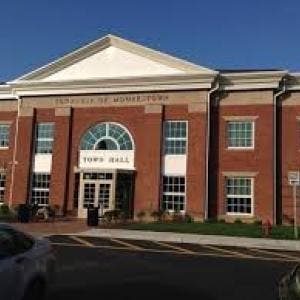
Moorestown, NJ -- Moorestown Council voted unanimously to accept an Administrative Consent Order from the New Jersey Department of Environmental Protection (NJDEP) concerning multiple violations related to its water system during a special meeting Friday morning at town hall.
An Administrative Consent Order is considered to be an enforcement action executed by Water Compliance and Enforcement when an entity is in non-compliance.
The township is being fined $3,000 and must correct the violations set forth in the consent order.
Council adopted the consent order with a 4-0 vote. Councilwoman Stacey Jordan was absent.
Find out what's happening in Moorestownfor free with the latest updates from Patch.
While township officials said they previously didn’t agree with everything in the consent order, Mayor Phil Garwood said those disagreements are in the past and, the township views the consent order as a "path forward."
Officials also maintained that there is nothing in the order they weren’t already doing.
Find out what's happening in Moorestownfor free with the latest updates from Patch.
“This is just codifying what we’re already doing anyway,” Deputy Mayor Victoria Napolitano said. “This tells us to make the water as good and as clean as we can for the township, and that’s what we’re doing anyway.”
The Administrative Consent Order stipulates that Moorestown can’t continue to operate Wells 7 and 9 at the North Church Street Water Treatment Plant until it receives approval from NJDEP. Those wells will be permanently closed in the absence of treatment.
The wells were shut down on Oct. 6, 2014, on NJDEP’s recommendation after elevated levels of TCP 123, an unregulated contaminant, were found in the water.
One well was reopened in June of 2015, and the other was subjected to pilot testing.
The township announced that well would be closed once again in February while it enacted a temporary treatment and pursued a permanent solution. Moorestown is purchasing water from New Jersey American Water in the interim.
Councilwoman Lisa Petriello said she hopes the public doesn’t lose confidence in the township’s leadership as a result of the water issues.
“This is distressing and alarming,” Petriello said of the consent order. “ … This is about health and safety and trust. We need to hold ourselves to different standards and we have to do better. I hope there’s no breach in public trust or in our leadership.”
“This document enables us to move forward and allows the public to have confidence in us,” Garwood said.
On Friday morning, Township Manager Scott Carew said a Request for Proposal would go out sometime in the next two weeks to find a private company to run the township’s water and sewer department following the resignation of Bill Butler as Utility Superintendent.
Carew clarified that the township isn’t looking to privatize the entire water department; only the position formerly held by Butler.
He also praised the work of Wayne McEwan and Albert Vallen, who have been running the water and sewer departments, respectively.
Under the terms of the Administrative Consent Order, Moorestown can grant approvals for outstanding water main connections for projects that don’t require an NJDEP permit, but it can’t process any further applications until it meets its firm capacity.
It must also impose its annual water restrictions at all times. It currently only imposes restrictions in emergency situations, which is a violation of a now-terminated Memorandum of Agreement between the township and NJDEP.
If those wells are treated and used by the township, Moorestown will be required to conduct quarterly testing for TCP 123, TCE, and gross alpha particle activity, and monthly testing for dioxane.
Moorestown has 30 days to respond to the Administrative Consent Order, and 60 days to submit a compliance plan.
Once the plan is approved and implementation begins, Moorestown will be required to submit monthly updates to NJDEP.
Any violation of the Administrative Consent Order will result in further fines for the township.
NJDEP outlined Moorestown’s violations in the Administrative Consent Order, as detailed below:
In 2013, NJDEP approved the township’s applications for Water Main Extension Permits based on certain firm water capacity standards the township claimed it could meet.
However, by September of that year, NJDEP determined Moorestown had provided “inaccurate information” about its firm capacity.
At that point, it told the township it wouldn’t approve any more Water Main Extension Permits, and the township shouldn’t approve any projects that had a water demand, according to the document.
It also said it would evaluate the capacity that could be handled by the Hartford Road Water Treatment Plant because it was inoperable and couldn’t be turned on if needed.
The plant’s firm capacity was included in Moorestown’s applications.
Moorestown then told NJDEP the Kings Highway plant couldn’t meet the firm capacity it previously said it could.
In April of last year, the sides entered into a Memorandum of Agreement that said Moorestown would address these concerns.
NJDEP specifically mentions making the North Church Street plant fully compliant with drinking water standards for manganese, TCE, gross alpha particle activity and radium.
NJDEP agreed to grant the Water Main Extension applications as long as Moorestown met the requirements of the MOA, but Moorestown failed to meet all of the MOA’s requirements.
NJDEP also issued a notice of non-compliance for Moorestown’s failure to monitor its gross alpha particle activity for June of last year. The notice was issued in February of this year.
Moorestown also didn’t report testing for radiological contaminants on the two wells at the North Church Street plant during the six days of October 2014 that they were operational, as required.
The township also didn’t report the results of dioxane testing, as required. Levels of dioxane didn’t violate state and federal regulations.
NJDEP also cited Moorestown’s failure to notify residents of the presence of coliform in its water for a year. Coliform was detected in the township’s water supply in February of 2015, and the public was notified in February of 2016.
As a result, the MOA has been terminated and replaced by the Administrative Consent Order.
Get more local news delivered straight to your inbox. Sign up for free Patch newsletters and alerts.