Politics & Government
Moorestown Council to Consider Awarding Contract for Temporary Water Solution
Township Utilities Engineer L. Russell Trice suggested hiring Calgon Carbon, out of Pennsylvania, during Monday night's meeting.


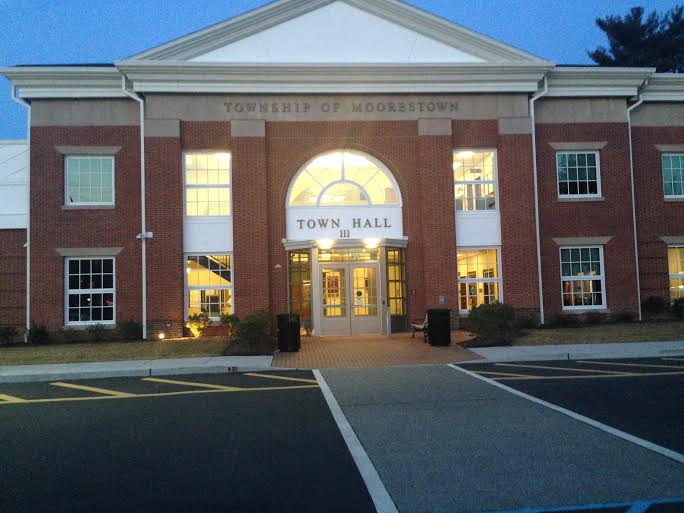
Moorestown, NJ -- Moorestown Council will consider a resolution at its March 7 meeting to begin work on a temporary solution to eliminate Trichloropropane (TCP 1,2,3) and Trichlorethylene (TCE) that has been found in the township’s drinking water.
Township Utilities Engineer L. Russell Trice, senior associate with the Alaimo Group, suggested hiring Pennsylvania-based Calgon Carbon to install a pair of carbon tanks that will eliminate the contaminants over an expected period of 12 months during Monday night’s council meeting at town hall.
Should council approve that resolution, the tanks could be in place four weeks later, with work likely beginning two weeks after that.
Find out what's happening in Moorestownfor free with the latest updates from Patch.
While this temporary solution, first mentioned during a special meeting at town hall on Feb. 10, is in place, the township will explore a permanent solution, which may include buying the tanks from Calgon Carbon.
The initial cost to have the tanks installed is $171,000, with an $11,400 monthly rental fee. The initial fee would be waived if the township decided to purchase the equipment at the end of the rental cycle. There is also a demobilization fee that goes along with renting the equipment that would also be waived in the event the township decided to purchase the equipment.
Find out what's happening in Moorestownfor free with the latest updates from Patch.
In the meantime, the township has once again shut down Well 7 at the North Church Street water treatment plant.
The township shut down two of its wells at the treatment plant in 2014 following a recommendation from the New Jersey Department of Environmental Protection (NJDEP) after the township reported the presence of TCP 1,2,3 in its water in its 2013 Water Quality Report.
Last summer, one of those wells (Well 7) was reopened and subjected to testing after samples taken in June showed there was no TCP 1,2,3 in the water. NJDEP never recommended reopening the well.
During the Feb. 10 meeting, members of the public asked the township to close Well 7 again while it pursued the temporary solution.
Township Manager Scott Carew called for the township to shut down the well at the request of Mayor Phil Garwood, who said he spoke with members of council individually to get their opinion before making the request. The well was shut down on the order of the township manager and not council, the township clarified Monday night.
To compensate for the well being closed, the township is currently getting its water from New Jersey American Water, as it did last year. Township Manager Scott Carew is hopeful that the township will be able to avoid getting water from the water company later in the year when it normally would, thus eliminating any additional cost the township might be taking on at this point in time.
The township said it decided to shut the well after receiving results of the pilot test, which officials say they received right before the Feb. 10 meeting. Testing concluded in December.
“After that meeting, we knew the time frame, the costs and our options, and the consensus was to close it,” Garwood said.
Each of the filters can hold up to 10 tons of carbon and water. When empty, the filters are much lighter, making transportation into Moorestown easier, Trice said.
The carbon will suck out the contaminants, but it can also be completely used up. The company would refill the containers for a fee, but the township doesn’t expect to use all the carbon. It will conduct monthly testing to measure how much carbon remains in each filter.
The well water will be tested before the wells are turned back on, Carew said.
Get more local news delivered straight to your inbox. Sign up for free Patch newsletters and alerts.