Health & Fitness
Breaking Boundaries in Uterine Fibroid Care
A Rutgers Health professor explains how a minimally invasive treatment improves recovery and quality of life
Uterine fibroids, benign tumors that develop in the uterus, are among the most common gynecologic conditions affecting women, with an estimated 70% to 80% developing them by age 50.
Despite its prevalence, the exact cause of the tumors remains unclear. Although noncancerous, fibroids can cause significant and sometimes debilitating symptoms, including heavy menstrual bleeding that require multiple pads during the day, pelvic pain and complications that disrupt daily life and overall well-being. Black women are disproportionately affected by fibroids, often developing them at an earlier age and experiencing more severe symptoms and facing barriers to timely diagnosis and treatment.
At Rutgers New Jersey Medical School and University Hospital, physicians are advancing clinical care and enhancing the quality of life for women with uterine fibroids through uterine fibroid embolization (UFE), a minimally invasive alternative to conventional surgery that offers a safe and effective treatment option.
Find out what's happening in Newarkfor free with the latest updates from Patch.
Beyond advancing clinical care, Rutgers’ physicians also are focused on addressing the disparities surrounding fibroids. Efforts are aimed at better understanding and closing gaps in underserved communities.
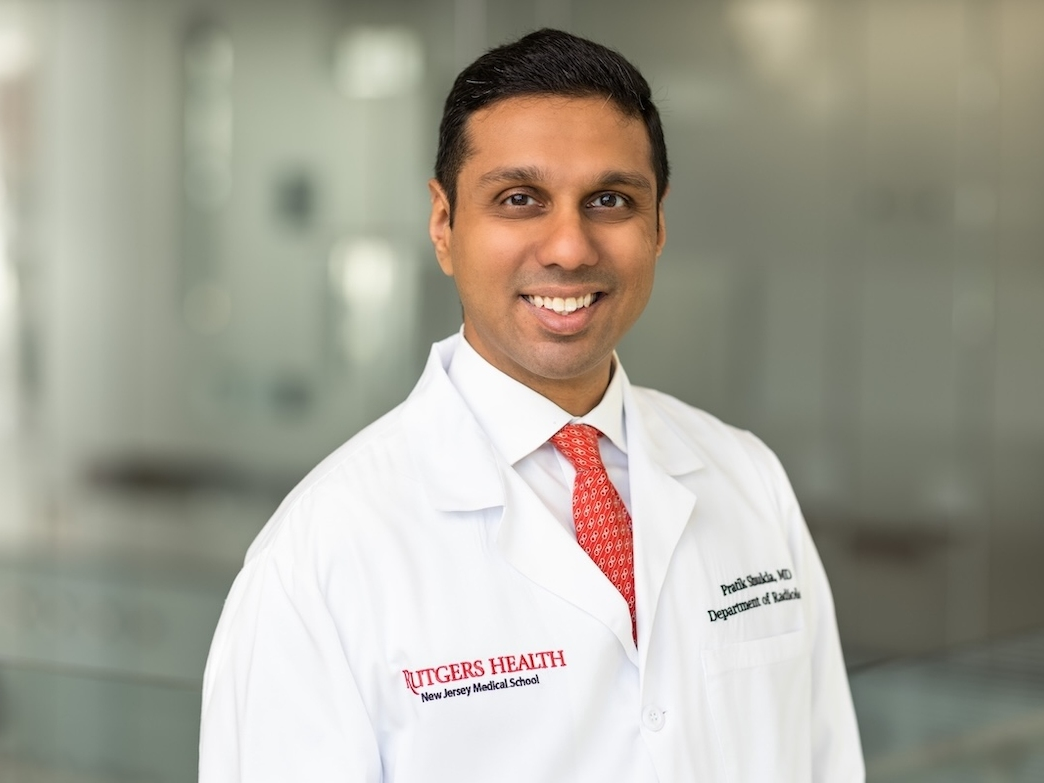
Pratik A. Shukla, an associate professor in the Department of Radiology at Rutgers New Jersey Medical School, discusses the prevalence and impact of fibroids, the role of minimally invasive treatment and ongoing efforts to improve access and outcomes for patients.
Find out what's happening in Newarkfor free with the latest updates from Patch.
How common are uterine fibroids among women in the U.S. and how do they typically affect a woman's daily life and overall well-being?
Up to 75% of premenopausal women will develop uterine fibroids by the time they reach 50 and they are more common in Black and Hispanic women. About one-quarter of these women will develop symptoms, including heavy menstrual bleeding resulting in symptoms of anemia, which may cause fatigue, shortness of breath, dizziness and palpitations. They can also develop bulk symptoms, which are physical effects caused by enlarged fibroids that can lead to pelvic pain and pressure, back and leg pain from nerve compression, increased urinary frequency and dyspareunia, pain that occurs before, during or after intercourse.
What causes uterine fibroids, and are there environmental, hormonal or lifestyle factors that contribute to its development and growth?
The exact cause of uterine fibroids is unknown. They are thought to be multifactorial and influenced by genetics, hormone variations, diet and activity levels. Severity of symptoms increases with age and race, particularly among African American and Hispanic women.
Research shows that Black women are disproportionately affected by uterine fibroids. What do we know about why these disparities exist?
Black patients are disproportionately affected by fibroids and have more severe symptoms, which may be multifactorial in nature. However, disparities in treatment do exist. Many Black women who suffer from fibroids believe that this is normal as they see their friends, family and community suffering from them. Also, healthcare disparities related to minority and underserved communities are documented and may also play a role.
My area of research surrounds disparities related to offering minimally invasive uterine fibroid embolization as a treatment option for these patients. We found that patients who were underinsured were more likely to get referred to interventional radiology for the UFE procedure compared to patients with commercial insurance.
You perform uterine fibroid embolization – UFE – at University Hospital in Newark. Can you explain what this procedure is, how it works to treat fibroids and how it differs from conventional surgical options?
UFE is a minimally invasive procedure where we guide a catheter through a small pinhole in the wrist or groin into the arteries of the uterus and slow down the blood supply to the fibroids by injecting tiny beads into the uterine arteries, all under X-ray imaging guidance.
There is no surgical incision, and patients go home the same day with a small dressing at the access site. Pelvic pain and cramping are expected for 24 to 72 hours, and most patients return to normal activities within 48 hours.
The fibroids begin to shrink over the next few months, with bleeding symptoms improving first and pressure symptoms typically resolving within six months. Compared with traditional surgery, recovery is faster and complications are fewer, as with most minimally invasive procedures. Symptom improvement may be quicker with surgery, especially a hysterectomy, and myomectomy, fibroid removal, has similar recurrence rates compared with UFE.
What advice would you offer to women navigating fibroid symptoms?
Please learn about all the options that are out there and consult with different specialists to learn about what they can offer.
Looking ahead, what developments in fibroid treatment or research give you the most hope for improving outcomes and reducing disparities?
I think the most important factor in improving outcomes and reducing disparities will be increasing awareness in the community. This is tougher in underserved areas where traditional education strategies do not seem to work well, like social media, but rather a grass roots, boots-on-the ground approach is more effective.
However, these efforts require many resources including personnel and can be tough to coordinate. This is the aim of the Uterine Fibroid Embolization Awareness Workgroup of the Radiology Health Equity Coalition, where we are partnering with medical schools and different organizations to create a nationwide network of students to help increase UFE awareness in these communities.
Learn more from Shukla in this video: Breaking Boundaries in Uterine Fibroid Care