Schools
The Movement Of Bees: Rutgers Doctoral Student Studies Rare Population In Northern NJ
In studying how these bees move around to find their flowers, Max McCarthy said he hopes to add to ecological and conservation knowledge.


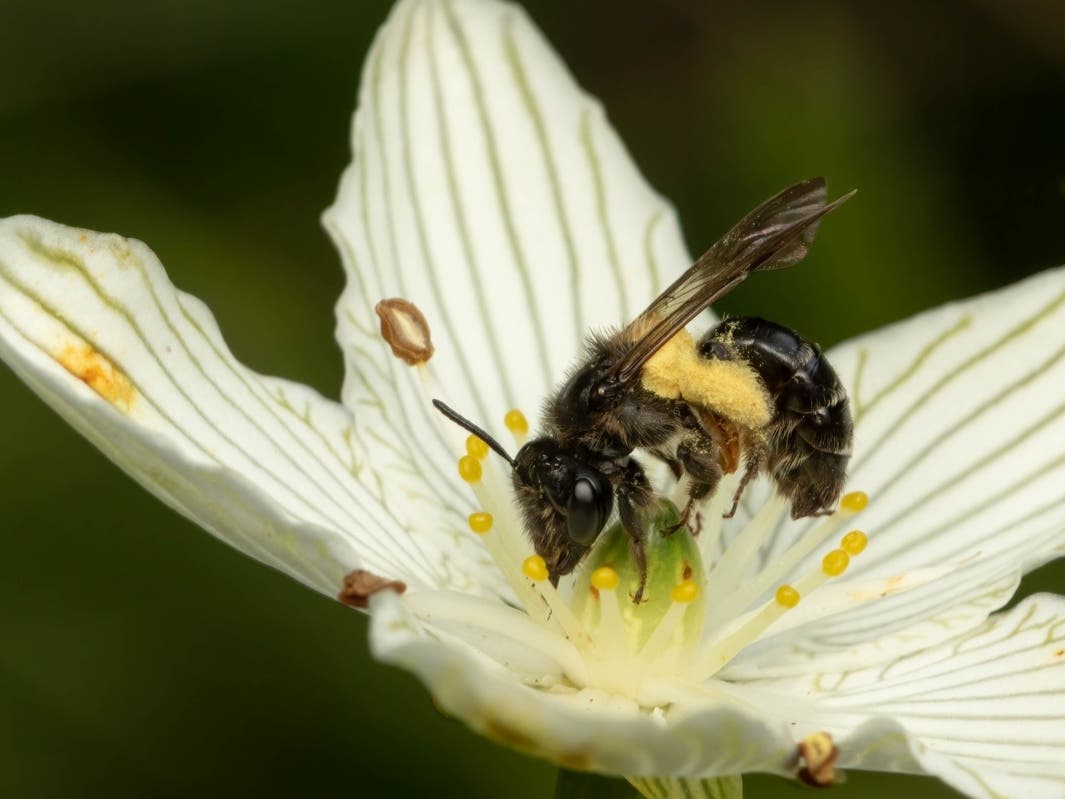
NEW BRUNSWICK, NJ — A Rutgers University doctoral student is studying a rare bee species in northern New Jersey, in the hopes of better understanding how pollinator populations move around.
Max McCarthy is in the ecology and evolution program at Rutgers’ New Brunswick campus, and his research was featured last month in The New York Times. McCarthy said he began studying bee populations while getting his master’s degree at Tufts University in Massachusetts. Now, he is studying populations of a specific miner bee known by its scientific name, Andrena parnassiae.
By studying how Andrena parnassiae move around to find their flowers, McCarthy said he hopes to add to ecological knowledge on how to conserve bee populations.
Find out what's happening in New Brunswickfor free with the latest updates from Patch.
“When we conserve isolated locations, are populations just stuck there, or is there more movement between those than we’d think?” McCarthy said in an interview with Patch.
This bee is a rarity, feeding on a flower called fen grass of Parnassus. The flower itself is found only in wetlands. Because both bee and plant are so particular, it helps McCarthy pinpoint exactly where populations of both will be.
Find out what's happening in New Brunswickfor free with the latest updates from Patch.
“Lots of other bees are specialized on other sorts of things like blueberries or willow bushes, and it helps you know where to find the bees,” he told Patch. “I really have to have a good idea of where all those patches of the plant are. And that’s hard to do with some other plants that could be growing just about anywhere.”
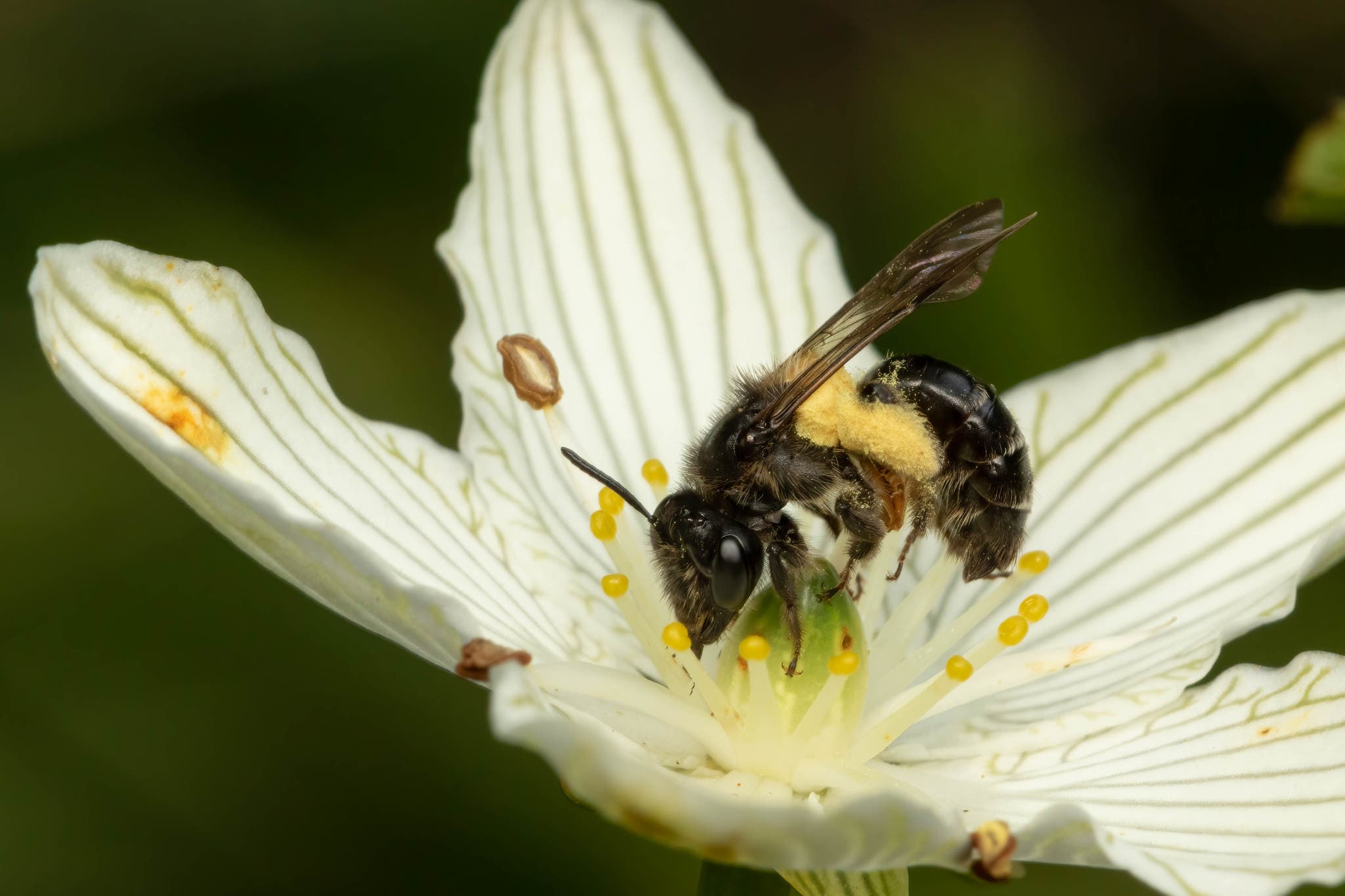
Last year, biologist Sam Droege sent a list of unusual bees to an email listserv McCarthy subscribes to. The list included Andrena parnassiae. McCarthy said there were no records of the bee in New Jersey before he began his research. He knew grass of Parnassus grew in the state, though, so he went looking.
“In a matter of moments (from) showing up at the site where the plant was growing, the bees were there all over the flowers,” he said.
Thus began the process of noting each bee he sees and recording them in a notebook. McCarthy catches the bees and puts little dots on their backs with a paint marker, then releases them.
“I go out to an individual patch and I do a survey where I walk around the plant for a certain amount of time, I catch all the bees I can catch off the flowers and I hold them in little vials,” he said. “And at the end, I go through them and I mark them all individually. So if I were to catch any of these bees again, I know who they are because their marks are all unique.”
He said he has marked 246 bees across 10 patches of flowers in Warren County.
“The point in studying these guys is not just to be able to say something about these bees,” he explained. “It’s a really exemplary system that might allow us to learn things we could generalize to other bees of a similar size and occur in patchy habitats like this.”
McCarthy said insect populations often fluctuate year to year.
“What that means is sometimes in that particular patch, they’ll go locally extinct but then maybe in some subsequent year, the patch will get recolonized by individuals from another nearby patch,” he said.
But if these bees move from place to place, McCarthy said, that’s something of note.
“Maybe they are really good at getting around, and that has some interesting implications for where we need to conserve habitat. Or maybe populations just are really stable, which is interesting for an insect from a conservation perspective, too.”
Get more local news delivered straight to your inbox. Sign up for free Patch newsletters and alerts.