Politics & Government
Christie's Budget Includes $213 Million Bump in School Aid
With one of every three dollars of the governor's budget earmarked for education, schools wait to see how much they will actually receive
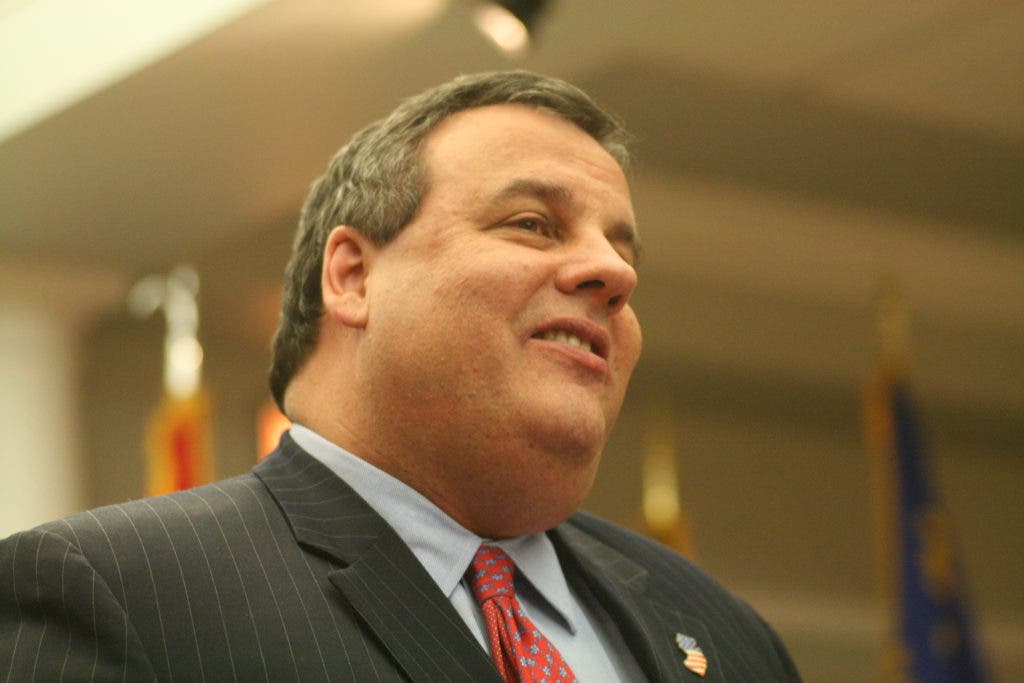
To big applause, Gov. Chris Christie yesterday highlighted that his proposed fiscal 2013 budget would include an additional $213 million in aid to public schools, but the cheers may not be widespread when the details reveal how the money is distributed.
Districts are to learn today how each will fare under Christie's $32.1 billion spending plan, and although the overall amount in state school aid is going up about 1.7 percent, state officials said it will not be across-the-board increases to all 500-plus districts.
State Treasurer Andrew Sidamon-Eristoff said a "vast majority of districts will be getting a slight increase." But the administration also for the first time will be using the state's funding formula in the distribution of aid, he said. The funding formula ties aid directly to the number of individual students and their needs, meaning students with limited English or low-incomes get additional sums -- or for scores of districts, especially those with falling enrollments, a decrease in the money they receive.
Find out what's happening in New Milfordfor free with the latest updates from Patch.
"There are always going to be student population changes that need to be taken into account," Sidamon-Eristoff said.
Districts and their representatives yesterday were not making judgments one way or another on Christie's budget until the aid numbers can be reviewed. And even that is not a final word, since business administrators will then need to look into the details of how money is distributed within the different aid categories.
Find out what's happening in New Milfordfor free with the latest updates from Patch.
"We have to reserve judgment until we see the level of detail that is in it," said Raymond Wiss, president of the New Jersey School Boards Association and a Northern Valley trustee. "Still, there are a lot of positives in terms of the commitment to education."
One area sure to get attention is how -- or if -- the state was going to make cuts to so-called adjustment aid, a pot of $570 million that is meant to hold districts level in the event of enrollment decreases.
More than 150 districts received adjustment aid this year, some as much as half of their overall aid. Jersey City receives $116 million in adjustment aid, $50 million in Camden. $36 million in Vineland. But it is not only urban districts: Brick receives $14 million, Toms River $11 million.
Another wild card is a report expected from acting education commissioner Chris Cerf later this week that could bring changes to the very funding formula that the state is following.
Under the law, Cerf may seek to adjust some of the computations for additional aid for students with special needs, potentially amounting to millions of dollars for some high-poverty districts. Christie has not hid his contempt for the amount of money spent in the state's neediest districts under the Abbott v. Burke rulings.
"It is one thing if all districts receive an increase, but if there are 100 that don't, we would have concerns," said Michael Vrancik, the school board association's chief lobbyist.
Even the $213 million overall increase trumpeted by Christie and his staff is not quite as advertised, since more than $80 million of the total was in a combination of funds that will not be direct aid to districts.
For instance, $68 million will be savings from moving state aid payments from one fiscal year to another. Another $14 million will go to just the districts taking on outside students through the state's inter-district school choice program. In the end, of the total increase, $120 million would be in the direct formula aid to all districts.
Still, at $8.8 billion, Christie boasted it was the highest sum ever distributed by the state, more than $1 billion more than when he was elected. And it makes two years of the state restoring aid to school districts, as opposed to the nearly $1 billion in cuts two years ago.