Neighbor News
Lawn Culture Needs to Change; S437 is the Remedy Science and Politics
Lawn Culture is Ecologically Senseless and not good for our Health or Wellbeing. Ecological vs pre-ecological perspectives.



Lawn Culture is Ecologically Senseless; perhaps environmentally, required in Urban settings.
A Lawn is a form of impervious surface.
The Lawn culture itself is a business it's practices are anti-nature, anti-community; it's Pollution, Noise and, Disturbing the Peace.
Ironic that during this draught period grass doesn't grow and yet it's still being cut every-week. Another laissez fair business example of free market life in a vacuum, economy outside the laws of nature. We can;t hurt the economy but the economy can hurt us.
Find out what's happening in Parsippanyfor free with the latest updates from Patch.
Recently A copy of the S437 was presented to Council, and a reply was requested. No reply was forthcoming; however one member of Council did verbally state on the sideline, he would not support such legislation, because it was a form of government interference with business.
So then; Public Health is not a elected officials responsibility?
Find out what's happening in Parsippanyfor free with the latest updates from Patch.
One must ask when mowers and blowers emit dirty-carbon-air into surroundings and infect the peace with noise; is that not worse than interference with business, but a public health issue affecting disproportionately a large number of people within a local community or region at the same time? We talk of cancer and it's victims and then separate possible and likely causes of cancer from real sources?
No Commissions; just cosmetic committees
Here in Parsippany only one "committee" seems to be active the and ever called upon under a mayors discretion; the Economic Development Advisory Committee; the other eight committees are mere look good and rarely if ever open to the public with meaning and coordination with town officials. The Open Space committee no longer exists and was not summoned when needed during the past. Our Transparency committee is anything but; as we see in the various contentions of where certain monies went. Back to the subject: Mower, Blowers, polluting technology, and a new friendly lawn culture.
Habitat and Part Lawn In the time of climate change and loss of biodiversity of our planet.
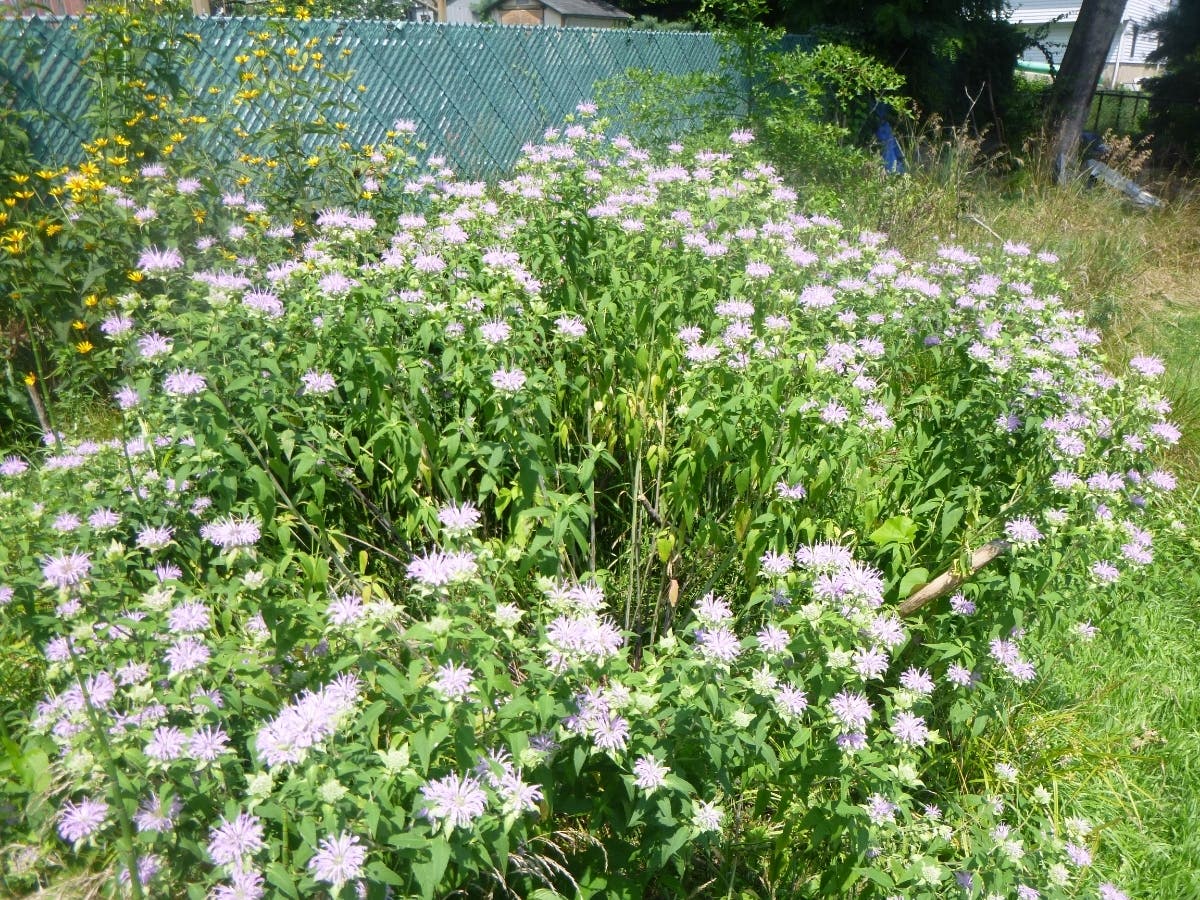
What people need to realize is a lawn type culture can be suitable if more diversity is allowed. Local habitats with native species of plants and flowers can bring beauty and peace to a community, giving space for various birds and important species, bees,and butterflies. Habitats like garden also require maintenance and care, but of a healthier way.
Pre-Ecological Paradigm versus Ecological Paradigm. We need nature, nature does not need us.
The world, man's place in it, and a host of policy issues all look different when viewed in traditional pre-ecological perspectives. These Paradigms must be sorted as one necessary for the climate crisis, the other obsolete, and not ecologically sound. Politics and Science must become one. Many States and Municipalities have already made the moves to disallow these unsuitable technologies to violate citizens rights to peace and health. When will New Jersey and especially local officials advance this issue?
S437 is the remedy: Change for the better, Ecology not economy. Support Life not business as usual; time for change, change for the better.
S437: This bill would prohibit, beginning one year after the bill’s effective date, the sale or distribution of gas-powered leaf blowers within the State for use or operation in New Jersey. The bill would also prohibit, beginning four years after the bill’s effective date, the use of gas-powered leaf blowers within the State. As defined in the bill, “gas-powered leaf blower” means a leaf blower that has a two-stroke or four-stroke engine and uses gasoline or a gasoline and oil blend as fuel.
Any person who violates the bill’s provisions would be subject to a civil penalty of not less than $500 nor more than $1,000 for each offense. In the case of a continuing violation, each day during which the violation continues would constitute an additional, separate, and distinct offense. The bill authorizes State and local law enforcement agencies to have the exclusive authority of enforcing the bill’s provisions. The bill also incentivizes the enforcement of the bill’s provisions by permitting any penalty recovered to be retained by the enforcing government entity.
Gas-powered leaf blowers emit high rates of pollutants, including, but not limited to, carbon monoxide, nitrous oxides, hydrocarbons, unburnt gasoline, and fine particulate matter. For example, the amount of carbon monoxide emitted from a typical backpack gas-powered leaf blower for just one hour is equal to the amount of carbon monoxide emitted from the tailpipe of an automobile operating for over eight hours, and, for the other pollutants, the amounts are even greater. The chemical pollutants that gas-powered leaf blowers emit may contribute to smog formation and acid rain.
In addition to environmental consequences, gas-powered leaf blowers are also associated with occupational health concerns. Gas-powered leaf blowers generate noise at a decibel level capable of causing hearing loss in a short amount of time, and gas-powered leaf blowers send dust and other small particles into the air for considerable distances, including, but not limited to, animal feces, trace quantities of heavy metals such as lead, and allergens such as pollen and mold.
There are affordable alternatives to gas-powered leaf blowers, including electric leaf blowers, which are quieter and safer to operate and less harmful to the environment.
Why is it then, that we can't hurt the economy but the economy can hurt us? The sustainable scale has long been reached and exceeded; waste and inefficiency reign.