Neighbor News
Ordinances Are Not Law Can Change Anytime for "Any Reason." Municipal Laws Shall Not Stand In The Way of Speculation Market Development In A Land Littered With Already Developed Abandoned Properties. The Future of Water Means Little To Whole Foods.
Ordinance or Law. Town Attorney alleges municipal ordinances are not law and can be changed anytime. No law no enforcement, its easy.

At the last special Town Council Meeting concerning RD developers threat to the natural resources and community entrusted to the Parsippany Municipal authorities on September 15, several statements very made that were very disturbing by the Township Attorney and Administrator; to think we pay taxes to such a regime, not centered in community or the science of good land use but outside forces. Whole Foods, should be called whole paycheck. Who can honestly afford to shop Wholefoods, a anti-union corporation? Whole foods builds on aquifer recharge, destroys local neighborhood, something to be proud of?
Inglesino; says Ordinances are not really laws, can be changed anytime..
So according to him; no law no enforcement, on the 200-foot buffer Ordinance established in previous zoning of Waterview Office Park. Below from the legal dictionary, please find of interest. The philosophy ordinances are not laws, allows for lack standards in our community and an excuse not to bother uncaring residents, or irresponsible corporate entities. No wonder our streets and landscapes are so trashed.
Ordinance
A law, statute, or regulation enacted by a Municipal Corporation.
An ordinance is a law passed by a municipal government. A municipality, such as a city, town, village, or borough, is a political subdivision of a state within which a municipal corporation has been established to provide local government to a population in a defined area.
Ordinances constitute the subject matter of municipal law. The power of municipal governments to enact ordinances is derived from the state constitution or statutes or through the legislative grant of a municipal charter. The charter in large part dictates how much power elected officials have to regulate actions within the municipality. Municipalities that have been granted “home rule” charters by the legislature have the most authority to act. If, however, a municipality enacts an ordinance that exceeds its charter or is in conflict with state or federal law, the ordinance can be challenged in court and ruled void.
Many ordinances deal with maintaining public safety, health, morals, and General Welfare. For example, a municipality may enact housing ordinances that set minimum standards of habitability. Other ordinances deal with fire and safety regulations that residential, commercial,and industrial property owners must follow. Many municipalities have enacted noise ordinances, which prohibit prescribed levels of noise after certain hours of the evening.
Zoning.
One of the most significant areas of municipal law is Zoning. Zoning ordinances constitute a master plan for land use within the municipality.A municipality is typically divided into residential, commercial, and industrial zoning districts. Zoning attempts to conserve the value of property and to encourage the most appropriate use of land throughout a particular locality.
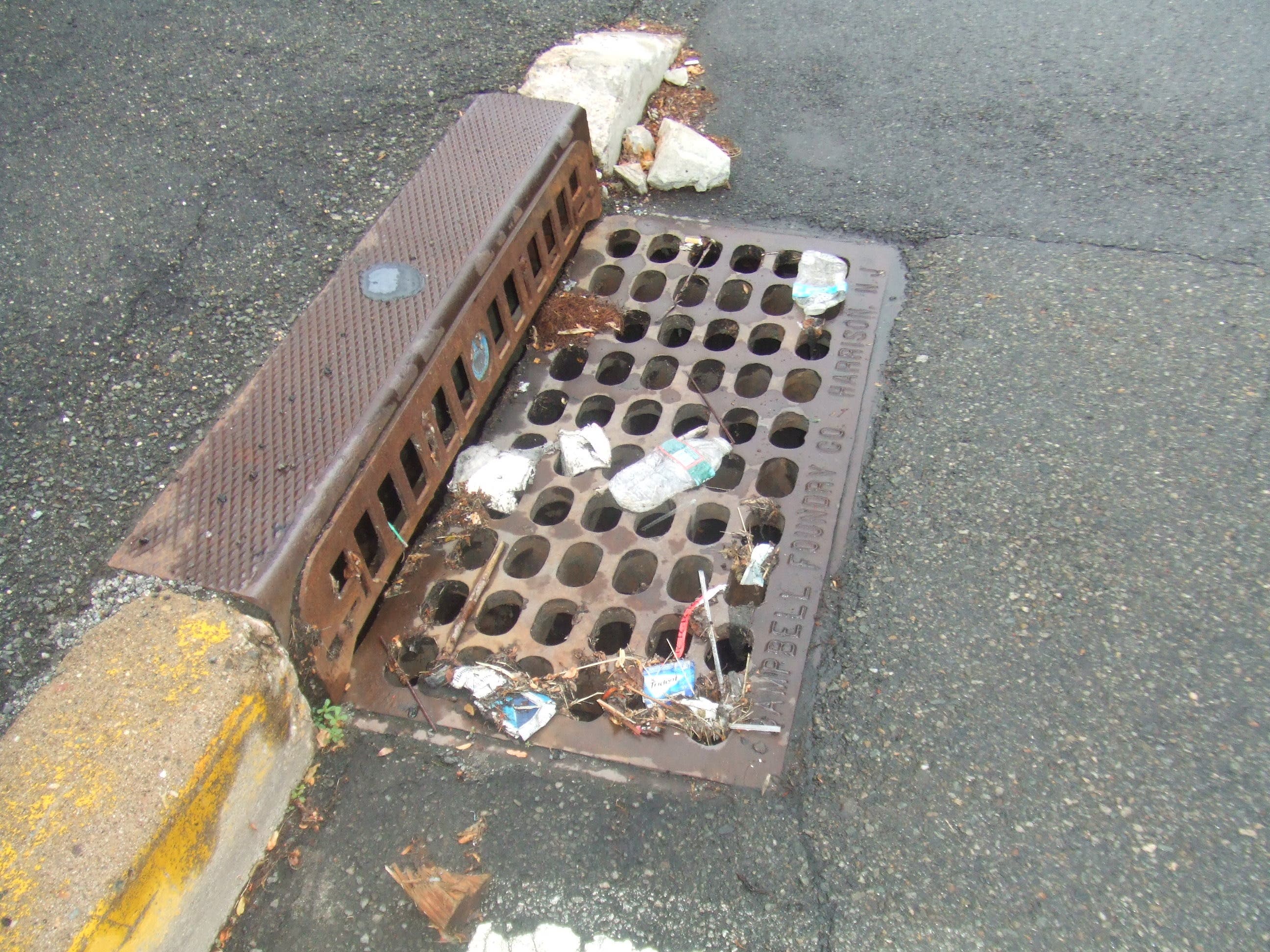
Pictures demonstrates our lack of stormwater ordinances, clean streets once a day, its everybody’s job and an ordinance. No enforcement no law, it only gets worse.
Find out what's happening in Parsippanyfor free with the latest updates from Patch.
Ordinances are not laws, but can be conveniently changed, as was done with the Parsippany Open Space Tax Ordinance in June 2012; Now may be done to favor RD developer, the 200 foot buffer ordinance of the Warterview Office Park will not stand; or could not stand..So then the zoning present corresponds to an ordinance or established municipal covenant with the surroundings and its citizens. No public need exists, as has been demonstrated, no change to the immediate character of the neighborhood has taken place to justify the rezoning.
Last question to our alleged Attorney: Does that mean the Constitution is not law; because it can change? or any outdated law that changes, is no longer a law?