Neighbor News
McCormick endorses an Essential Workers Bill of Rights
McCormick said a plan proposed on April 13 by Senator Elizabeth Warren & Representative Ro Khanna has not gotten priority it deserves
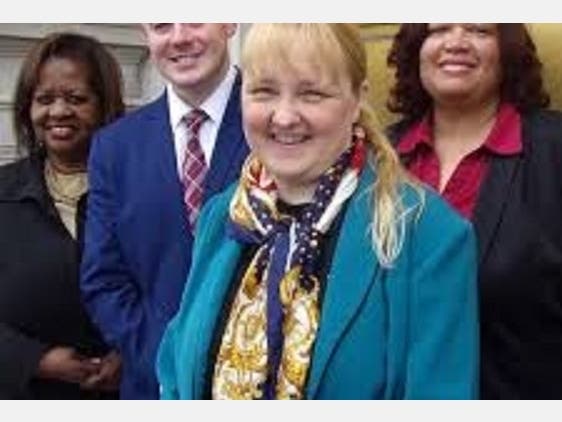
Lisa McCormick endorsed a proposal for an Essential Workers Bill of Rights to protect frontline workers during the coronavirus pandemic.
The progressive New Jersey Democrat, who is running for Congress in the 12th District, also called on lawmakers to include the Essential Workers Bill of Rights in the next coronavirus relief package.
McCormick said a plan proposed on April 13 by United States Senator Elizabeth Warren (D-MA) and Representative Ro Khanna (D-CA) has not gotten the level of priority that it deserves.
Find out what's happening in Princetonfor free with the latest updates from Patch.
"This global pandemic has not been enough for lawmakers to put the needs of working people ahead of corporate profits," said McCormick. "In response to the coronavirus pandemic, Congress approved four separate measures allocating trillions of dollars in bailouts, but none have provided meaningful protections to working people."
"Workers who are required to work often go without protective gear, even if they lack access to paid sick leave," said McCormick. "Essential workers are on the frontlines of this pandemic. Many are working in high-risk conditions without appropriate equipment, safety standards, or job protections but when people try and speak up for themselves and each other, they are fired. Workers are dying as a result."
Find out what's happening in Princetonfor free with the latest updates from Patch.
"Essential workers include doctors, nurses, home health aides, grocery or drug store employees, food service employees, federal, state, and municipal staff, janitors, farm workers, delivery drivers, warehouse workers, transportation workers, and child care providers," said McCormick. "These people are contracting COVID-19 at a higher rate than the general public, because they cannot remain in place at home, where there are fewer opportunities to contract the deadly disease."
"Essential workers are the backbone of our nation's response to coronavirus," said Senator Elizabeth Warren. "We have a responsibility to make sure essential workers have the protections they need, the rights they are entitled to, and the compensation they deserve. The next relief package must put all workers front and center -- but it must also specifically include the policies in our Essential Workers Bill of Rights."
"Nearly 60 million Americans are still working to keep our internet running, to deliver our groceries, to make sure we have electricity, and to care for the sick. In an age of automation, we are reminded of the dignity and importance of work that is not remote," said Representative Ro Khanna. "This crisis needs to open our eyes to the value of workers who are often invisible, and we need to give them the pay and benefits they deserve."
McCormick, Warren and Khanna agree that the Essential Workers Bill of Rights must include:
- Health and safety protections. Every employee, including employees of contractors and subcontractors, should be able to do their job safely, which means having necessary amounts of personal protective equipment provided by employers at no cost to the employee. Employers should be required to take proactive actions when someone at the job site may have contracted coronavirus, including informing employees if they may have been exposed and evacuating the job site until it can be properly cleaned. And the Occupational Safety and Health Administration should be required to immediately issue a robust Emergency Temporary Standard to keep employees safe.
- Robust premium compensation. Every worker should be paid a livable wage, and essential employees are no exception. During this pandemic, essential workers should also be paid robust premium pay to recognize the critical contribution they are making to our health and our economy. Premium pay should provide meaningful compensation for essential work, be higher for the lowest-wage workers, and not count towards workers' eligibility for any means-tested programs. It must be retroactive to the start date of the pandemic, and not used to lower the regular rate of pay for any employee.
- Protections for collective bargaining agreements. Collective bargaining agreements must be protected from being changed or dissolved by employers during this crisis, including during bankruptcy proceedings. Workers' rights to vote for representation in a National Labor Relations Board election in a fair and safe manner must also be protected during the pandemic.
- Truly universal paid sick leave and family and medical leave. Congress must pass Senator Patty Murray's PAID Leave Act, which provides 14 days of paid sick leave and 12 weeks of paid family and medical leave, so essential workers can care for themselves, family members, or dependents, without being required to submit unnecessary paperwork. And we must ensure that President Trump is not allowed to arbitrarily exclude workers to roll back these protections.
- Protections for whistleblowers. Workers who witness unsafe conditions on the job or know about workplace coronavirus exposure must be able to openly identify their concerns and have them addressed, without fear of retaliation.
- An end to worker misclassification. The pandemic has highlighted the longstanding problem of employers misclassifying workers as independent contractors in order to avoid providing the full suite of benefits and protections available to employees. At a time when too many essential workers are being denied basic employment protections, Congress should crack down on worker misclassification.
- Health care security. All essential workers should get the care they need during this crisis, including those who are uninsured or under-insured, regardless of their immigration status. We must use public programs to provide no-cost health care coverage for all, as quickly as possible. Congress should also listen to workers who have called for a full federal subsidy for fifteen months of COBRA for employees who lose eligibility for health care coverage.
- Support for child care. At a time when child care providers across the country are closing their doors and struggling to survive the pandemic, Congress must commit robust funding to help these providers and ensure essential workers have access to reliable, safe, healthy, and high-quality child care.
- Treat workers as experts. Any time a public health crisis hits, the government should work with employers and workers to craft a response and set safety and compensation standards. Essential workers, and their unions and organizations, must be at the table in developing responses to coronavirus - from determining specific workplace safety protocols to helping develop plans for distributing PPE to holding seats on the White House Coronavirus Task Force.
- Hold corporations accountable for meeting their responsibilities. Congress should ensure that any taxpayer dollars handed to corporations go to help workers, not wealthy CEOs, rich shareholders, or the President's cronies. That means taxpayers and workers should have a stake in how funds are used and companies should be required to use funding for payroll retention, put workers on boards of directors, and remain neutral in union organizing drives. CEOs should be required to personally certify they are in compliance with worker protections, so they can face civil and criminal penalties if they break their word. And any federal funding should be designed to ensure that employers cannot skirt the rules by firing or furloughing workers or reducing their hours or benefits in order to access a tax credit or avoid a worker protection requirement.
McCormick reiterated that an Essential Workers Bill of Rights is necessary because the Trump Department of Labor has rolled back and weakened these protections for essential workers, including millions of health care workers and first responders.