Health & Fitness
Environmental Jokes, Life-Cycle Assessments, and Beer
How is it that these three things are connected? Read on and find out.
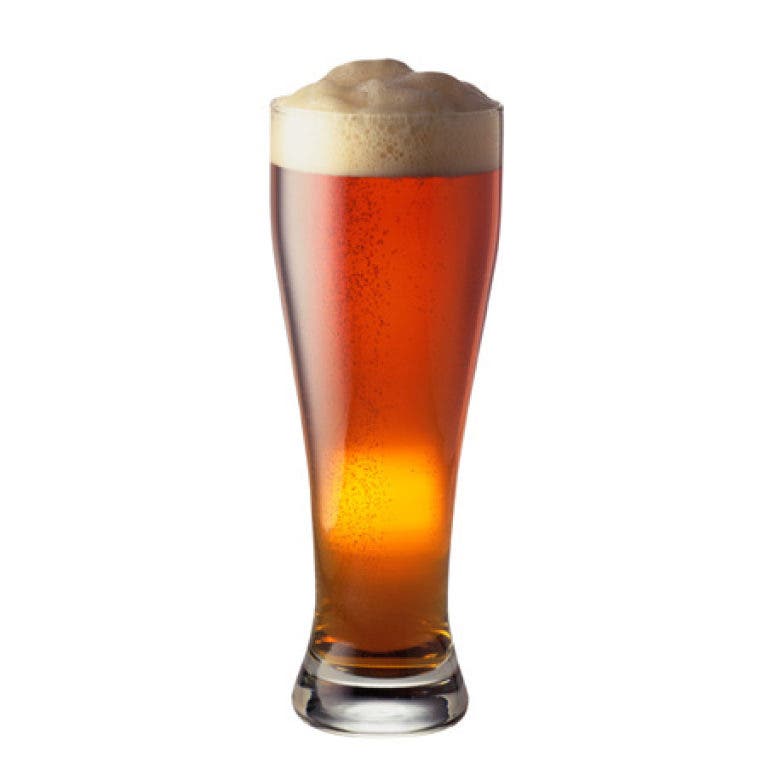
An environmentalist and a non-renewable resource walk into a bar and sit down for a couple of pints. After a while, the non-renewable resource orders two more beers. The bartender turns to the environmentalist and says “I’ll serve you, but not your friend, he’s getting wasted.”
A Trex® deck board walks into a bar and the bartender says “is this a recycled joke?”
Who doesn’t like a good environmental joke? I know I do... so does anyone know one, as it seems I sure don’t. Because reading a recent environmental trade article, I realized the joke’s on me. Here I am, environmental consultant, and I’m toiling away on former pesticide manufacturing and urban waterway Superfund sites. But, based on the article I read, there are environmental professionals that are paid to perform life cycle assessments (LCA)... on beer. Superfund sites versus beer. Damn, I’m clearly in the wrong business.
The LCA is an environmental accounting system useful when looking at the overall environmental impact of a product. Basically, you take a product and analyze all the input materials and energy sources, from cradle to grave, to develop an environmental footprint. Is the product energy intensive? Does it require too much water? Are there toxic byproducts? In this sense you can compare between two or more substitutable products, and maybe look for ways to improve the process.
So, back to the trade article. These guys and gals get a contract to apply all their geekdom to study the environmental impacts of beer - pretty cool. Talk about mixing business with pleasure. If I had their job, I would actually take some work home with me from time to time. As a recap, here’s their LCA in narrative form, skipping all the (yawn) standard deviations, charts, and other techno mumbo-jumbo:
Hops and barley are farmed and the barley is later malted. The raw ingredients are trucked to the brewery, where water is combined with the malted barley and hops in a big kettle (if the end product is Coors Light, there’s a lot of water and little of the other stuff). The mash is boiled and cooled. Yeast is pitched into the wort, which is essentially beer soup and the precursor to the final product. More prolific than those proverbial rabbits, the yeast multiply into the trillions in no time. Then, in a textbook example of symbiosis (a biological win/win situation), the yeast consume the sugar and humans get ethanol as a by-product. Sugar is added to the fermented brew under anaerobic and pressurized conditions to produce carbonation. The liquid is bottled, the leftover solids are composted. A burly truck driver (Hank, according to his name patch) delivers the brew to a bar, where it is refrigerated. A patron, who just got off the phone with his wife to let her know about an important business meeting that just came up, walks into a bar. He orders a beer. Then two more. On his way out, he takes a detour through the men’s room while whistling. He flushes. A short time later, at the sewage treatment plant, the influent volume and nitrogen concentrations increase... well, you get the idea.
And that’s pretty much the LCA of beer, from cradle to grave. The LCA study concluded that the process can be improved by using local ingredients, lessening energy demand, and by gifting a kegerator to your husband on Father’s Day (alright, you got me, I added that last one). All in all, it’s a fairly benign process when compared to other products and consumables.
Well, all this typing is making me thirsty, time to see what’s in the refrigerator (since I don’t have a kegerator - yet).