Community Corner
Libby, A Golden Retriever Lost For 3 Years, Draws Global Following In Rescue Effort
Libby, a golden retriever startled by a loud noise 3 years ago, stays a step ahead of rescuers. But where there's kindness, there's hope.


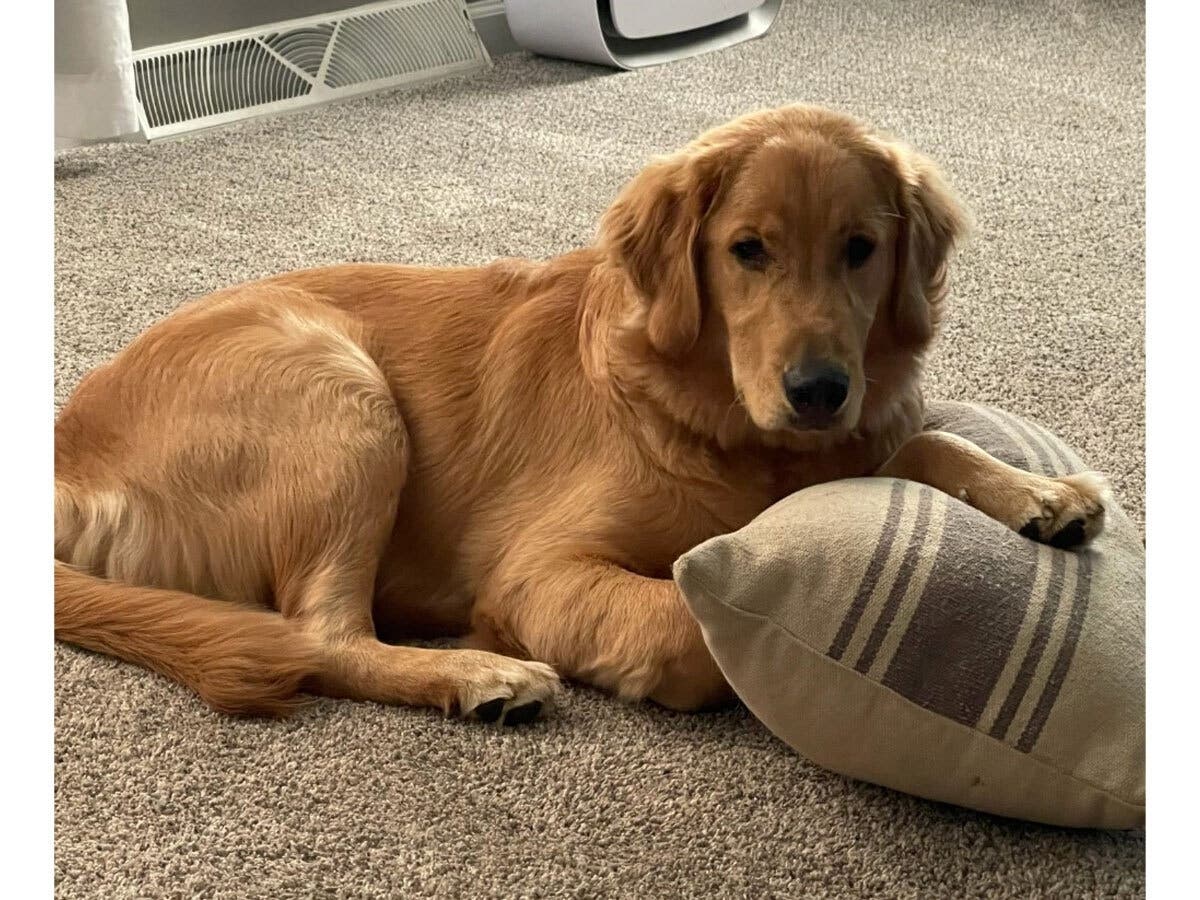
Libby, a golden retriever startled by a loud noise more than three years ago, stays a step ahead of rescuers. But where there’s kindness, there’s hope.
Libby’s story is a powerful testament to persistence, trust and the dedicated people refusing to abandon a dog in survival mode.
For more than three years now, Libby, a dog her owner says is “too smart” for her own good, has been figuring it out for herself.
Find out what's happening in Across Americafor free with the latest updates from Patch.
The 4-year-old golden retriever has weathered blizzards, days of howling wind, and Arctic cold that had to have cut through her dense, water-repellent coat. She has endured three summers of punishing heat, severe thunderstorms and all the extremes the Midwest can muster.
Along the way, Libby — “a big fluffball with a sweet disposition” when Chris Vest got her at 8 weeks old — has wandered into the hearts of hundreds of thousands of people around the world who follow efforts to reunite them on the Paws of Hope Animal Rescue group’s Facebook page.
Find out what's happening in Across Americafor free with the latest updates from Patch.
Threads of kindness run through this story of ordinary people who go all in for dogs they have never met and owners they do not know. Paws of Hope happens to be based in Iowa, but networks like it exist across the country, working mostly quietly and often together to bring lost pets home. Volunteers may search separately, but they share sightings, strategy and hard-won expertise with groups such as The Retrievers in Minnesota and On the Run Pet Rescue in eastern Iowa and western Illinois.
Why Libby Bolted
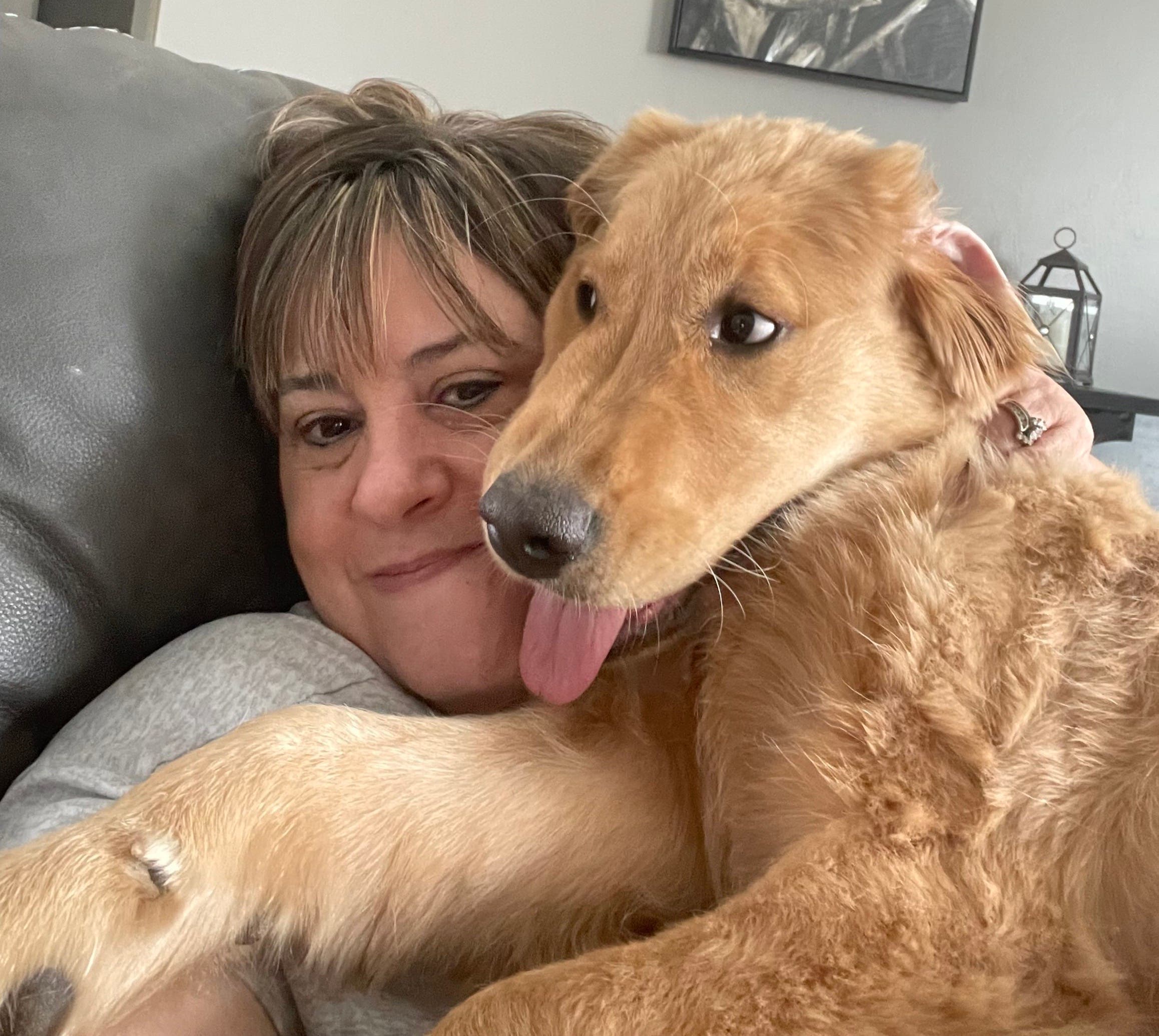
Libby was about a year old on May 26, 2023, the day she was startled by an air compressor outside of Tama, Iowa. She was on a family road trip, about 25 miles — or 17 or 18 miles “as the crow flies” — from her home in Grinnell.
When the dog, who had never lived outside, bolted, she fled into unfamiliar territory. Her body went into survival mode, and the frightened young dog was driven by instinct: get away from danger, not find the way back to safety.
And she was still very much a puppy, with less experience, less impulse control and fewer learned responses to fall back on.
“We looked for days for her and called her. She did show up on June 15, not very far from where she took off,” said Vest, who now lives in Belle Plaine, about 40 miles from Libby’s current home base. “We put up a hunter’s trail cam and kennel trap, but she never showed back up again.”
The Network That Libby Built
Word of mouth spread quickly. Libby had been seen at this location or another one. Ordinary people with no connection to her still keep one eye on the road and the other peeled on farm fields and ditches on the off chance of catching a glimpse of her.
Acts of kindness like that unfold every day in America. Most never travel beyond a town’s Facebook page, a missing-dog flyer or a neighbor’s text thread. It often takes a story like Libby’s to reveal how many people are willing to stop what they’re doing for a stranger, and for an animal that isn’t theirs.
“It puts me in tears just thinking about how grateful I am, whether for the people driving vehicles looking for her, feeding her, or taking turns at the traps,” Vest said. “It’s just overwhelming the way people reached out, donating food and their time. I’m just grateful.”
That solidarity was invaluable early on.
“We kept getting sightings, and we’d put up the trap, and every time we found her, she would move,” Vest said. “Libby’s too smart for her own britches, that’s for sure.”
‘If Not For That Farmer ...’
Trackers have lost Libby for months at a time, but she has stayed in the same general area since fall. Once again, grace presented itself.
“If not for that farmer, we wouldn’t be successful at keeping her contained where she is,” Vest said. “He said we can do whatever we need to do. He still says that. When we worried when he was starting to plant, he said, ‘No, we’ll just plant around it.’”
And so he did, leaving a square mile fallow to give searchers access to leave food and toys carrying Vest’s scent, a tactic meant to lure Libby into the Missy Trap.
Named after a golden retriever named Missy who was also spooked and ran, the large containment trap is made for lost, skittish dogs too wary to enter conventional box traps. Sensors on the door are set for a dog her size, and cameras are fixed at every angle.
Libby has come close to going in far enough to trip the sensors, then cautiously backed away
In the recent video above from a Paws of Hope Animal Rescue camera, Libby grabs a toy with Chris Vest’s scent, plays with it, but does not enter the confienment trap.
‘Living Her Best Life?’
A children’s story practically writes itself in videos showing Libby with skunks, opossums and coyotes.
“On Christmas Eve, Libby followed the skunk like she was inviting her to Christmas dinner,” said Niki Kerr, the volunteer coordinating Libby’s rescue for Paws of Hope.
But Libby is not Bambi.
“People say she is living her best life and we should leave her alone,” Kerr said.
Kerr can’t do that. A vet tech at a low-cost animal clinic in Des Moines, she has spent years doing the delicate work of trapping and reuniting lost pets.
“I don’t find dogs; they find me,” she told Patch in a phone interview as she steered her pickup truck toward Tama.
It was Kerr’s night to leave food for Libby. She, Vest and two other women switch off feeding duty. They don’t want to confuse Libby by adding too many human scents to the area.
A Little Help From Small Friends
Libby’s fairy-tale-like friendship with smaller animals works to her rescuers’ advantage. Skunks and opossums can wander in and out of the trap without tripping the sensor.
“We’ve got cameras out there going in all different directions. The skunk and possum are lifesavers. She sees they can go in there and nothing happens,” Kerr said. “The problem with Libby is, she is ridiculously smart, as most golden retrievers are, and at the survival skill level she is at …”
So far, Libby has stayed one step ahead of Kerr.
“You can’t lose hope,” she said. “Losing hope is the worst thing you can do in this scenario. Sometimes, it’s really [expletive] hard. There are days I bawl my eyeballs out because I don’t know what else to do.”
Libby is being cared for as much as a dog in survival mode will allow.
“She’s a healthy weight, and we give her flea and tick medicine in her food and deworm her. We stay up on things we would stay up on with any dog. We’re doing the best we can,” Kerr said, adding with a laugh, “There are a couple of raccoons that are probably flea-free.”
‘I Bet That’s Libby’
Paws of Hope Animal Rescue began in Mechanicsville, Iowa, after Kim Chapman, her husband, Alex, and neighbor Dayna Stieger helped find a dog that had traveled more than 40 miles in 2021.
“We helped locate this dog, and from there, it was just, ‘This is kind of fun and rewarding at the same time,’ and it grew from there,” Kim Chapman said.
They started by connecting through Facebook lost-pet pages, gradually expanding beyond their own community. In 2022, the Chapmans and Stieger formally organized their work under the umbrella of a 501(c)(3) nonprofit.
In 2025 alone, Paws of Hope tracked and returned 420 lost pets to their families — mostly dogs, but also cats and a rabbit. Most were home within two weeks.
Paws of Hope became involved in the search for Libby after Chapman noticed a social media post about a lost golden retriever about 12 miles from where Libby disappeared.
“I bet that’s Libby,” someone commented.
As it turned out, it was someone else’s dog and someone else’s happy ending.
Libby’s Star Power
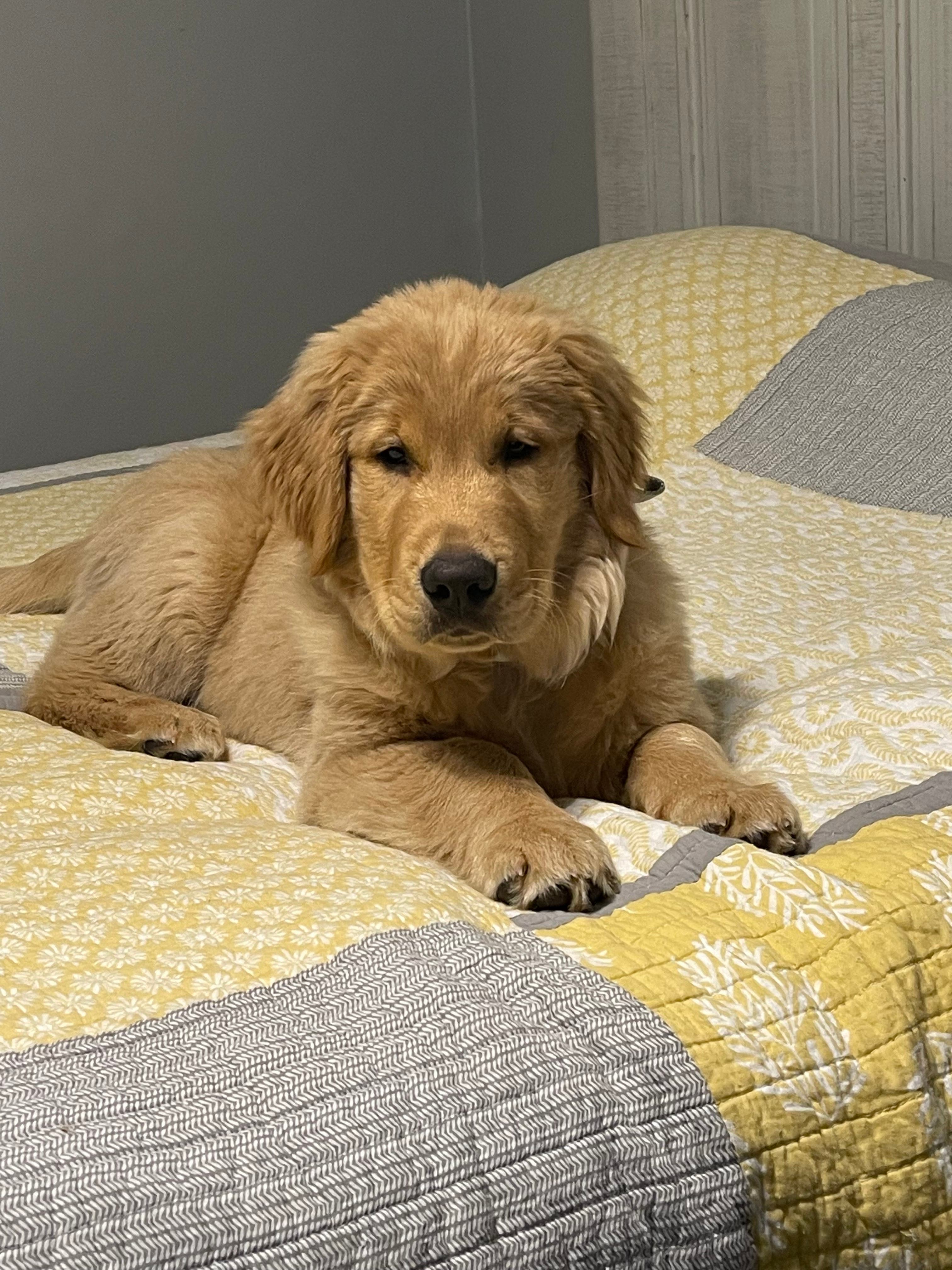
But it was something of a new beginning for Paws of Hope. The group would go on to help build the network around Libby — tracking sightings, sharing information and trying to understand the patterns of a dog who had learned to live just beyond reach.
“Where she goes when she’s not there,” Chapman said, “that’s the mystery we can’t figure out.”
Chapman isn’t sure how the group’s page rose to the top of Facebook’s algorithm, but its following grew exponentially once Paws of Hope joined the search for Libby. Kerr and three others are now officially part of the group, expanding its reach and impact.
Not every lost pet has that kind of star power. If there’s one thing Chapman would like Libby’s social media fans to know, it’s that other reunions deserve celebration, too.
“We love Libby and are doing everything in our power for her,” Chapman said. “We also need to celebrate the other animals we’ve been able to bring back home.”
And it all started with a dog whose name few people know but touched something deep in the Chapmans and their friend. They simply thought they could help.
What Lost-Pet Groups Need Most
For anyone hoping to build a similar lost-pet recovery group — whether in Iowa or Illinois, Connecticut or California, Pennsylvania or anywhere else — Chapman said the work has to start with trust.
That means being specific about money. Paws of Hope accepts donations, but Chapman said donors are more likely to give when they know exactly what the money will buy: dog food, trail cameras, equipment or a new trap.
“It fluctuates all year,” she said. “When it’s very specific, people are more apt to help. We’re not just asking for random donations. We’re very upfront about why we need it.”
Some traps cost more than $700, she said. Paws of Hope has raised money by letting donors name a trap for $500, a personal touch that also shows supporters where their money went.
“It is being used exactly for what we said it would be used for,” Chapman said. “That’s important for people to see. Unfortunately, there are so many people who scam and take money and run. I want our donors and supporters to know exactly what’s going on.”
The Business Behind The Business
The other requirement is organization.
The volunteers have full-time jobs and responsibilities outside rescue work. Paws of Hope relies on constant communication among its volunteers, often through group chats where members track who is working on what.
That matters because lost-pet recovery can quickly become chaotic. Without coordination, multiple people may end up trying to help the same family while another case gets missed, wasting time, energy and equipment.
Social media helps, but it can also consume the work it is meant to support.
“If I sat on Facebook every day, we wouldn’t be looking,” Chapman said.
Still, the online community matters. Posts bring tips, donations and volunteers. They also give the group a chance to celebrate each reunion — not only the high-profile cases like Libby, but the quieter ones that end with another pet back where it belongs.
New And Lasting Friendships
For Chapman, the work has brought something else, too: friendships forged in the strange, exhausting world of lost-pet recovery.
“I’ve found some of the best friendships through doing this,” she said. “Not just Libby, but through the whole rescue world itself.”
It’s the same with Vest and Kerr.
“Niki and I have gotten very close,” Vest said. “She goes at all hours of the night and sometimes stays all night in her truck, then goes to work a full-time job. She’s just an incredible lady.”
If not for Kerr and the others, Vest may have given up more than once. She wondered if the people urging her to stop were right. Was Libby living her best life?
“In survival mode, everyone’s a stranger,” she said, pausing before adding, “even her owner.”
‘As Long As She’s Out There’
One of the lowest points came last winter, after Vest, who stands 5 feet tall, trudged through snow past her knees to leave food for Libby.
“I thought I was going to die, and no one would be able to get to us,” she said. “The snow was so deep, she wasn’t going to get to the food, anyway. It was 5 degrees, and she would’ve been hunkered down in a safe place.”
Still, Vest kept going. To do less would feel like a betrayal — of her dog and of the community that had risen around them both.
“As long as she’s out there, I’m going to keep going,” she said.
Vest said she “would’ve never, ever guessed” that people from all over the world would become so invested in Libby’s story.
“It’s amazing and overwhelming at the same time,” she said. “I just didn’t know people were so passionate about things like this.”
When Libby Comes Home
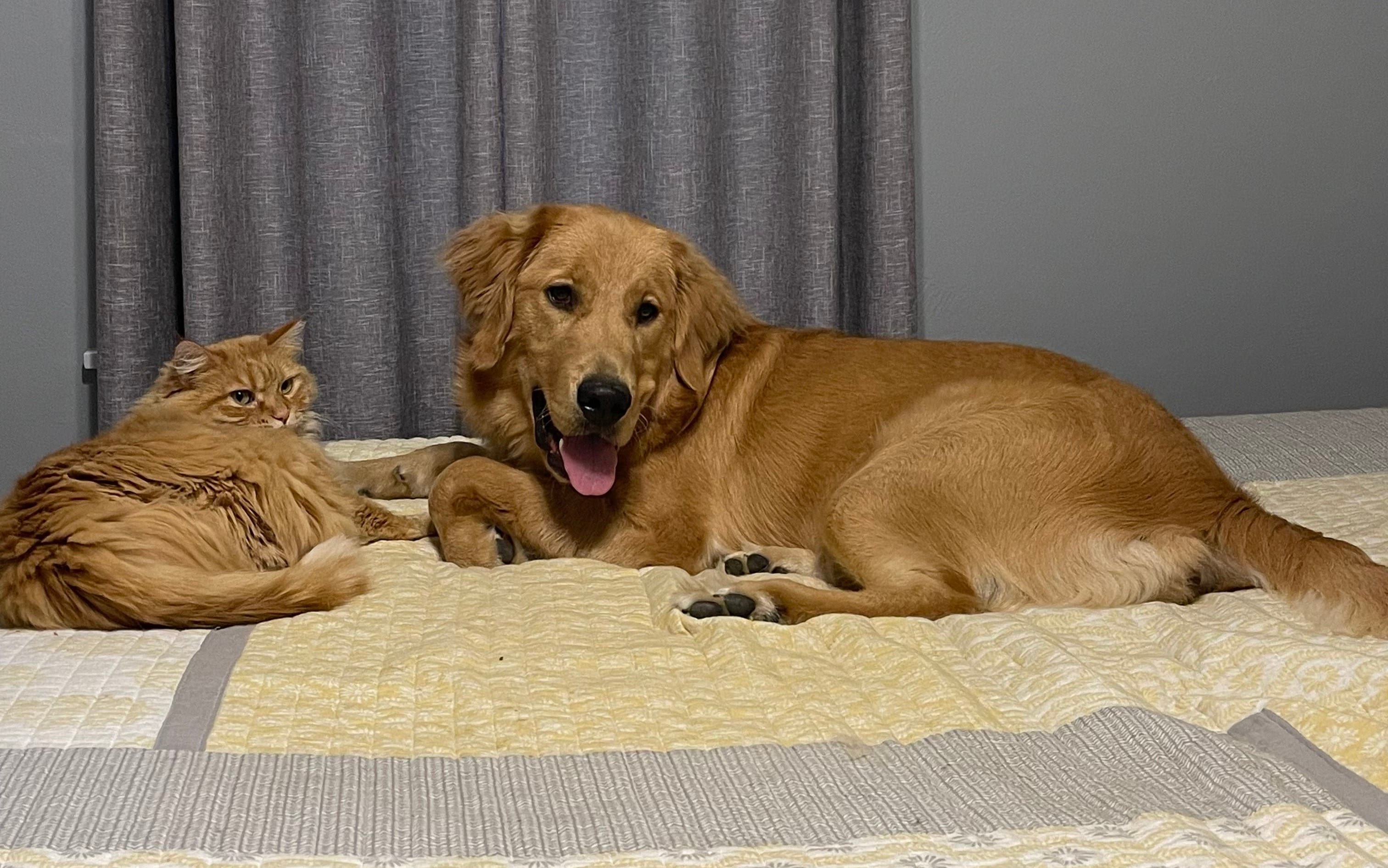
Driving an 80-mile round trip to feed Libby three or four days a week after working a full day as a manager at a mid-sized property-casualty insurance company is grueling but worth it.
“When I feed, we think she does better, really sniffs around. It’s possible that she would still remember after three years,” Vest said. “Every day’s a new day. I have to keep the hope in order to keep the team. It truly is about teamwork.”
She has everything ready for when Libby comes home.
Her garage has been transformed into a decompression chamber of sorts, away from other house pets and stimuli that might steal Libby’s focus or cause her anxiety. A kennel in the basement can be used on hot days.
The team behind Vest promises her dog will once again be the sweet, outgoing dog who got lost three years ago.
“People don’t understand survival mode. They think she’ll be feral, but dogs snap out of it fairly quickly if they’re domesticated in the first place,” Kerr said.
For now, Libby remains just out of reach — close enough to be fed, watched and worried over, but not close enough to come home.
The work around her has become its own kind of promise: that a dog in survival mode is not a lost cause, that patience can be a rescue strategy, and that ordinary people, organized around one animal’s absence, can make that absence easier to bear.
Resources
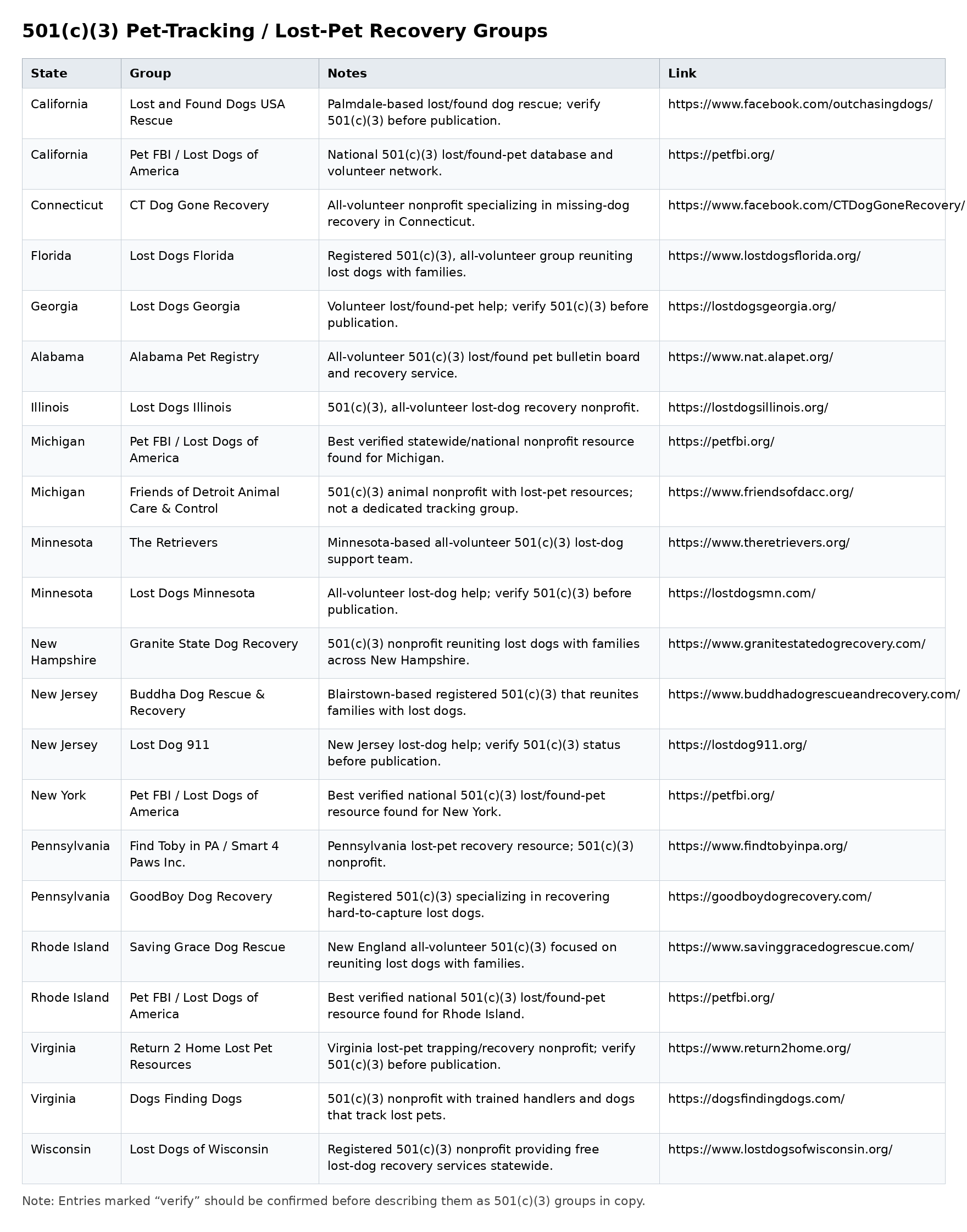
If you’ve lost a pet, the organizations in the table below may be able to help.
Get more local news delivered straight to your inbox. Sign up for free Patch newsletters and alerts.