Neighbor News
Guarini Justice Complex Achieves LEED Gold: Netta Leads the Way
Frank J. Guarini Justice Complex Achieves LEED Gold: A Milestone in Sustainable Civic Architecture

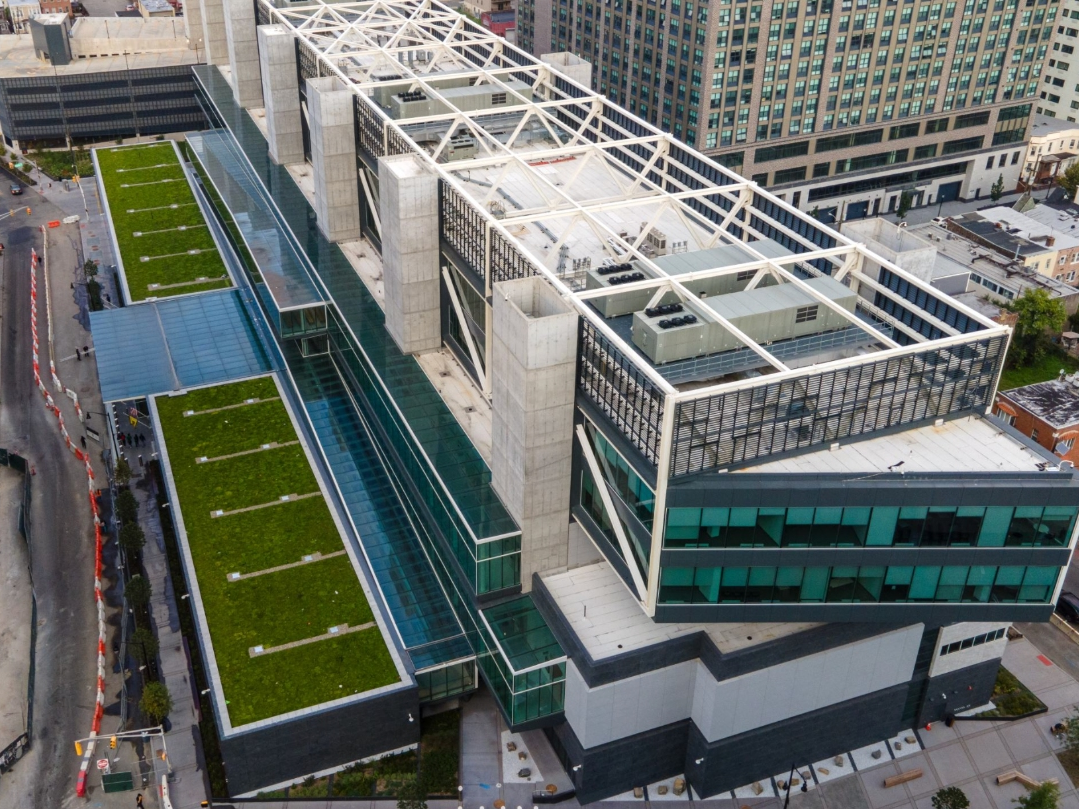
In a significant achievement for Hudson County and sustainable development in New Jersey, the Frank J. Guarini Justice Complex has officially earned LEED Gold certification, marking it as a premier example of environmentally responsible civic architecture. This prestigious designation, awarded by the U.S. Green Building Council, recognizes the complex's comprehensive approach to sustainability, energy efficiency, and community-centered design principles.
Located in Jersey City, the complex represents a transformative addition to the urban landscape while setting new standards for courthouse facilities nationwide. The certification underscores the successful collaboration between Netta Architects, county officials, and various stakeholders in creating a structure that balances judicial functionality with ecological responsibility.
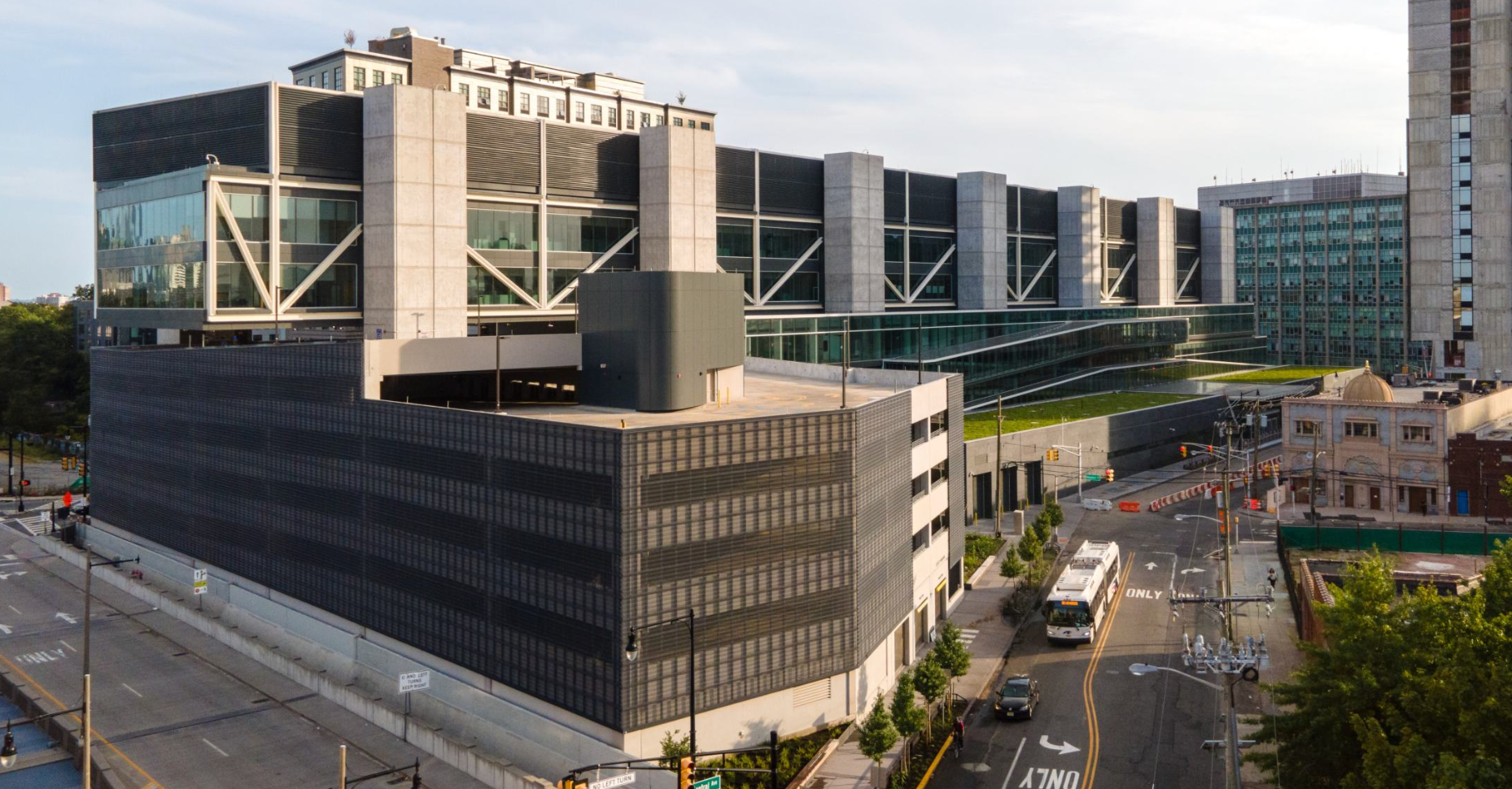
Credit: Netta Architects
Find out what's happening in Scotch Plains-Fanwoodfor free with the latest updates from Patch.
A Sustainable Vision Realized
The journey toward LEED Gold certification began during the initial planning phases when the Hudson County Improvement Authority recognized an opportunity to reimagine what a modern justice complex could be. Rather than simply replacing aging facilities, the vision expanded to address multiple community challenges simultaneously.
"This certification validates our commitment to building infrastructure that serves both current needs and future generations," said a representative from the Hudson County Improvement Authority. "We wanted a facility that would not only modernize our judicial system but would do so while minimizing environmental impact and maximizing resource efficiency."
Find out what's happening in Scotch Plains-Fanwoodfor free with the latest updates from Patch.
The complex's sustainable features include an innovative water management system that reduces consumption by over 40% compared to conventional buildings of similar size. Energy-efficient HVAC systems, coupled with a meticulously designed building envelope, contribute to significant energy savings while maintaining optimal comfort conditions throughout the varying spaces within the complex.
Solar-reflective roofing materials mitigate the urban heat island effect, while strategically placed windows and light wells maximize natural illumination, reducing the need for artificial lighting during daylight hours. This thoughtful integration of passive design strategies with cutting-edge technology embodies the holistic approach that earned the project its prestigious certification.
Netta Architects: Designing for the Future While Honoring the Past
For Netta Architects, the project represented an opportunity to demonstrate how civic architecture can balance historical context with forward-thinking design. The firm's approach carefully considered Jersey City's architectural heritage while introducing contemporary elements that reflect the evolving nature of judicial proceedings.
"We're incredibly proud to be part of a team that's shaping a more sustainable future through thoughtful design," noted a principal at Netta Architects. "The Guarini Justice Complex demonstrates that public buildings can be both functionally superior and environmentally responsible without compromising on architectural excellence."
The firm's design philosophy emphasized flexibility and adaptability, recognizing that judicial needs will continue to evolve in coming decades. Courtrooms feature modular components that can be reconfigured as requirements change, while technological infrastructure supports current virtual hearing capabilities with capacity for future advancements.
Perhaps most notably, Netta's design team worked diligently to ensure the building would serve as a community asset beyond its judicial functions. Public spaces were conceived as extensions of the surrounding neighborhood, with accessible plazas and ground-floor areas that invite civic engagement rather than institutional detachment.
Beyond the Building: Community and Urban Revitalization
The Guarini Complex represents more than just a sustainable building—it serves as a catalyst for neighborhood revitalization and improved urban functionality. The project addressed longstanding concerns about traffic flow in the area, introducing new circulation patterns that alleviate congestion while enhancing pedestrian safety.
New public spaces surrounding the complex have transformed previously underutilized areas into vibrant community gathering spots. Native landscaping not only provides aesthetic appeal but also supports local biodiversity and reduces maintenance requirements, demonstrating how sustainable practices extend beyond the building itself.
"This project exemplifies what can be achieved when sustainability is considered at every scale—from building systems to urban planning," explained a sustainability consultant who worked on the certification process. "The complex doesn't exist in isolation; it's designed to improve its surroundings and contribute positively to the city's ecological footprint."
Local businesses have already reported increased foot traffic since the complex opened, suggesting that the project's economic benefits extend into the surrounding commercial district. This ripple effect was among the goals articulated during early planning sessions, when stakeholders emphasized the importance of leveraging public investment for community-wide advantages.
Innovation in Judicial Architecture
The achievement of LEED Gold certification is especially significant given the unique challenges presented by courthouse design. Security requirements, operational complexities, and the need to accommodate diverse user groups typically place constraints on sustainability initiatives in judicial facilities.
The complex overcomes these challenges through innovative approaches to security design that maintain necessary protections while minimizing energy consumption. Secure areas utilize sophisticated access control systems that operate with remarkable efficiency, while public spaces employ passive surveillance principles that reduce reliance on energy-intensive monitoring equipment.
Courtrooms represent another area where innovation shines. Traditional courtroom designs often struggle with acoustics, lighting, and ventilation—challenges that typically lead to high energy consumption. The Guarini Complex introduces next-generation courtrooms featuring precision-engineered acoustics that enhance clarity while reducing the need for amplification. Lighting systems respond automatically to occupancy and available daylight, while ventilation adapts to occupancy levels in real-time.
These technologies don't merely save energy—they create superior environments for the administration of justice. Judges have reported improved ability to hear testimonies clearly, while attorneys note that visual presentation systems enhance their ability to present evidence effectively.
A Model for Future Development
As municipalities nationwide face the dual challenges of aging infrastructure and increasing environmental concerns, the Guarini Justice Complex offers valuable lessons in sustainable redevelopment. The project demonstrates that with thoughtful planning and interdisciplinary collaboration, even the most complex institutional buildings can achieve impressive sustainability benchmarks.
"We hope this project serves as inspiration for other counties and municipalities considering facility upgrades," remarked a county official involved with the project. "The initial investment in sustainable systems pays dividends not just environmentally but economically over the building's lifecycle."
Industry experts have already begun studying the complex as a case study in sustainable judicial architecture. Particular attention has focused on how the project team navigated the often-competing demands of security, public access, and environmental performance—developing solutions that enhance rather than compromise each priority.
Looking Forward: The Legacy of Sustainable Design
The LEED Gold certification represents not an endpoint but a milestone in the complex's ongoing sustainability journey. Operational plans include continuous commissioning of building systems to ensure optimal performance, while a green purchasing policy guides decisions about supplies and maintenance materials.
Educational components integrated throughout the facility inform visitors about sustainable features, fostering environmental awareness among the thousands of citizens who will utilize the complex annually. Interactive displays highlight energy and water savings in real-time, making abstract concepts of sustainability tangible and relevant.
As Jersey City continues its evolution into a model of urban sustainability, the Frank J. Guarini Justice Complex stands as testament to what can be accomplished when public institutions embrace environmental responsibility. The gold certification shines as brightly as the vision that inspired it—a beacon of sustainability in civic architecture that will influence judicial facilities for generations to come.
Through thoughtful design, technological innovation, and unwavering commitment to sustainability principles, the complex achieves the rare distinction of excellence in both form and function. It honors its namesake, Frank J. Guarini, through architecture that embodies the highest ideals of public service and environmental stewardship—truly justice served with a golden standard of sustainability.