Business & Tech
Here's Where Secaucus' Newest Data Center Will Go
Here's how data centers have increased your electric bill:


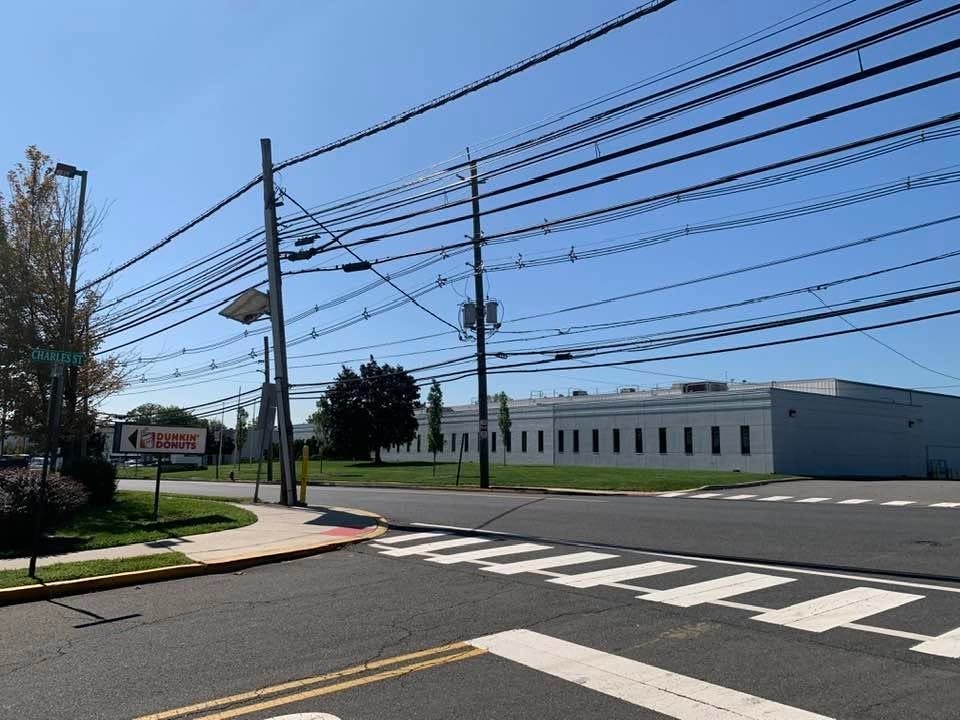


SECAUCUS, NJ — Here's where Secaucus' newest data center is proposed to go:
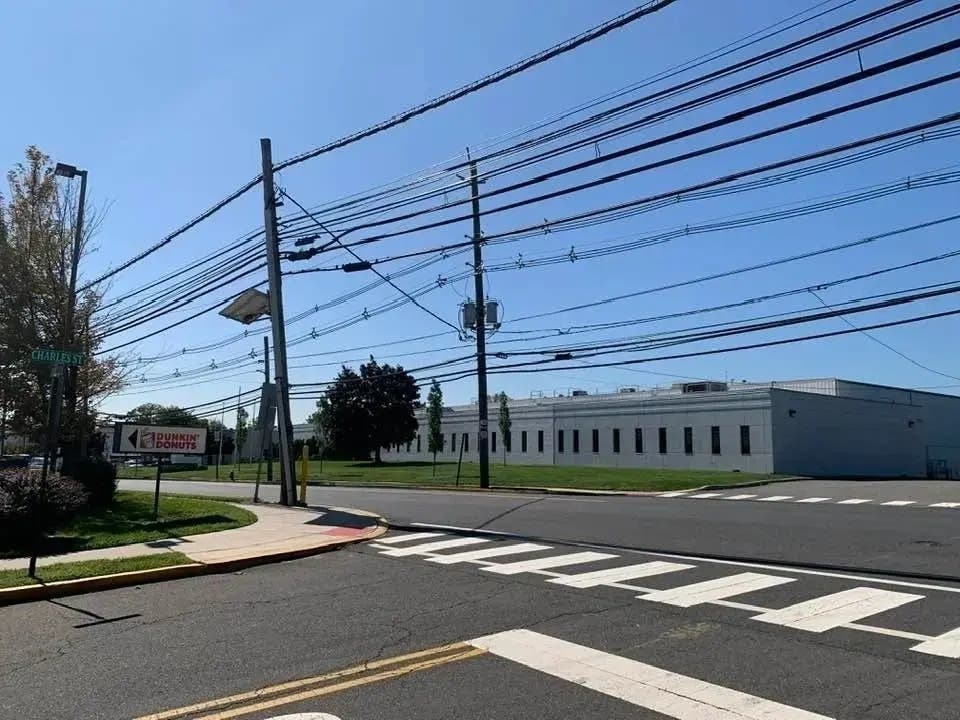
It will be built at 215 County Avenue, at the intersection with Louis Street, in a vacant building that used to house a printing company. The data center would be located right next to Shetik Field youth soccer fields.
CoreSite will run it. As Patch reported in June, CoreSite already has a very large data center on Enterprise Avenue, so this would be their second data center in town, if approved.
Find out what's happening in Secaucusfor free with the latest updates from Patch.
Will it be approved? The New Jersey Sports & Exposition Authority has the first say. (For reasons that are unclear, the NJ Sports & Exposition Authority is pretty powerful in Secaucus and has control over land use in almost 90 percent of town.) Mayor Mike Gonnelli said data centers are already permitted under their land-use rules, and he said Tuesday he sees no reason why they would deny it.
After that, CoreSite will need to apply before the Secaucus Planning Board.
Find out what's happening in Secaucusfor free with the latest updates from Patch.
"If they need a variance for something simple like parking, we'll approve that. And if it needs no variance, yeah it'll likely go through. If we reject their application, they'll sue us and they'll win," said the mayor.
Gonnelli likes data centers. The town published its official position on data centers in the August town newsletter, which was mailed to all residents. Data centers pay a lot in taxes. Data centers don't bring a lot of noise or traffic to streets.
In fact, this article called Secaucus "the quirky town that quietly runs the Internet," because the town has such a high concentration of data centers (nine currently open, two more coming, including CoreSite). Some of the biggest players in the AI world, including CoreSite, Equinix, H5 and Evocative, all operate right here in tiny Secaucus.
But have data centers made New Jersey's electric bills higher?
Yes. Here's how:
It's well known that data centers require massive amounts of electricity to operate. And data centers do pay their own electric and water bills (they use a lot of water to cool their servers down).
But because so many data centers are opening now and in the future, PJM Interconnection, which runs the electrical power grid in 13 states, including New Jersey, has had to buy a lot more electricity so the grid can handle data centers coming online.
Data centers account for 70 percent of the projected increase in demand to the electricity grid, PJM said last year. PJM trickles those costs down to all ratepayers, or customers.
"Supply has not kept pace with this unexpected increase in demand. As a result, utilities paid more for future capacity, and those costs are passed on to customers," reported this article titled "Why Are New Jersey’s Electricity Bills Going Up?" "In PJM’s most recent auction in early 2025, prices rose higher than expected due to a surge in projected demand. PJM attributes this increase to two main factors: 1. Rapid growth in energy use for expected data centers, and 2. A shortage of new, reliable energy projects being built and connected to the grid."
Also, utility companies have had to make improvements to the grid, such as building new substations, transformers and transmission upgrades, to accommodate the surge in demand from data centers. Those costs get passed down to the average PSE&G customer as well.
And that's why PSE&G's New Jersey residential electric rates have increased nearly 30 percent since 2024.
The town of Secaucus addressed this in its August newsletter. The town said "a data center located anywhere in the 13 states of PJM's service area will have the same impact as if it were in Secaucus."
Is that true? Yes, said Anjuli Ramos-Busot, director of NJ Sierra Club. Data centers built anywhere on PJM's electric grid raise rates for all ratepayers across the grid, she said. Data centers just demand too much energy so we all pay together when the grid operator needs to buy more electricity.
But Neil Osnato, CEO of Persistence Analytics Group, which studies AI infrastructure and its impact on the electric grid, said it's not so simple.
"I would describe the town’s statement as partly true, but too broad as written," said Osnato. "At the PJM level, a large new data center anywhere in the 13-state system can increase forecast demand. So Secaucus is correct that the impact of data-center growth is not confined to the municipality where a facility physically sits."
"But that does not mean a data center anywhere in PJM has exactly the same impact on everyone’s electric bill," he continued. "PJM uses locational pricing. Capacity can have different zonal prices, wholesale energy prices vary by location because of congestion and transmission losses, and transmission-upgrade costs can be allocated to particular utility zones or neighboring zones rather than equally across all 13 states. There is also the local distribution system. A project that requires a new substation, feeder, transformer or other local utility infrastructure creates a different cost question from the regional PJM capacity market."
"To determine whether the existing Secaucus facilities have contributed to costs, you would have to trace their actual loads, the utility infrastructure built to serve them, and how those costs were allocated," he said.
Instead of just banning data centers outright, New Jersey Gov. Mikie Sherrill is trying to address this problem by making data centers pay a higher rate for their electricity than average homeowners do.
Osnato praised the state of New Jersey for taking action.
"(New Jersey's) new Data Center Fair Share law creates a separate rate structure for large data centers and directs (the state) to prevent other customers from subsidizing the energy and grid infrastructure they require," he explained.
"The state is now trying to ensure that large data centers pay for their own energy use and associated grid infrastructure rather than shifting those costs to other customers."
That new rate change just took effect this summer. Let's see if it will lower electric bills.
So, that's where we are with data centers. Environmental groups say data centers can pollute, pointing to Friday's 5,000-gallon diesel leak at Equinix, and people who live near them say they emit a constant loud buzzing. Small-town mayors like Gonnelli, a Democrat, love them because they pay a lot in taxes. And Republican President Donald Trump supports them, as he says America needs advanced AI to stay competitive with China.
Data Centers Are One Reason New Jersey Electric Bills Have Gotten So High (June)
Get more local news delivered straight to your inbox. Sign up for free Patch newsletters and alerts.