Sports
A Little League Umpire's Tale: Ben Brown is Mr. Blue
Columbia High School senior is the man in charge on the South Orange-Maplewood baseball fields.


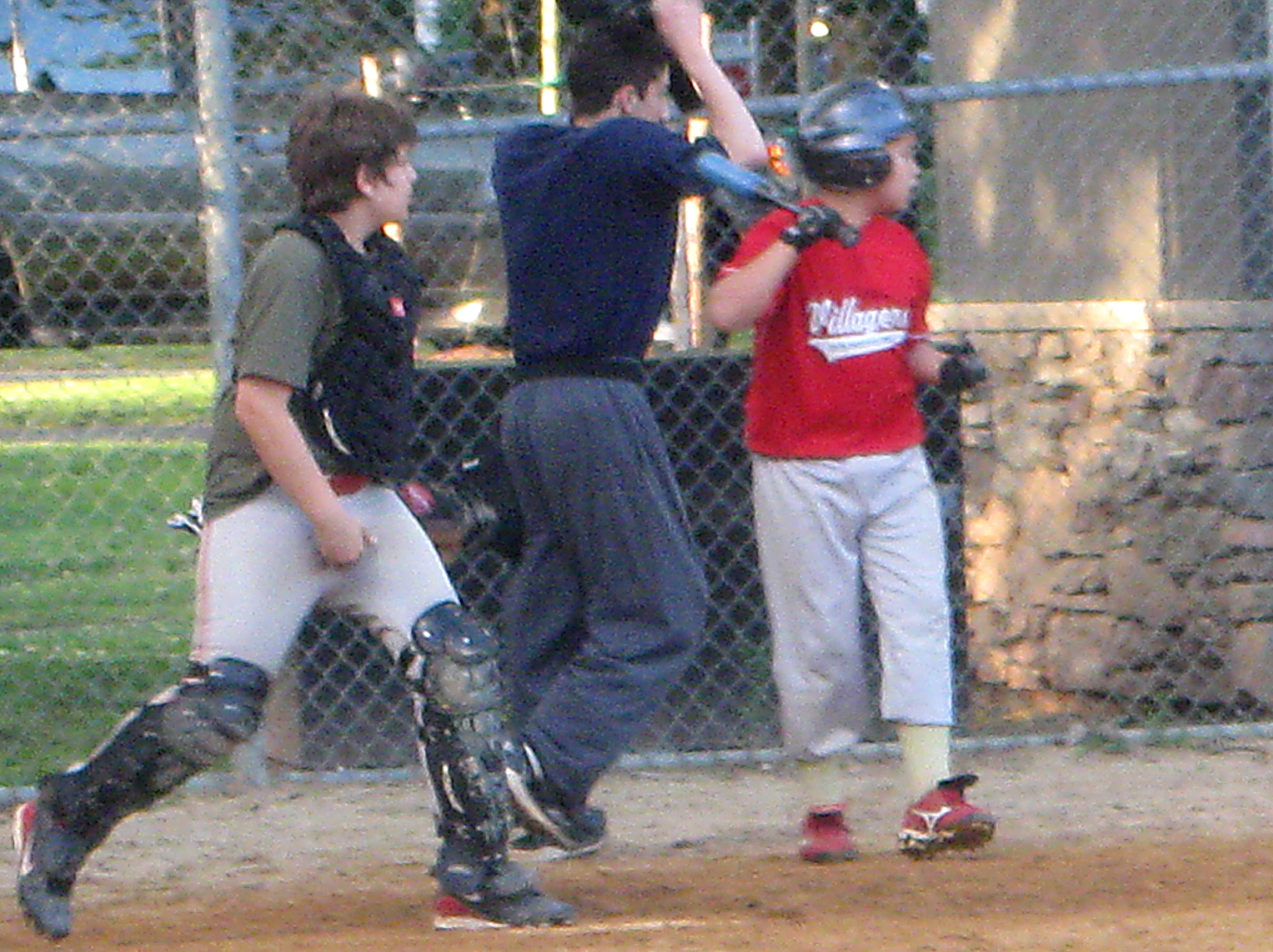


A major rite of passage of the teen years is finding a job, earning money and hopefully beginning the process of learning responsibility. For Columbia High School senior Ben Brown, the job he has held for the past five years is more than a way to make some extra cash. For Brown, an umpire in the South Orange- Maplewood Cal Ripken Baseball League, his job is truly a passion.
Brown, now in his fifth year of umpiring, has earned the respect of players, coaches and other umpires, largely because of the passion and dedication he brings to the position. "I love baseball," Brown stated, "being around the game, the intricacies and nuances. I embrace responsibility and I look forward to being that symbol in the ballgame."
Like practically all umpires, Brown started out at a young age playing baseball. The Cal Ripken league allows those 13 or older to train to become an umpire. When Brown turned 13, he knew that he wanted to give umpiring a try.
Find out what's happening in South Orangefor free with the latest updates from Patch.
Umpires go through approximately 20 hours of training per year, which includes technique, rule interpretation and how to handle a ball game and deal with coaches and players. First- and second-year umpires typically go through basic training. Those returning for three or more years attend an advanced umpiring class.
Brown raves about the training: "The training is good." He adds that Charlie Lindsey, the umpire who delivers the training, "has a wealth of experience and is always there if we need to consult about rules."
Find out what's happening in South Orangefor free with the latest updates from Patch.
Brown umpired his first game back in 2006 and recalls "being extremely nervous." Brown was pulled aside by one of the league's experienced umpires, Dom Chiereco, who asked him if he had any questions and assured him that he was prepared to do the job. Brown mentioned that people like Chiereco and Lindsey have had a strong influence on his development as an umpire.
As Brown has gained experience, he has been assigned greater responsibility. A first or second year umpire will typically be assigned games played by 9- or 10-year-olds. Brown is now one of the go-to umpires for the 12-year-old games played on the 50/70 field. Umpiring becomes more complex at this level, since a player is allowed to take a lead off and steal a base. Correct interpretation and explanation of the balk rule also comes into play since pitchers are trying to pick these runners off base.
Brown is also typically given assignments to work playoff semifinal and championship games, a responsibility that is only given to the top umpires. Brown has even been assigned to work a few Babe Ruth games. The Babe Ruth level, for players 13-15, approximates real baseball the most since it is played on a diamond that has the same base dimensions as professional baseball—with the pitchers mound being 60' 6" inches from home plate and the bases being 90' apart.
For Brown, the most important thing about umpiring is confidence, something that a first-time 13-year-old umpire usually doesn't have.
"You have to be firm, sure of yourself. There was level of ambiguity when I first started that [with experience] I overcame," he said.
Chip Nolet is the Supervisor of Umpires for the South Orange-Maplewood Baseball League and has worked with Brown since the beginning of his umpiring career. Nolet mentioned that the first year is crucial for all young umpires and Brown was no different.
"Ben was not physically a big kid, but I knew that if he could get through the first year he was going to be good," he said.
Nolet has been impressed with Brown's work ethic: "He studies, he learns the rules, he runs the game with self confidence. He is dealing with adults, letting them know [he's] in charge."
Nolet feels that umpiring is great training for kids: "It is people skills, responsibility, being on time, managing a situation that can become heated." Nolet has been so impressed by Brown that he even wrote one of Brown's college recommendation letters, not such a surprise since Brown's college essay was about his experiences and growth as an umpire.
An excerpt from Brown's essay speaks to his love for the game of baseball:
"I love it. I'm crazy about baseball and enjoy being around the game. I'm fascinated by its subtleties, the poetry of a well-turned double-play, and the strange and wonderful intricacies of the rulebook. I'm too old to play Little League and I'm not good enough to make my high school team. Umpiring keeps me connected to baseball. I like the responsibility—and, yes, the pressure—of umpiring."
To an outsider, umpiring may seem simple, but it is a job that is both physically and emotionally demanding. Umpires can spend two or more hours on their feet, and, while players can sit on the bench if they are not in the field, umpires get no such break.
Furthermore, most games only utilize one umpire, which means the umpire is behind the plate and not so infrequently being hit by wild pitches, foul balls and the occasional errantly tossed bat. Bumps and bruises are part of the job. Home plate umpires also wear chest protectors, shin guards and a face mask, a suite of armor that is not the most comfortable apparel on days when temperatures can reach into the 90s.
Brown feels one of the most difficult aspects of umpiring behind the plate is the requirement that you "have to keep your head absolutely still" as the pitch comes in. This is so that the umpire can accurately see whether the pitch is a ball or a strike. "It's a natural reflex to move your head," stated Brown, "but you have a job to do."
Even though working the plate is strenuous, Brown feels that it is actually more difficult and challenging to work as a base umpire. "Bases are tough because you have to do a lot of running," said Brown. "You have to get a good angle, stay out of the way of the players and be in position to make an accurate call. In games where there is a plate and base umpire, the base umpire is responsible for covering all bases except for home plate, which means that "there is a bigger area to cover."
One mark of a good umpire is his or her ability to interact with coaches and players and control the game so that it runs smoothly. Brown mentioned that the coaches as a group "have always respected him. They know how I work; they know I'm a dedicated and capable umpire."
Brown has supplemented his league training by doing outside research. He mentioned the book "As I See Them" by Bruce Weber as a "thoroughly enjoyable book that made me a better umpire."
From time to time disputes about calls will arise, but Brown is very clear on how he handles these. "As an umpire, whether you are 13 or 30 you have to be an adult about it. I let the coach have their say and respond in a calm, rational manner."
As one of the veteran umpires, Brown is sometimes paired with younger umpires. He commented that "it's fun to pass on knowledge, and help them out. I want nothing but the best for this league." Brown played baseball up through the Babe Ruth league age limit of 15. He mentioned that "he misses playing, but as long as I have a place in the baseball community, I am a happy man."
By umpiring Brown feels "like I am reliving my childhood again. You're a teacher. I take it upon myself to foster a love of the game. You have to keep it fun, but professional at the same time."
Come this fall, Brown will be a freshman at Lafayette College in Easton, Pa. Academics are definitely on his mind but so is umpiring. "I've done a search for Little Leagues close to the college and I will send letters offering my services," said Brown. While his ultimate career plans are still undecided, Brown has not totally ruled out pursuing umpiring either at the high school, collegiate or professional level. "If I'm still dong it (umpiring) after college, I'll definitely give it some serious thought."
Probably the ultimate compliment that can be paid to Brown is that, in his five years of umpiring, he has never once ejected a coach or player from a game. Brown explained that he never rules out an ejection but that "you have to be absolutely sure at this level" before you would do this.
"At this level it's about the kids. You don't want the focus on yourself. You don't want to take away from the fun of the game," he said.