Community Corner
Law Enforcement Officers Train To Communicate With Autistic Individuals
Nearly 300 local, county and federal officers gathered at Union County College in Cranford to learn to effectively communication with those who have autism.

The Centers for Disease Control predicts that one in 49 births in New Jersey will result in a child diagnosed with an autism spectrum disorder. Subsequently, the chances of a law enforcement official encountering someone in the field with the disorder is significant and could present problems for those not properly trained to deal with such individuals. That's where Dennis Debbaudt comes in.
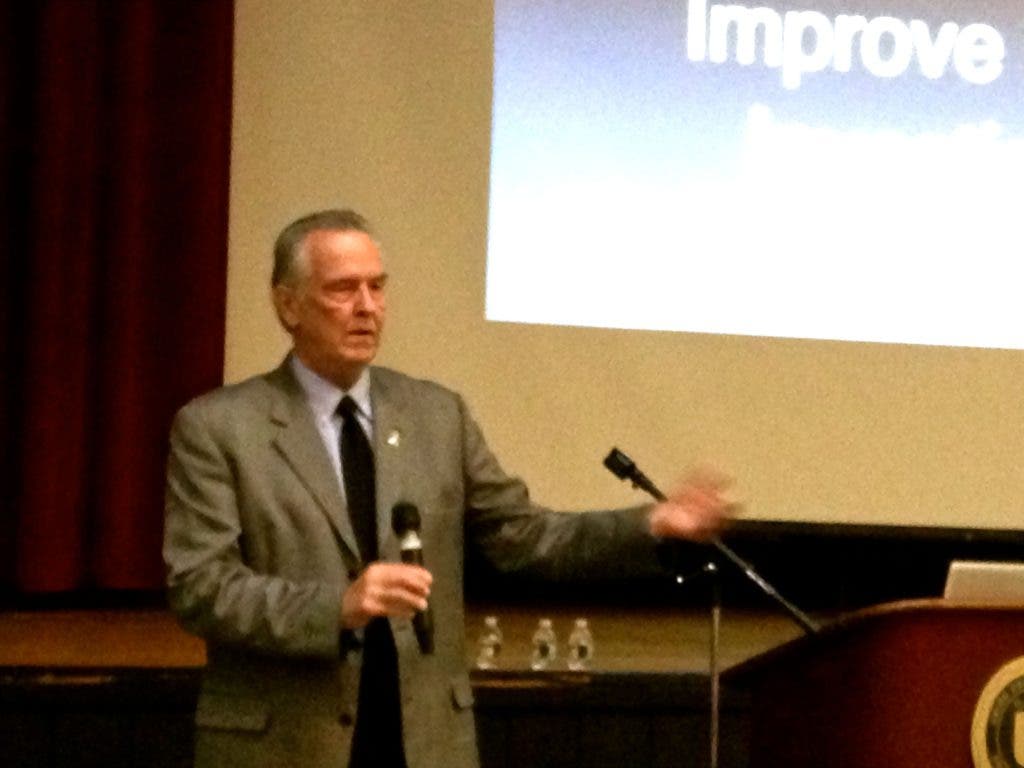
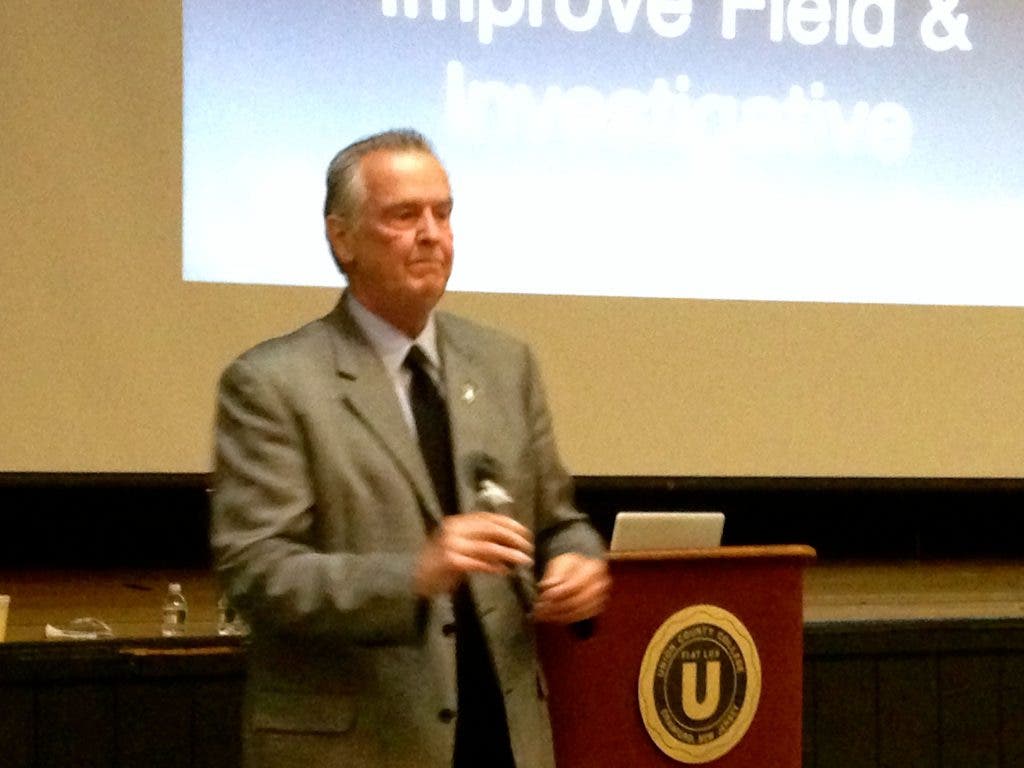
A renowned author and internationally acclaimed autism instructor, Debbaudt spoke to an assembly of nearly 300 law enforcement officials from Union County and more than 100 other local, state and federal agencies during a special day-long training session at Union County College in Cranford Monday.
The focus of the training — which was coordinated by Union County Prosecutor Theodore Romankow's Office — was to give officers a better understanding of how to deal with people with autism when responding to emergency calls or interacting with the community.
Find out what's happening in Springfieldfor free with the latest updates from Patch.
Most importantly, it taught them how to effectively communicate with those who have some form of autism.
"Communication, for some of us, is relatively easy. For others, it's harder," said Assemblyman John Bramnick, who represents Union, Morris and Somerset counties. Bramnick addressed the attendees at the beginning of the training.
Find out what's happening in Springfieldfor free with the latest updates from Patch.
“Autism is on the rise in New Jersey and interaction between law enforcement and those who are autistic occurs more frequently. The communication skills necessary to meet this challenge was the goal of today’s important seminar,” Bramnick added in a statement following the session, which was also briefly attended by NJ Attorney General Jeffrey S. Chiesa. “This was a very important event for law enforcement and I was pleased to join with Attorney General Chiesa, Prosecutor Romankow and Mr. Debbaudt.”
Janet Parmelee of the Morris-Union Jointure Commission — a regional public school district that provides services to special needs students — explained that some of the behaviors of autistic individuals, such as outbursts, may be misunderstood by the public and result in calls to law enforcement. Debbaudt's training was not only meant to help officers identify those with an autism spectrum disorder, but to maintain the safety of both those individuals and law enforcement, especially in situations when police have only seconds to react.
According to Debbaudt, common reasons for autism-related 911 calls may include various situations such as the actions of a parent or caregiver that may be misinterpreted by an outsider as assault or persons who display unusual behavior in unfamiliar situations such as stores.
"How do you do the right thing when you only have seconds to make a decision," Union County Sheriff Ralph Froehlich said to the attendees at the start of the program. "There are so many things that we have to respond to."
According to the Union County prosecutor, "persons with autism are involved with police seven times more in their lifetime than the average person."
"They're more like us than not," Debbaudt, the father of a 29-year-old autistic son, said of those who have the disorder. "They have the same desires, hopes and dreams that we have."
A native of Detroit, Debbaudt now lives in Florida and travels the world training law enforcement and other agencies such as the Department of Homeland Security, the New York Police Department and the Chicago police Department on how to handle autistic members of the community. His son was his primary reason for embarking on a journey to train law enforcement and others on how to effectively communicate with autistic people. The main reasons for Monday's training included safety — of the officers and the individuals with whom they are communicating — as well as efforts to avoid litigation that may result from improperly handling a call involving those with autism.
"Now is a good time to invest in patience," Debbaudt urged, adding the importance of "speaking slowly, calmly and in short bursts." He also pointed out that autism is not a mental disability, but a neurodevelopmental disability that involves the brain and starts very early in life when the brain is still developing.
In his remarks to the attendees, the attorney general said that law enforcement officers should train for the type of people they'll meet on a daily basis.
"We need to be on our toes and in the best position to protect ourselves and the people we're dealing with," Chiesa said, adding that police can often misinterpret an autistic person's actions for disrespect or even aggressiveness, while members of the public may mistake their condition as being disorderly or even suspects involved with controlled dangerous substances.
Following the opening remarks, Chiesa told Patch that he hopes those in attendance will take away from the training "as much information as possible to deal with folks who may exhibit types of behavior that may be seen as aggressive."
Chiesa added that with a growing number of individuals being diagnosed with an autism spectrum disorder it's more important than ever to make sure law enforcement officers are prepared to respond to situations involving autistic members of the community.
"With those kinds of numbers, we have to do everything we can to train these guys," Chiesa said.
Romankow added that he hopes those who attended Monday's training will return to their agencies and share the information they learned with other officers.
Following the opening remarks by state and county law enforcement officials, Debbaudt planned to show the officers various slides and training videos to help them identify "the sights and sounds of people with autism and the behaviors they might encounter" in the field."
"We're not training them to field diagnose someone with autism, just to identify the sights and sounds associated with it," Debbaudt said, stressing that safety is of the utmost importance and that whenever possible, officers should "slow down, and when it's safe to do so, invest time in their communication."
Get more local news delivered straight to your inbox. Sign up for free Patch newsletters and alerts.