Community Corner
Noted Paleontologist to Tell the Story of the Watchungs
One of the nation's leading paleontologists will speak at Trailside Nature and Science Center in Mountainside.



The following press release was provided by the county of Union.
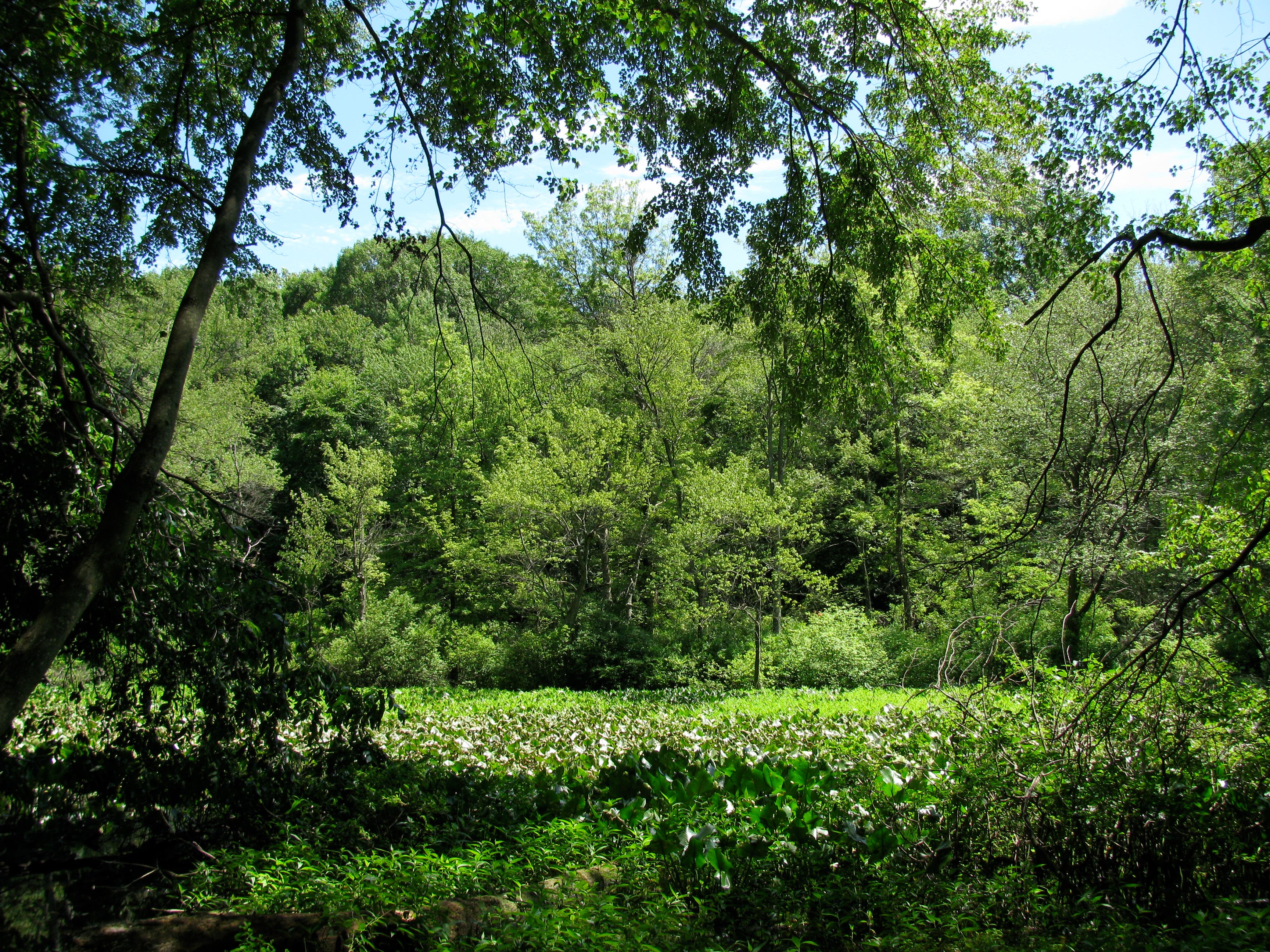
On the trails that weave through Union County’s Watchung Reservation, there is still evidence of the volcanic lava flows that erupted in the mountains more than 200 million years ago.
On Sunday, April 14, at 2 p.m., Paul Olsen, one of the nation’s leading paleontologists studying this region and the mass extinctions of species that once roamed the area, will speak at Union County’s Trailside Nature & Science Center.
Find out what's happening in Springfieldfor free with the latest updates from Patch.
Olsen, who teaches at Columbia University’s Lamont Doherty Observatory, discovered one of the dinosaur fossils currently on display at Trailside as part of the current Mastodon Exhibit, which also features 20,000 year-old mastodon bones discovered in Union County’s Lenape Park.
The New Jersey Mineralogical Society is hosting Olsen’s visit in conjunction with Trailside, located at 452 New Providence Road, Mountainside.
Find out what's happening in Springfieldfor free with the latest updates from Patch.
“We truly appreciate Paul Olsen’s willingness to give of his time and share his knowledge about this region,” said Union County Freeholder Bette Jane Kowalski. “It is hard enough, at times, to find him in the country, much less be able to bring him back to Trailside for a second time.”
Olsen spoke last year at the opening of the Mastodon Exhibit, “What’s In Your Backyard.”
“We are so used to going about our daily routines that we forget the incredible geologic forces that were at work millions of years ago,” Kowalski said. “And it will be interesting to hear what he has to say about species, like dinosaurs, that just disappeared from the earth.”
Olsen’s talk, “Earth, Wind & Fire: Mass Extinctions and the Geologic Evolution of The Watchungs” is expected to run about an hour.
There have been at least five great extinctions over the past 450 million years during which dominant groups of species disappeared.
Olsen and geologist Dennis Kent have been studying the causes of the fourth extinction–the one that paved the way for the dinosaurs. (For more information on their research, go to http://www.ldeo.columbia.edu/news-events/seeking-deadly-roots-dinosaurs-ascent
The two scientists have examined ancient lava flows in Morocco, sea cliffs along the coast of Wales, and rocks deep beneath the modern landscapes of New Jersey and Pennsylvania.
Recently, Olsen and Kent suggested another possibility for the extinction, another meteorite like the one that killed the dinosaurs. But finding that evidence has been elusive.
Their research has led them to the conclusion that large dinosaurs showed up in what is now New Jersey 10,000 years after the Triassic extinction.
But one of the most intriguing aspects of this, they found, was that the rocks from that time contained a spike of iridium–an element that is rare on earth, but abundant in meteorites.
Get more local news delivered straight to your inbox. Sign up for free Patch newsletters and alerts.