

Learning about Things that Go
From the first day of school, our two-year-olds have been interested in things with wheels. They are not particular – trains, cars, trucks, buses, planes, helicopters – they love anything that “goes.” So, of course, our very first emergent theme for the year was … vehicles. What better way to help children develop the age-appropriate skills that they need than by allowing them to explore a topic that interests them.
Find out what's happening in Summitfor free with the latest updates from Patch.
We started the theme by watching what the kids did with the various vehicles in our classroom. Then, we provided them with additional materials that would encourage them to explore and expand their existing knowledge. For instance, we watched them push trains around the floor, under the furniture, and up the walls. The next logical step was to work on their gross and fine motor skills when moving the vehicles. The children painted a box as a garage and steered the cars in and out of the doors. We created a city scape on the work table using colored tape and wooden buildings to encourage the children to work on their eye-hand coordination as they directed the trucks up and down the roads.
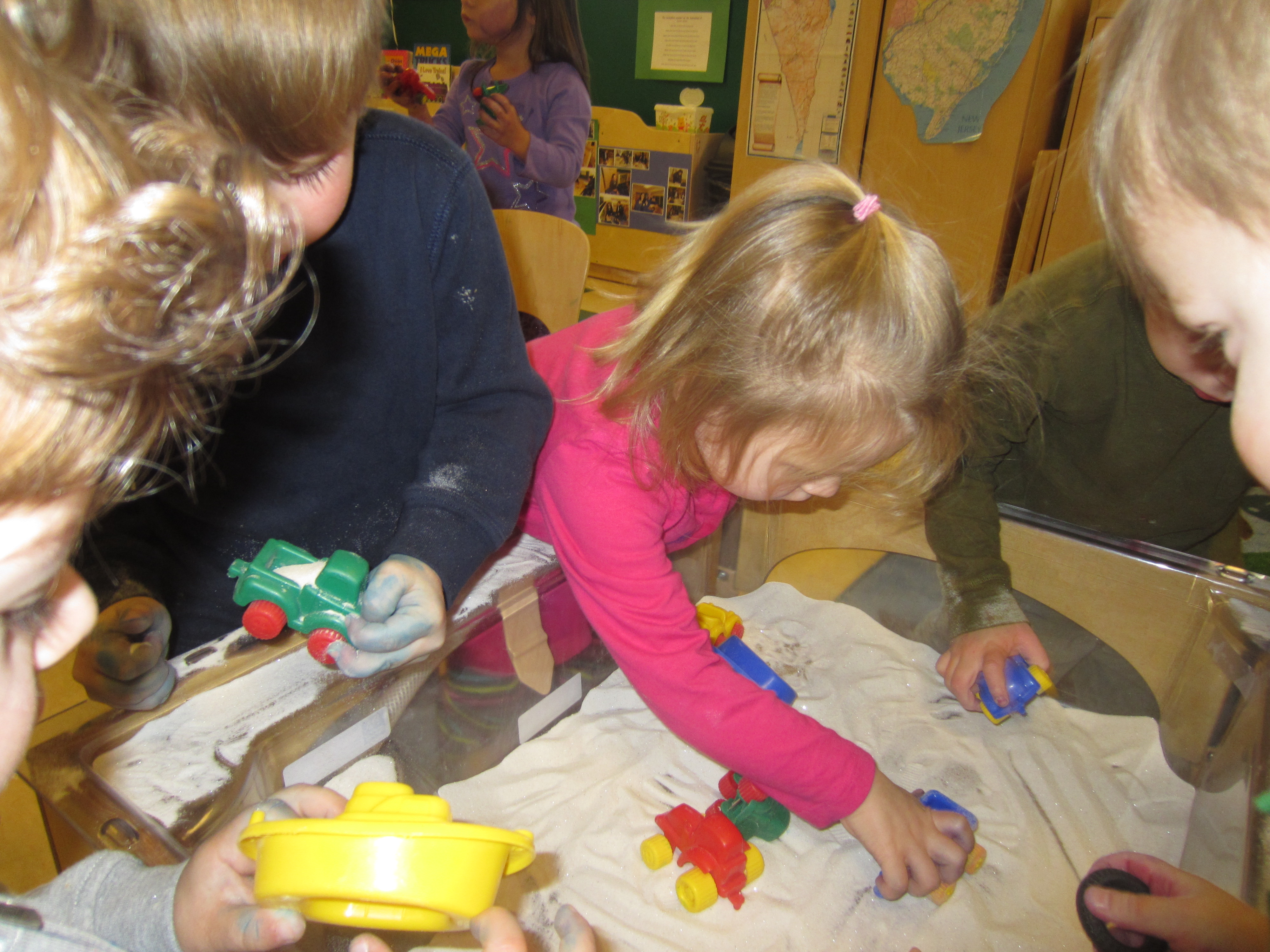
At this point, we noticed that the children were turning the buses upside down to spin the wheels, then placing them on the floor and examine the wheels when they were still. How could we help them understand how the wheels help the buses move? We filled the sensory table with sand so that the children could examine the tracks that vehicles make. They told us “hard,” sharing with us that it takes more hand strength to push the vehicles in the sand than it does on the floor. To allow them to develop even greater hand strength (which is extremely important for writing), we added ink pads and vehicles to the work table. They remained focused for extended periods of time as they experimented with creating tracks on maps.
Find out what's happening in Summitfor free with the latest updates from Patch.
Finally, as we saw their experimentation dropping off, we set up one last experiment for them to try. We took the full length mirror from the classroom kitchen and placed it on its side on the carpet. Voila, a ramp – a surface on which they could experiment with objects moving on their own. And experiment they did! They brought every vehicle to the ramp, learning which ones rolled quickly and which rolled slowly. They also brought non-vehicles to the ramp, and we talked about things that would go down and things that stopped.
Did we teach the children about gravity, friction or inertia? No! But they did learn that cars roll down a ramp but need to be pushed on horizontal or vertical surfaces. Did we teach them that the number of wheels and the weight of an object affect its speed? No! But they did learn which trains went “fastest,” and they deserted those that did not. Did we teach them about the difference between malleable and rigid surfaces? No! But they did learn that truck tracks are visible in ink pads and sand but not on the floor or on the table. Did we TEACH them about all the vehicles they love? No, not really! But we presented them with the materials and the opportunity to experiment and learn in ways that were meaningful and important to them. In addition, we supported their explorations, discovered their individual interests, and guided their work so that they could LEARN. And in the end, it’s not the teaching that matters, it’s the learning.