Neighbor News
Moral lobbying? How a Summit-based minister persuades the NJ state legislature
Reverend Rob Gregson, a Unitarian Universalist minister, talks about how he lobbies for social justice issues in the state.

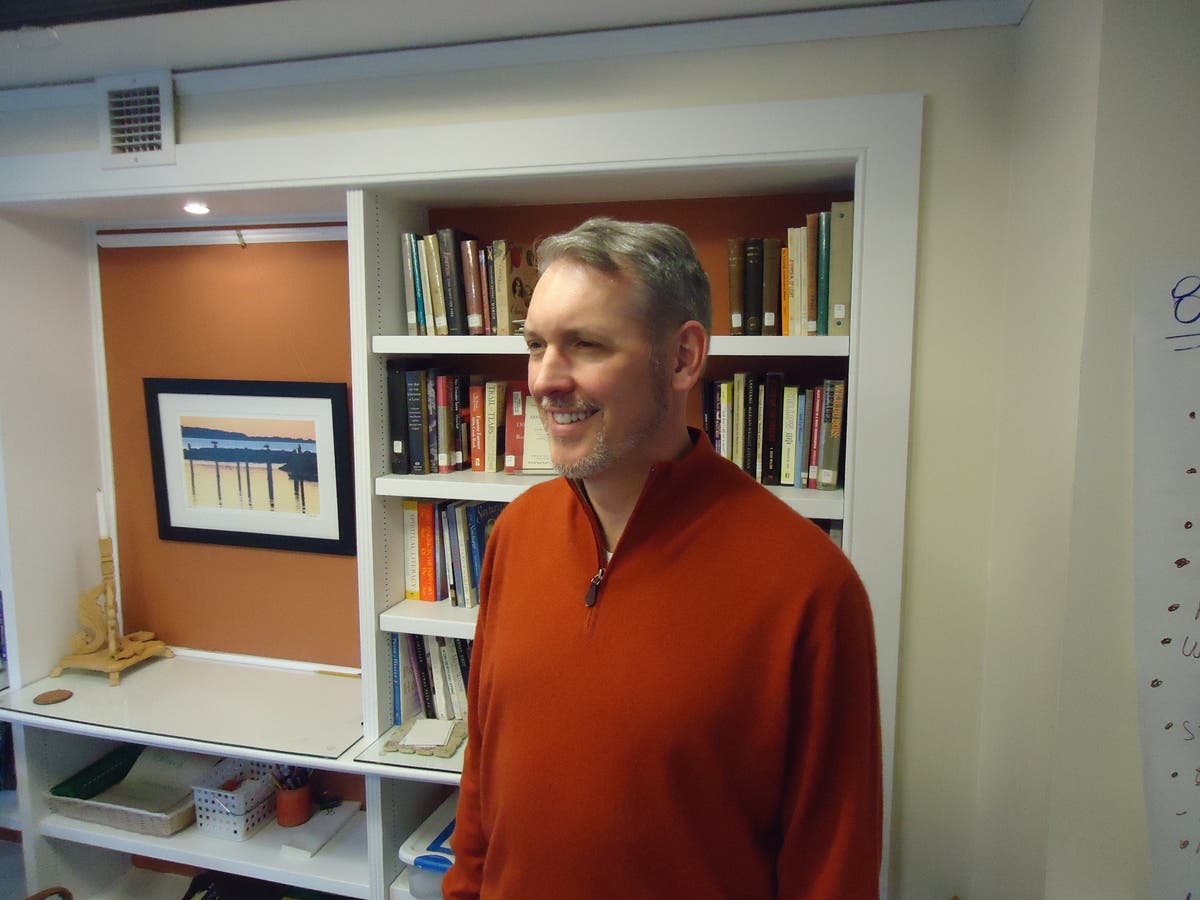
Summit -- Is there such a thing as moral lobbying?
While lobbying generally has a negative connotation of paid advocates trying to sway government decision-making for less-than-noble purposes, there are lobbyists who advocate for so-called "good causes."
Rev. Rob Gregson, a Unitarian Universalist (UU) minister based in Summit, lobbies the state of New Jersey on behalf of various causes aligned with social justice. While he has served as an actual church minister, at present he is the executive director of the denomination's statewide lobbying effort. Unitarian Universalism is a non-creedal tradition, meaning that there is no "test" or formula that determines the nature of ultimate truth. UUs say that they find the truth together, in responsible community--and that sometimes the Truth changes.
The UULMNJ -- a “mouthful” of an abbreviation, Rev. Gregson ruefully agreed, stands for the Unitarian Universalist Legislative Ministry of New Jersey. The UULMNJ speaks up for progressive causes to New Jersey legislators.
The group advocates on behalf of:
* Criminal justice reform, such as making New Jersey’s bail program a risk-based rather than money-based system, making bail fairer to the poor. Gregson said that the incarceration rate of African-American men nationwide relative to population is six times that of white males, but in New Jersey, the rate is twelve times more likely, which he describes as a “sobering and shocking” statistic.
* Economic justice, to reduce inequality in terms of income and wealth.
* Environmental protection efforts such as lead abatement in the water supply and advocating for more renewable energy sources.
* Gun violence prevention.
* Immigration reform--a major push this year given the harsh new penalties and deportation orders handed down for even the most minor of crimes (like using a fake Social Security number to get a job.)
* Reproductive justice, such as steps to protect people who work in women's reproductive health clinics.
The focus on particular issues fluctuates with time. Hot issues in recent years have been equal marriage rights for gay and lesbian couples, as well as protecting minority motorists from police abuse.
The organization was founded in 2008 by the minister and lay leaders in the Princeton UU congregation, who raised money and then enlisted other congregations throughout the state. The program was modeled on a similar California UU organization. Each of the six issues has an associated task force, a group of persons who care about that particular issue. By coordinating the efforts of individuals, they hope to influence pending legislation. The “legislative ministry” concept has spread to 25 states since it began nearly 15 year ago. Rev. Gregson is the UULMNJ’s first full-time director. Each NJ member congregation pledges dues which brings in a steady stream of operating funds. According to Gregson, only a handful of denominations have invested as heavily in advocacy as UUs, despite the fact the denomination is small in relative numbers of members. The organization counts 1200 current members, which is roughly half of all UUs statewide.
Gregson works with both Republican and Democrat legislators on a non-partisan basis. Religious organizations claiming a tax status are prevented from political lobbying on behalf of candidates, but they are allowed to lobby for issues that they care about. 501(c)4 status allows for issue-oriented political lobbying, and 501(c)3 status allows them to be exempt from paying taxes. He explained: “We’re very clear about keeping a boundary between partisan activity and issue-based activity -- we’ll work with anyone, on any issue, as long as it’s an issue that fits our Unitarian Universalist principles.”
When an issue comes up, the UULMNJ sends out “e-blasts”, that is, targeted emails about upcoming pieces of legislation, to urge recipients to get involved, attend political meetings, sign petitions, write letters, join rallies, and so forth. Social media is playing a larger role, including second-generation approaches such as group texting. This allows for fast, coordinated responses.
Gregson testifies before the legislature in Trenton, typically at committee meetings in which members of the public are invited to respond to pending legislation. Religious identification can be persuasive; for example, in advocating for gay marriage, in which opposing ministers claimed that gay marriage was “against God’s will”, Rev. Gregson said it was helpful to have a minister, in ministerial garb, disagreeing publicly with such assertions. “I’m known by legislators, they see us over time, and I can speak directly from that moral perspective,” said Gregson.
Building coalitions is also important, he said. The UULMNJ works with other religious groups, as well as the Anti-Poverty Network, Planned Parenthood, and the American Civil Liberties Union. For example, he worked closely with such groups to reform New Jersey’s laws about solitary confinement, which evidence shows “contributes to the mental breakdown” of prisoners' health and can become a form of torture. So far, the effort against solitary confinement has been unsuccessful as Governor Christie has refused to sign it. To draft legislation, Rev. Gregson has worked with law firms which have contributed their expertise on a pro bono basis.
Gregson grew up in the Pacific Northwest but discovered Unitarian Universalism while involved in interfaith work at Amherst College. He had come out as a gay man in college and was impressed that the UUs and Quakers were working openly on gay and lesbian rights in the early 1990s. Following seminary at Harvard Divinity School, he served as a parish minister for seven year in rural western New Jersey, then helped to found a British Unitarian nonprofit community-based ministry in East London. “We served hot meals to seniors, but our star program was providing after-school tutoring and activities to low-income, largely immigrant British families.”
Gregson is currently working with clergy and laypeople to develop an interfaith “Toolkit” to help lessen police bias against persons of color. It will be a step-by-step best practices guide to help religious communities partner with activists of color and local police. The idea is both to support police in their difficult work and hold them accountable in order to halt the killings of unarmed African-American men--which should help make police work safer too.
Supporting the mission of the UULMNJ doesn’t require being a UU, Rev. Gregson noted. Folks interested in helping can access their website (www.UULMNJ.org) or visit their Facebook page, or call. “The nice thing about our office is that it’s very small--feel free to call and speak with me directly,” he said.
What does the future hold? Rev. Gregson said, “We’ve been advocating for a reasonable, interfaith moral voice in the public sphere. We’re definitely here for the long run.”