Politics & Government
200 Tons Of Soil, Plus Asbestos-Contaminated Debris At Toms River Park Site Being Removed
One contractor is to be paid $94K for the excavation; total costs for the project include two other contractors, according to documents.


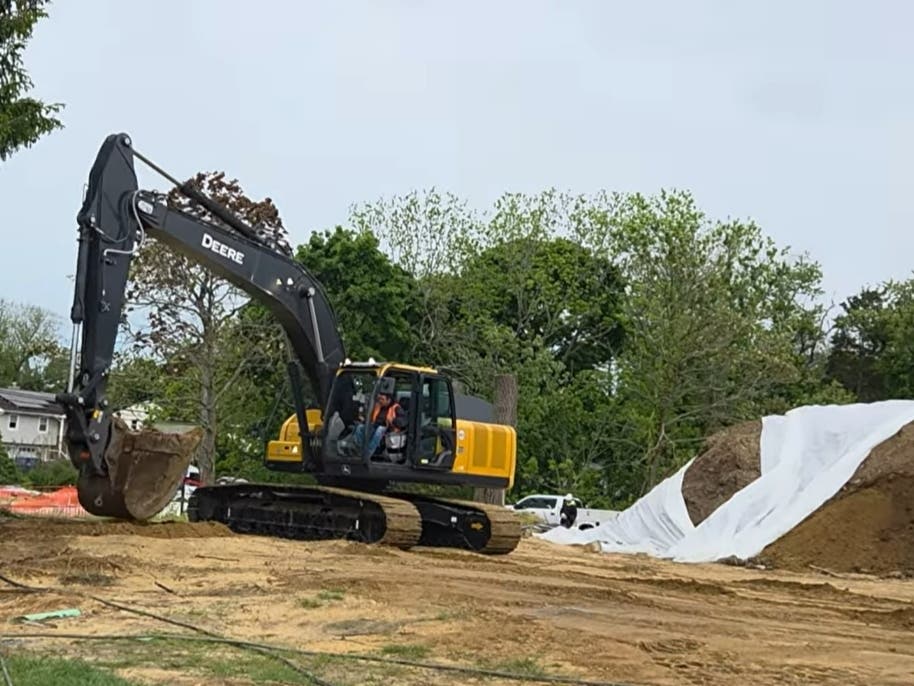
TOMS RIVER, NJ — The removal of asbestos-contaminated debris and asbestos-impacted soil has begun at the Clifton Avenue property that Toms River officials hope to turn into a township park.
The 4.3-acre site at the corner of Clifton Avenue and Batchelor Street had been in limbo since October, when officials with the state Department of Health and Department of Labor shut down work following the demolition of two old homes that prompted concerns about asbestos at the site.
On Monday workers with AWT Environmental Services and Pennoni, a Philadelphia-based engineering firm designated to oversee the cleanup, were at the property excavating soil and working to prepare other areas of the site.
Find out what's happening in Toms Riverfor free with the latest updates from Patch.
At least 200 tons of soil is expected to be removed from the site, according to AWT Environmental Services of Old Bridge, the lowest bidder for the work at the site, which bid $94,300 for the base cost of the project. That cost could rise depending on the actual amount of soil removed, the bid said.
The amount being paid to Pennoni for its oversight work was not immediately available Wednesday. An additional contractor supervised by Pennoni, Guardian, which was brought on site in the initial days after the shutdown of work at the site, is being paid to perform work involving sealing the soil and debris for transport, according to bid documents. That amount is unknown.
Find out what's happening in Toms Riverfor free with the latest updates from Patch.
The work plan did not estimate how long the work will take or when the site will be released for Toms River to continue its plans to build a park and a playground at the site, which the town purchased in 2023.
Toms River employees began demolition of the homes at 554 Clifton Ave. and 525 Batchelor St. on Oct. 14, but concerns about asbestos prompted the state response. Warnings about asbestos at the site were posted days later and the site was fenced off to keep people off the property.
State officials have not released reports on what was found at the site, saying their investigation is ongoing. Toms River officials have said there was no asbestos found in soil samples.
According to the Asbestos Abatement Work Plan by Pennoni, the health department found asbestos-containing materials debris “scattered throughout the site within the soil.”
The Pennoni work plan said the Department of Health collected bulk samples at the site and found both friable and non-friable asbestos-containing materials debris, including transite siding and pipe insulation, with the results provided to Pennoni on Oct. 28, 2025.
A copy of the work plan, dated Feb. 4, 2026, was provided to Patch on Saturday. Patch had sought the plan in a March 2 Open Public Record Act request but was told in a March 11 reply from Toms River officials that the document did not exist.
Friable asbestos is materials that are “easily crumbled or crushed into a powder,” according to a description on Mesothelioma Hub, a site with information about mesothelioma, a cancer caused by inhaling asbestos fibers.
Non-friable asbestos materials don’t crumble under hand pressure but fibers can be released and sent airborne if the items are broken up, ground up or subjected to other abrasive activities, the site says.
The items were “comingled throughout the site,” according to the work plan, with the total quantity not known. That included transite siding, which is made of asbestos mixed in cement and estimated to have 4 to 5 percent asbestos content, and the pipe insulation, estimated at 45 to 58 percent. Asbestos shingles were commonly used on homes from the 1920s until about 1980.
The work plan says a minimum of 6 inches of soil is being removed from two areas on the site, with at least a 20-foot perimeter around the sites of the two demolished homes and debris piles. A map of the areas where soil is being removed is at the bottom of this article.
The foundations of the two homes were checked for the presence of asbestos-containing material and there was none found, according to documents.
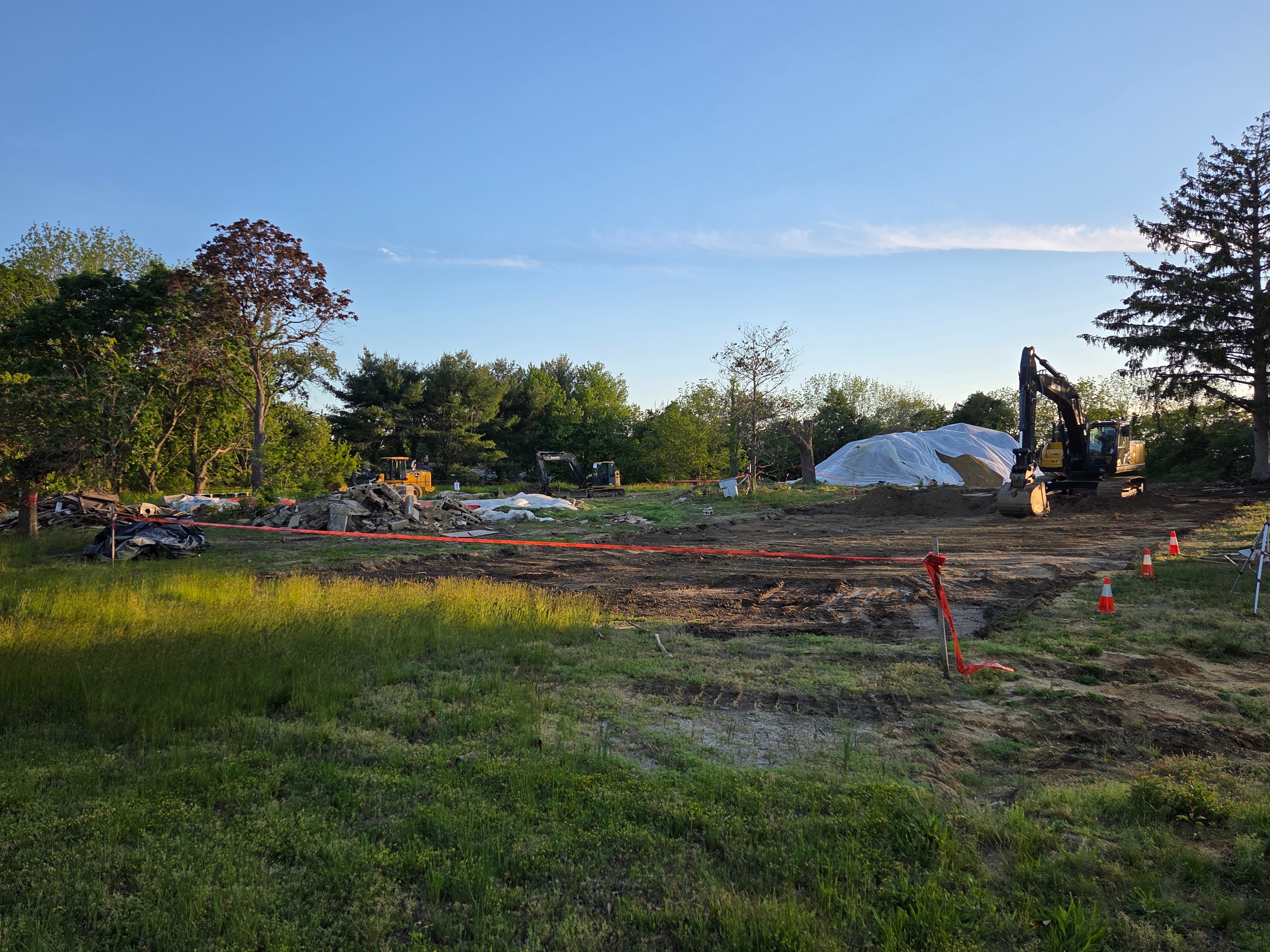
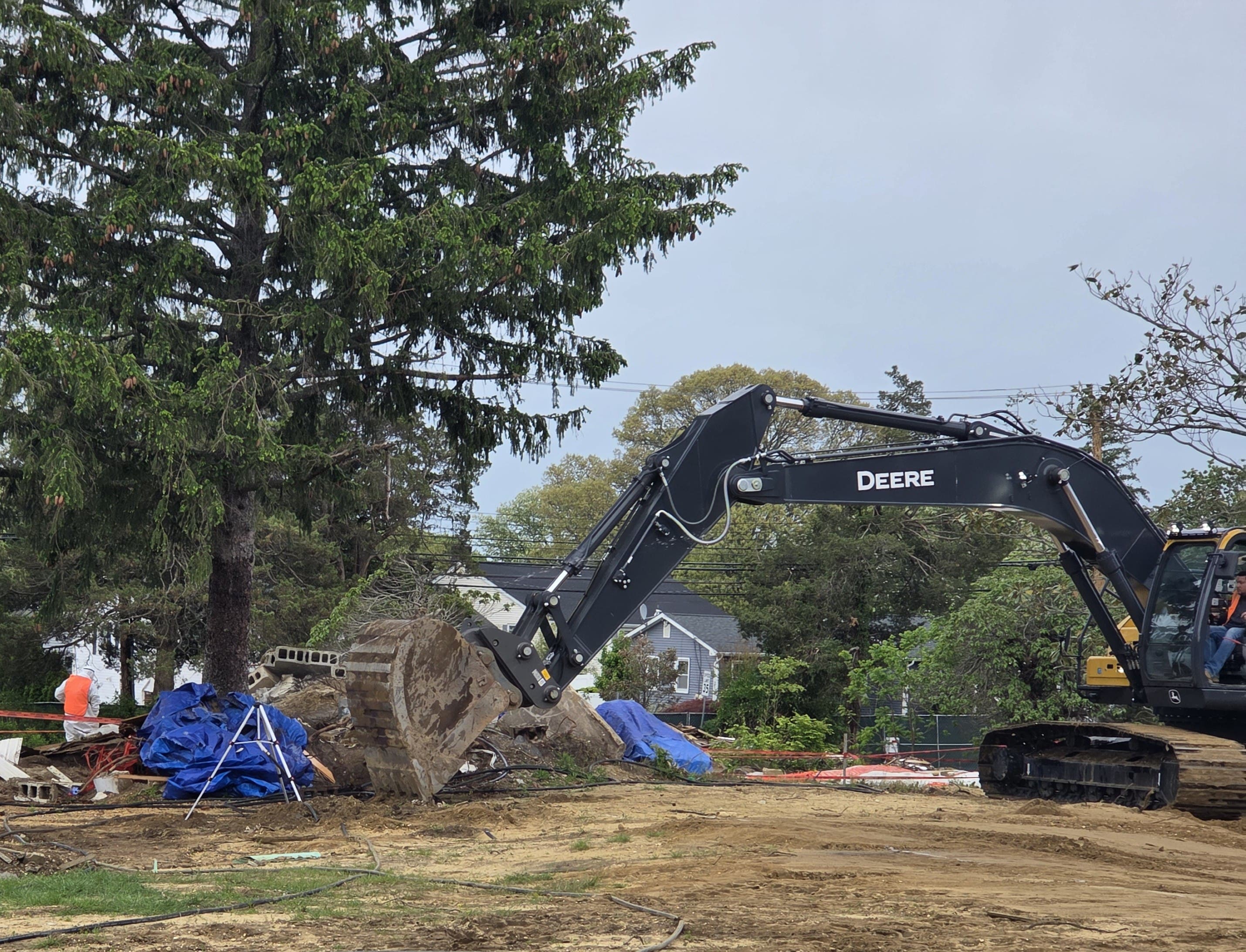
On Monday and Tuesday, piles of cinder blocks were visible near the site of the Clifton house as work was being carried out. Workers in a full protective suits and wearing respirator masks were performing tasks in the area to be excavated. One was raking the area with a leaf rake to collect rocks and gravel before excavation is done. Another was walking the site with a handheld device, possibly an air quality monitor based on the work plan descriptions.
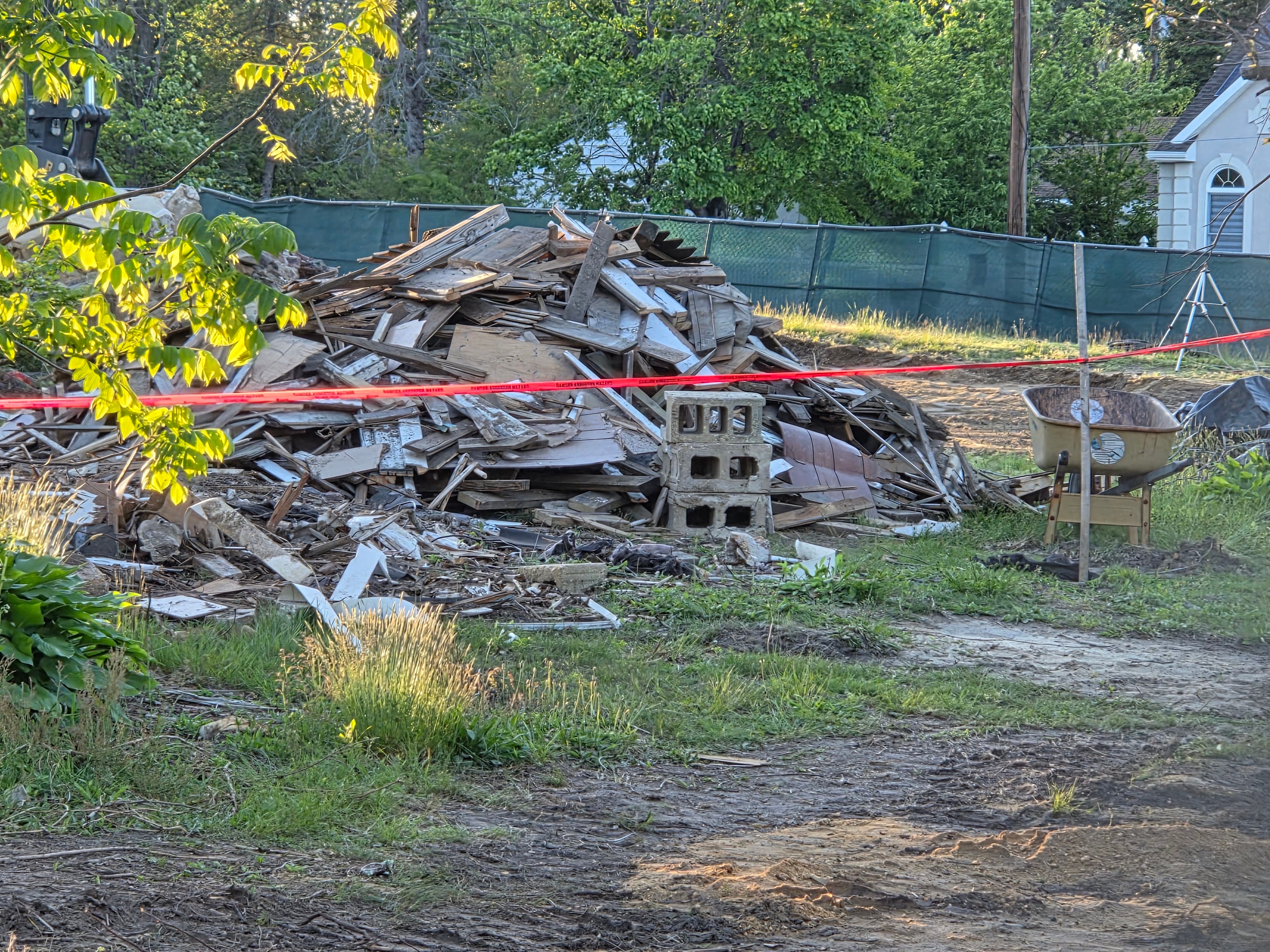
In another spot a worker was marking out an area to be excavated, while excavation was underway by an operator backhoe. There are water sprinklers continuously spraying the site while work is underway and portable air sampling devices were clipped to the fence at various spots.
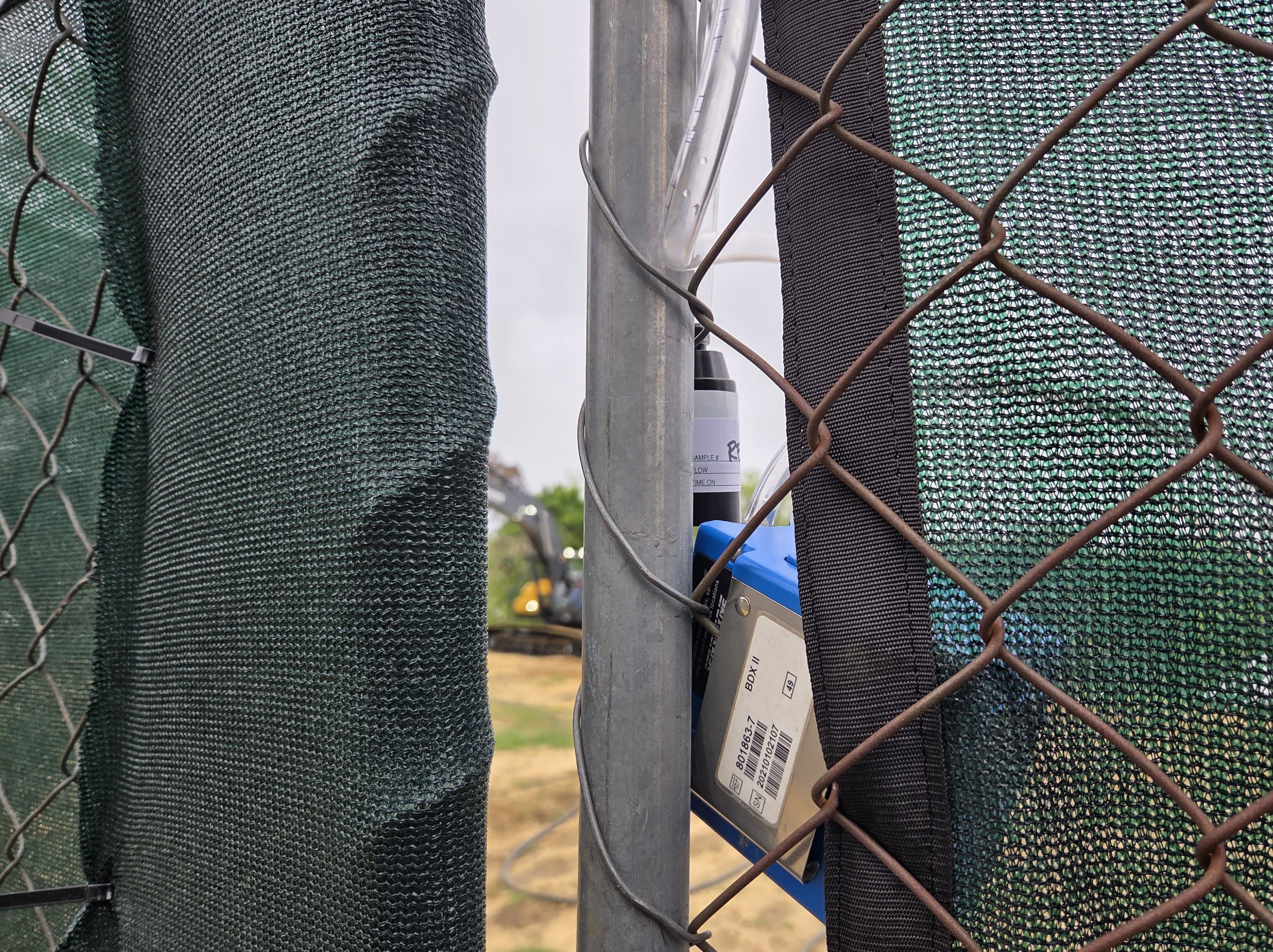
The work plan describes how the soil and debris will be removed from the site and hauled to an authorized asbestos disposal location but does not say where it might be taken.
It also notes that “A 20-yard waste container containing construction debris from the site is currently being stored at the Department of Public Works. Once site activities continue, the container will be transported to the site and transferred to a proper lined and labeled waste container for disposal as ACM waste.”
AWT also will be filling the foundation that was removed with sand, according to its project bid.
Two other companies bid on the work, with amounts significantly higher than that of AWT.
Brick Asbestos and Demolition Industries, from Brick Township, bid $396,000 to do the work, including a charge of $59,400 if the basement foundations had included asbestos-containing materials.
Greg Lertsch Demolition Excavating of Wall bid $177,550, with the bid primarily based on the number of days to complete the various elements of the work.
Videos of the work can be seen below.
This is the work area map.

Previous reporting:
Get more local news delivered straight to your inbox. Sign up for free Patch newsletters and alerts.