Neighbor News
Clarksville Road Bridge Shutdown in West Windsor: Delays and Federal Hurdles Expose Safety Gaps
An article from "The West Windsor Focus," an investigative journalism series on local community issues.
The Urgency of the Bridge Closure
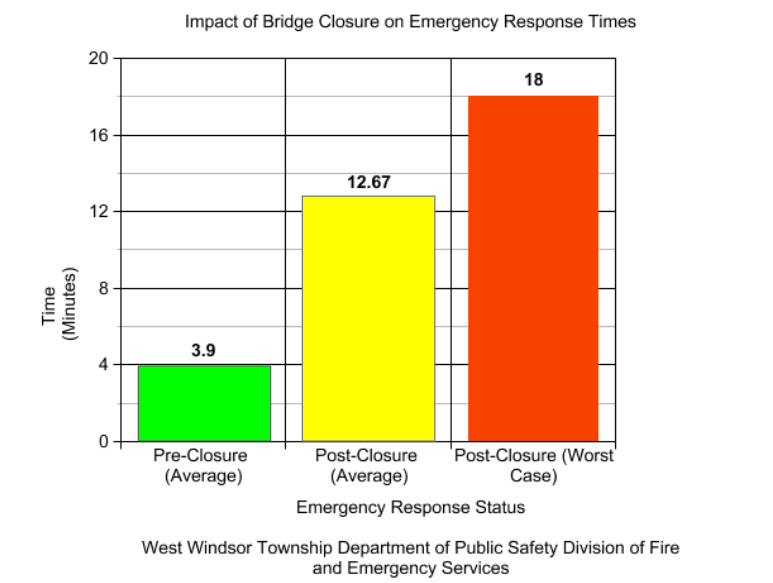
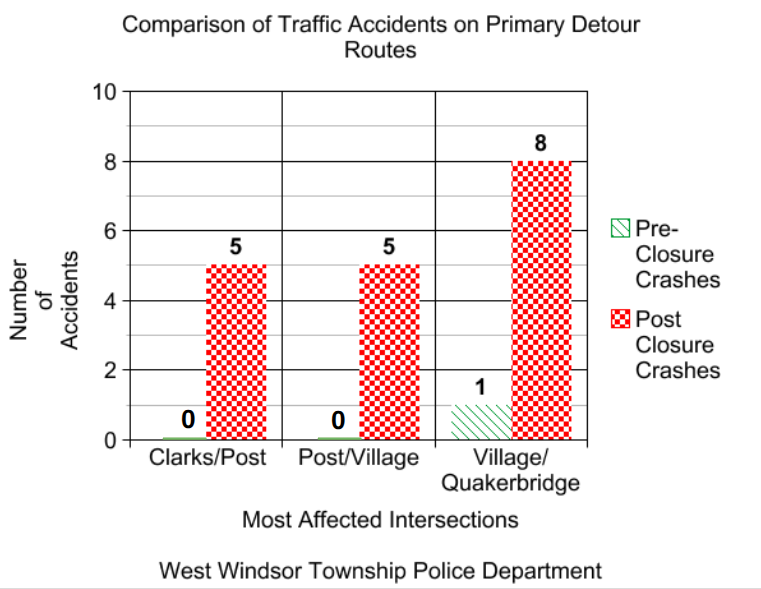
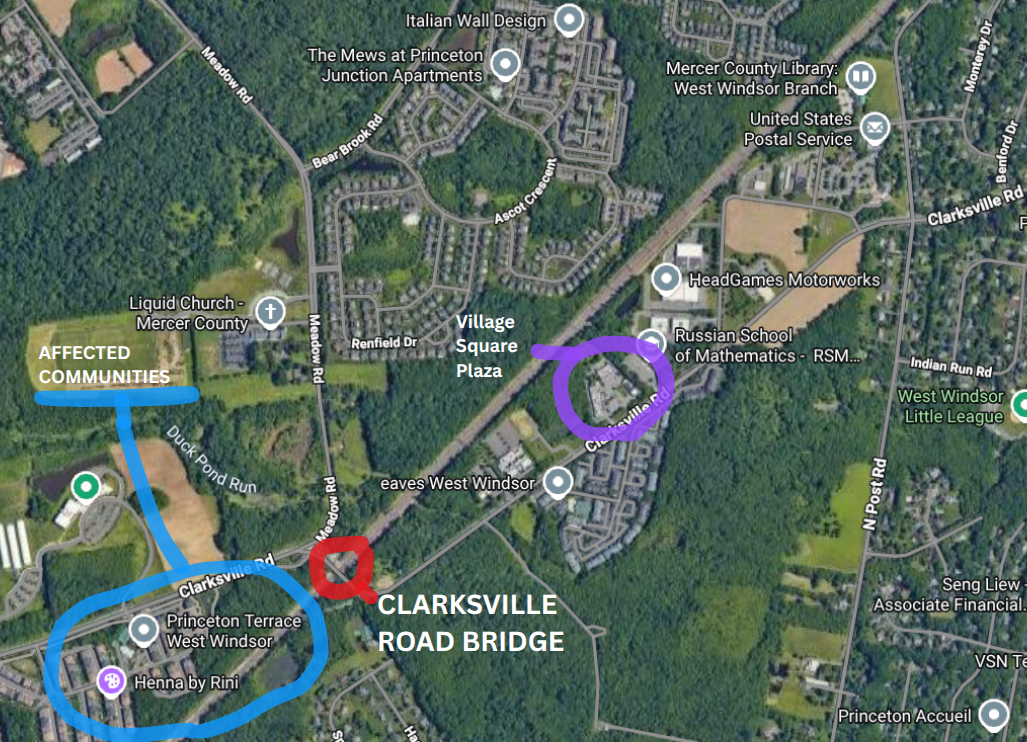
A routine four-minute emergency response can now take up to sixteen minutes. This is the situation in West Windsor. Official township documents, including Resolution 2026-R051 and the Governor’s Packet for the Clarksville Rd. Bridge Closure, show that Fire, EMS, and County Hazmat response times have often quadrupled. These delays put residents at significantly higher risk. For example, in Princeton Terrace, the pre-closure response time was 3 minutes and 54 seconds. After the closure, it jumped to 12 minutes and 40 seconds. These delays started when the New Jersey Department of Transportation (NJDOT) ordered an emergency closure of the Clarksville Road bridge on November 2, 2025. The closure affects a major roadway used by around 15,000 drivers daily, raising serious public safety concerns. Beyond emergency delays, police-reported data cited by the Town Council shows that the higher traffic volume has escalated the normal rate of accidents, creating extra hazards for school buses and pedestrians.
The Need for Transparency
Daily life is being disrupted for residents, who are frustrated over the lack of communication from officials. Trips that used to take 7 to 10 minutes now stretch to 30 minutes, costing time and fuel. Many people have pointed out that trips to the Quaker Bridge Mall and weekly grocery runs to Costco now take twice as long.
Detours are also causing congestion across the township. The Alexander Road roundabout, near Princeton Junction train station, is constantly backed up. Residents say they want a clear plan and timeline from NJDOT. They feel they deserve more transparency.
Find out what's happening in West Windsorfor free with the latest updates from Patch.
Impact on School Transportation and Local Businesses
School buses have to take alternate routes, which adds travel time and complicates schedules. Local businesses are struggling. Owners in Village Square report revenue losses exceeding 50 percent.
Grand Master Steven Phillips, owner of NJ TaeKwonDo & Kickboxing Academy, shared a video saying he needs the bridge fixed so his business can continue for another 25 years. Other affected businesses include Global Halal Meat, Capuano’s, The Little Gym, The Pottery Place, Kumon of Princeton Junction, and Mizu Japanese Cuisine. The Township has approved property tax credits for the shopping center to pass down to tenants, but many owners worry this will not prevent permanent closures.
Find out what's happening in West Windsorfor free with the latest updates from Patch.
Capuano’s, a family-run restaurant operating for over 30 years, says its revenue has dropped 30 percent since November 2, 2025. The owners explained that the loss directly affects payroll, rent, and supplier payments. “This is not just numbers on paper,” they said. “It is our staff’s livelihoods and our ability to keep the doors open day to day. If this continues for another six months, I do not know how we will survive. We are already operating on very thin margins, and this kind of sustained loss could force us to let some employees go. These are people who have been with us for years.” They emphasized that the bridge closure is a human issue, not only an infrastructure problem, and called for urgency, clear communication, and support from Amtrak and NJDOT.
Gateway of India reports losing more than 50 percent of its revenue because regular customers cannot reach the store. “My major customers live in the Toll Brothers community next to the bridge,” the owner explained. “Since the bridge is closed, many of them go to other stores that are easier to reach. We lose more than 50 percent of business.” The closure has also increased fixed costs. “I am losing almost $50,000 monthly. Power bills went up 33 percent, and I still have to run freezers and coolers for perishable items.” When asked how long they could survive, they said, “We do have a family. We took loans to run this business. The trains are still running, but we are the ones getting affected. If the bridge closure continues, we will have no choice but to make hard decisions about survival.”
Mizu Japanese Cuisine reports a 20 percent decline in revenue. “It affects everything, rent, staff, daily operations,” the owner said. “If the bridge continues to be closed, it will only get worse.”
Hot Wok Cafe described the slowdown as threatening both the survival of the business and the stability of employees’ livelihoods. “I hoped the bridge would be fixed soon,” the owner said. “We invested a lot of money here. The business is very slow, and I do not know how we can survive. It totally affects my family.”
Together, these statements show that the closure affects families, employees, and the broader community. Business owners are calling for urgent action, better communication, and practical solutions to restore access. Without quick intervention, many fear permanent closure.
Detour Signage and Access Challenges
Confusing detour signs are making the situation worse for local businesses. Current signs read “Clarksville Road Closed” instead of “Clarksville Bridge Closed,” which misleads drivers and reduces traffic to businesses along Clarksville Road. Capuano’s explained that proper signage is essential because small businesses depend on visibility and access. Without accurate directions, even residents trying to reach open parts of the road may avoid the area entirely. Updating the signs to read “Clarksville Bridge Closed” would clarify which roads remain accessible, restore customer traffic, and help prevent further revenue loss. Accurate signage, they say, is critical for keeping their business alive and protecting the livelihoods of staff who have been with them for years.
The Investigation into Why the Bridge Failed
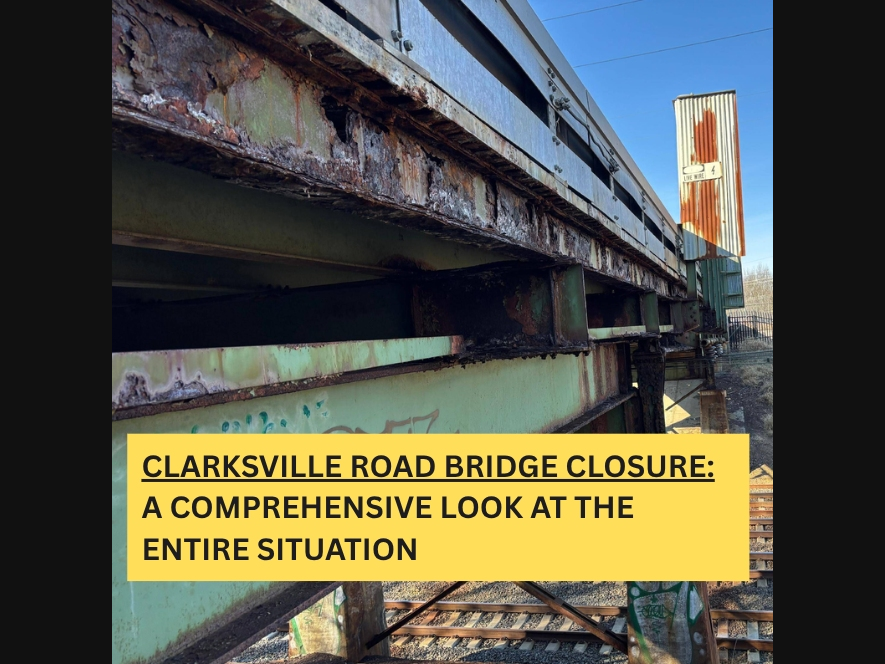
A routine inspection found severe structural corrosion and section loss on the steel beams supporting the bridge deck. Section loss happens when steel rusts so much that it becomes thinner and weaker than designed. Although the bridge was rebuilt in 1983, corrosion progressed over time due to moisture and road salt. By November 2, 2025, the damage was so severe that immediate stabilization was not possible.
Preventing Structural Decay through Maintenance
Regular maintenance can slow or prevent deterioration. Under the National Bridge Inspection Standards, bridges need inspections to reduce corrosion. Power washing removes road salt, watertight bridge deck joints prevent salt-heavy water from reaching steel, and protective painting shields beam ends from moisture. In this case, preventative measures were not taken, so corrosion reached a critical level and triggered the emergency closure.
The Current Administrative Situation with Amtrak
Repair is delayed by federal permits. Because the bridge crosses the Northeast Corridor rail lines, NJDOT needs Amtrak permits and safety personnel to work. In early February 2026, township officials reported that Amtrak had taken nearly three months to issue a basic inspection permit. At a public meeting on February 3, leaders said Amtrak’s business-as-usual approach stalled inspections and repairs. Because Amtrak did not classify the bridge as an emergency project, work proceeded at a normal pace. On February 24, the Town Council passed Resolution 2026-R051 petitioning Governor Mikie Sherrill to declare a State of Emergency.
A Comprehensive Timeline
- 1983: Bridge undergoes major reconstruction.
- 2022: NJDOT identifies bridge for replacement. Construction scheduled for 2027.
- November 2, 2025: Inspection shows "severe structural corrosion" and "section loss." NJDOT orders emergency closure.
- November 2025 to January 2026: Township waits for Amtrak's “Right of Entry” permit for NJDOT engineers to inspect tracks.
- February 2, 2026: Officials report permit stalled for nearly three months.
- February 3, 2026: Township publicly expresses frustration with Amtrak delays.
- February 11, 2026: Amtrak issues permits. NJDOT contractors begin inspections.
- February 24, 2026: Town Council passes Resolution 2026-R051 requesting a State of Emergency.
- Early March 2026: Inspection confirms deterioration so severe that stabilization is not possible.
- March 23, 2026: NJDOT confirms bridge inspections are complete. Reviews ongoing.
- Late March 2026: The bridge has been closed for over five months. NJDOT is reviewing results to develop repair options.
Call to Action for Residents
Residents can push Amtrak to prioritize the project. You can:
- Sign the petition “Repair the Clarksville Road Amtrak Bridge immediately” on Change.org, which has over 1,900 signatures.
- Email Amtrak leadership respectfully to stress the safety crisis. Please use the template below:
Email Template for Amtrak Leadership
To: gerhard.williams@amtrak.com and roger.harris@amtrak.com
Subject: URGENT: Emergency Prioritization of Clarksville Road Bridge in West Windsor NJ
Dear Mr. Williams and Mr. Harris,
I am a resident of West Windsor, New Jersey. I am writing to ask that Amtrak prioritize the Clarksville Road bridge project. The bridge has been closed for over five months. This has caused emergency response times to quadruple and school bus routes to be disrupted. Local businesses are also facing significant revenue loss. The bridge closure has heightened life safety risk to over 1,200 directly affected residents and additional populations indirectly impacted by traffic congestion.
We understand the complexity of working on the Northeast Corridor, but we are asking for transparency and a clear timeline for repairs. Please elevate this project to a priority status to allow the state to begin repairs immediately.
Sincerely,
[Your Name]
[Your Address]