Politics & Government
Meet This 'Dreamer' From New Jersey
Andrea, 26, was brought to the U.S. from Ecuador as a baby. Her parents and younger brother have protected legal status, but she does not.


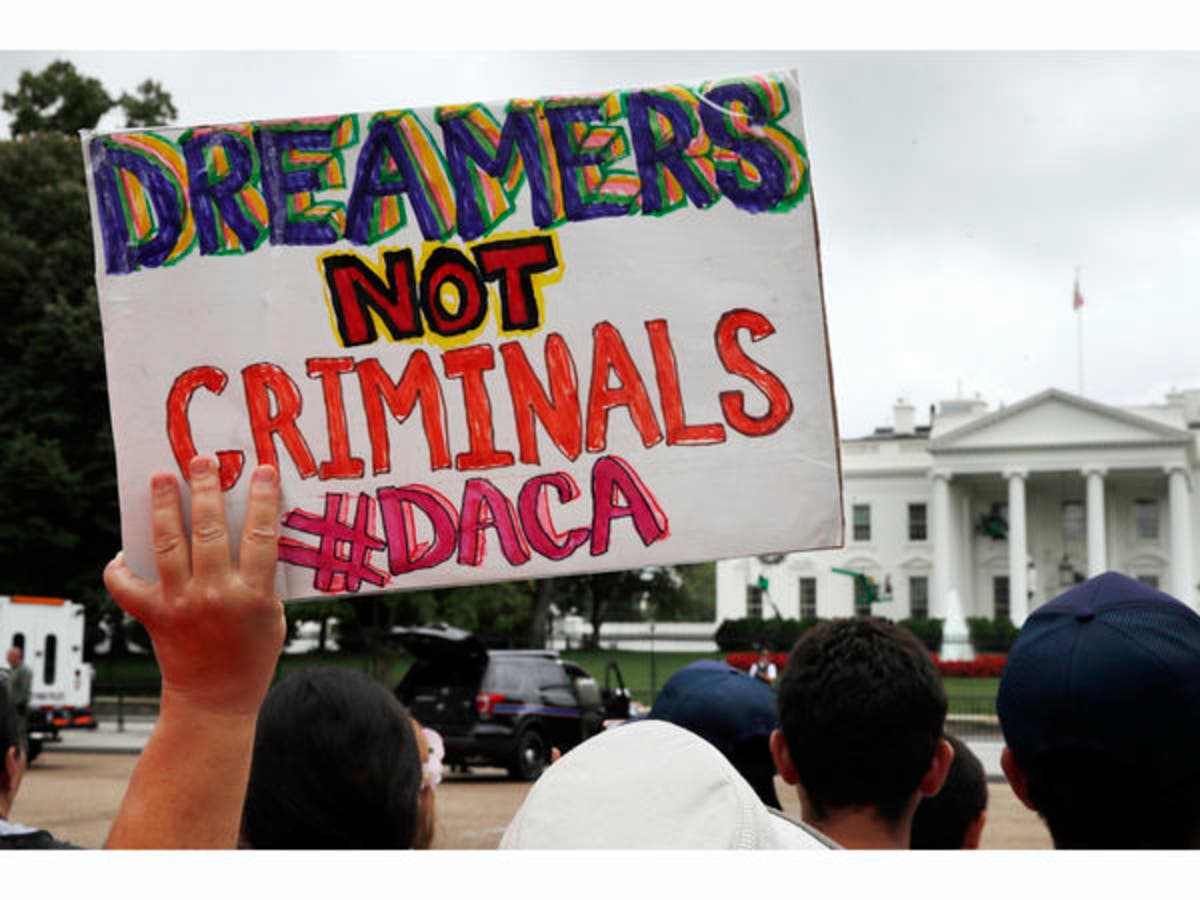
NEWARK, NJ — Meet Andrea. She's 26 years old and she's one of just under 800,000 people in the United States who are here illegally, but protected under the Deferred Action for Childhood Arrivals (DACA) program. That is — she was protected until Tuesday. Attorney General Jeff Sessions announced the Trump administration is rescinding DACA and giving Congress a six-month window to come up with a replacement.
When she was a year and a half old, Andrea's parents brought her to the U.S. from Ecuador. They came here on a standard tourist visa, which they overstayed. The couple, with their baby, settled in a suburb outside Newark. Andrea declined to say where, as she and her family still live in that town. She also asked Patch not to use her last name.
Her parents had a second child, Andrea's younger brother. Because he was born here, he's a U.S. citizen. Once he became 21, he took advantage of a longstanding immigration law, and petitioned the U.S. government to give his parents green cards. So they now have legal status. He could not petition for Andrea, because she was already older than 21 at the time.
Find out what's happening in Woodbridgefor free with the latest updates from Patch.
Watch: The Trump Administration Just Announced The End Of DACA
So out of a family of four, Andrea is the only one illegally in this country. She's never been back to Ecuador, or even left the U.S., because she knew she wouldn't be allowed back in.
Find out what's happening in Woodbridgefor free with the latest updates from Patch.
As a kid, Andrea never knew there was much difference between herself and her brother. It wasn't until high school that Andrea began to slowly realize she was "different" than her classmates.
"We had drivers' ed and I realized I couldn't get my permit because I didn't have any identification," she said. "It hit me then that there were a lot of things I had to be careful about and a lot of things I wouldn't be able to do."
From then on, Andrea kept her immigration status a closely guarded secret.
"Where I went to high school, there weren't many kids like me. Immigration was really never talked about," she said, fighting to hold back tears. "I didn't feel like I could tell anyone, because I didn't think anyone could relate."
Andrea's parents are both employed by a union. One of their goals was for both her and her brother to go to college.
"Education is really important to them. They started saving when I was a baby," she said. "As an undocumented immigrant, you can't take advantage of any financial aid or anything like that. They sent me to Rutgers all on their own."
She went to community college first, where she earned her paralegal degree, and from there attended Rutgers Newark. Her parents paid the $15,000 in-state tuition and Andrea commuted from their home to save on room and board. She also accelerated her course work to bring down the costs and graduated summa cum laude in two years, with a degree in political science.
"When I got to college, I told some close friends about my status. But not many," she said. "I chose political science because, as I got older, I wanted to be able to understand the mechanics of my situation and how everything would affect me. Being informed is very powerful."
The Obama administration passed DACA, also called the "Dreamers" Act, when she was 20. Because of that, she was able to get hired as a paralegal in a law firm. She received a salary as a W2 employee and paid taxes.
"It was such a huge relief. Without that, I wouldn't have been able to work legally. I would have been stuck in the shadows, getting paid under the table, or I would have had to volunteer," she said. "Not many people realize that DACA enabled us to pay taxes."
She now works as an immigration advocate with the American Friends Service Committee, a Quaker organization. She's since met a few others "Dreamers" as well, she says. They are all in their mid 20s, she guesses, were brought here as babies or young children and went on to graduate from U.S. colleges with degrees ranging from biology to engineering. They all currently work in those fields.
Every two years, Andrea has to apply with the U.S. government to have her immigration status renewed.
"If you don't have any criminal charges against you, they renew your permit," she said. "Fortunately, I just renewed mine very recently. I got it renewed a month ago so I'm good until 2019."
Her dream is to stay in the U.S. long enough to go to law school. But on Tuesday, suddenly that dream became threatened.
"I'm really unsure what my future holds. I don't have anything to protect me now," she said. She begins to cry again. "The United States is my home. I've never left here and I've never been back to Ecuador. I don't even have any recollection of it. I speak Spanish, but not as a native speaker. The U.S. is the only home I've ever known. I love this country and I can't imagine living elsewhere."
Get more local news delivered straight to your inbox. Sign up for free Patch newsletters and alerts.