Home & Garden
Zika Mosquito Could Call New Jersey Home in 10-15 Years, Biologist Predicts
"We originally thought the Asian tiger would never make it to New Jersey. But look, now it's here."


The mosquito that primarily carries the Zika virus, Aedes aegypti, does not call New Jersey home. Yet.
But it may in the next 10 to 15 years, as the earth warms. That's the concern of one entomologist who specializes in mosquito tracking and removal in the state.
"Aedes aegypti is cold-intolerant. That's key. Our winters are just too severe for this mosquito," said Gary Donato, an entomologist for the Mosquito Vector Control Program at the Hunterdon County Division of Public Health. "That's why we don't expect to see any big concerns with Zika this summer and fall in New Jersey."
Find out what's happening in Woodbridgefor free with the latest updates from Patch.
"But in the next 10-15 years, as we start to warm up, we'll probably see this mosquito start to survive over the winter," he predicted. "And then we'll see more of a concern with these viruses."
Earlier this year, the Centers for Disease Control and Prevention published a map, extending the estimated range of Aedes aegypti mosquitoes to include all of New Jersey, New York City and Long Island. No locally acquired cases of Zika have been reported in the continental United States.
Find out what's happening in Woodbridgefor free with the latest updates from Patch.
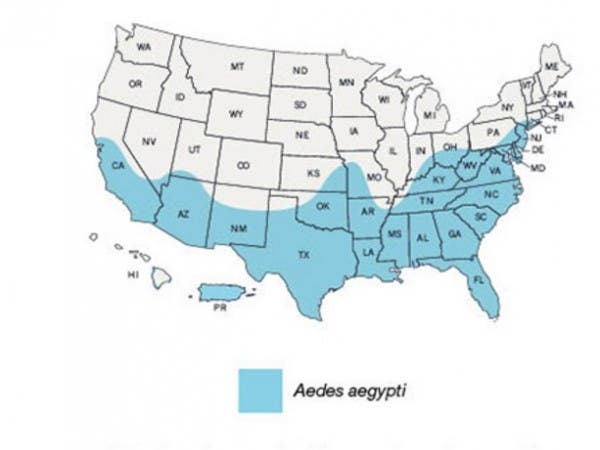
"It may even be sooner than 10 years," said Donato. "What we need is a trend of several mild winters to keep it warm enough for them to survive. The rest of the planet is warming up like crazy, but here in New Jersey we are under this pocket of the polar vortex that comes down and keeps us very cold. But you can already see the changes nationwide: Song birds are nesting earlier, plants are blooming earlier, mangrove swamps are moving north along the coast. It would make sense that insects are going to be taking advantage of that, too. Over the next few years we are certainly going to see invasive insects and the diseases they carry."
If Aedes aegypti is found in New Jersey today, it's because they likely came off container ships traveling here from Florida, Texas, the Caribbean and South America, he said.
Another mosquito expert agreed it's possible, but he thinks it would take Aedes aegypti longer than 10 years to gain a real foothold in the Garden State.
"We are pretty clear that the earth is warming, but I would bet it would take longer," said Matthew Bickerton, a biologist who works for the Middlesex County Mosquito Extermination Commission. "Aedes aegypti lays their eggs in the fall — they haven't figured out how to survive the winter yet, and that's a big hurdle for any species."
But, he added, look at the Asian tiger mosquito, Aedes albopictus, now found throughout New Jersey. "We originally thought the Asian tiger would never make it to New Jersey. Its native habitat is sub-tropical, in China. But look, now it's here."
The Asian tiger mosquito has only been in the state for the past 10 years, but this non-native species has quickly risen to become New Jersey's #1 nuisance mosquito. It's more aggressive than the state's other 60-odd species of mosquitoes; will go inside homes, and bites during the day. New Jersey is just warm enough for it to survive, but it hasn't been found in the Catskills, only a little bit farther north. In fact, with the recent rainfall in New Jersey in the past two weeks, Bickerton said he's seeing more and more Asian tiger mosquito nests.
"We've gotten a few inches of rain in the past few weeks, and all of a sudden we're starting to see Asian tiger eggs," he said. "They're hatching now, so we're starting to see a little bit of a surge. The population has started to creep up."
"Aedes ageypiti will probably follow in the footsteps of how the Asian tiger set up shop here," predicted Donato.
"I really hope it doesn't happen. It would be a pretty nasty thing and a really big deal to have Aedes aegypti take off here," Bickerton added. That's because in addition to Zika virus, Aedes aegypti carries several other serious diseases, such as dengue, yellow fever and chikungunya. All of those can be fatal.
"I really don't think it would happen, but from what I've learned working with mosquitoes is that you just never know," said Bickerton.
Get more local news delivered straight to your inbox. Sign up for free Patch newsletters and alerts.