Weather
Cuomo Declares State Of Emergency For Downstate NY
The declaration includes Putnam, Rockland and Westchester, as well as Long Island and New York City.


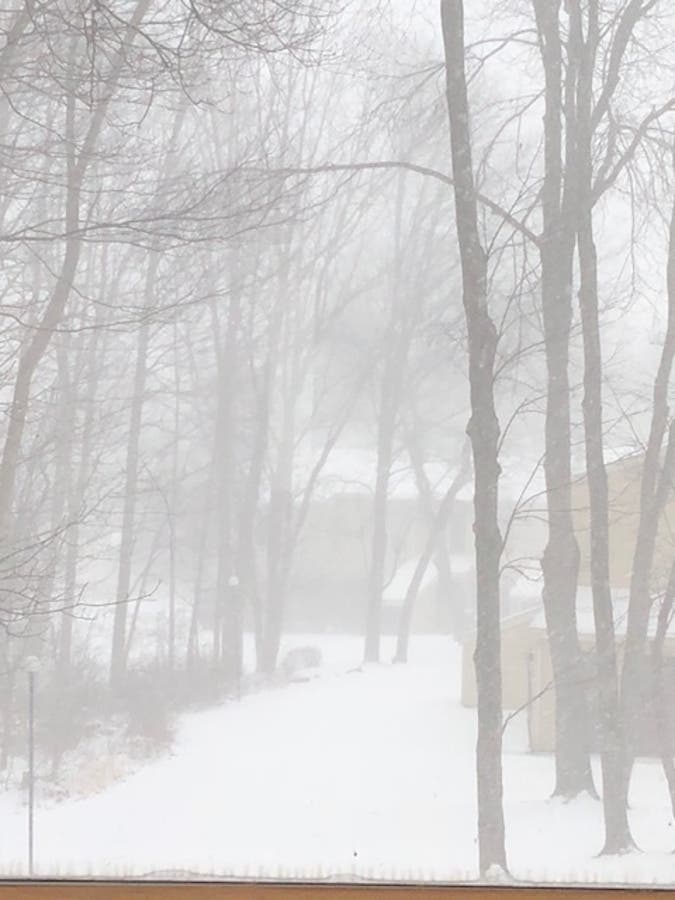
Governor Andrew M. Cuomo declared a state of emergency for Putnam, Rockland, Westchester, Nassau and Suffolk counties, and all of New York City Wednesday, ahead of the coastal storm, which is expected to bring heavy, wet snow downstate through Wednesday evening. The governor also announced 300 New York National Guard service members have been activated and will be deployed to areas impacted by the storm. Following recent weather events, Cuomo directed rapid response teams comprised of Long Island Rail Road, Metro-North and utility company personnel to be prepared to address downed wires or power failures. The utility companies are partnering with the LIRR and Metro-North to deploy to weather incidents as they arise, and restore power as quickly as possible to New Yorkers.
Cuomo also activated the State Emergency Operations Center.
A combination of wet, heavy snow, winds of 20 mph to 30 mph, and gusts up to 45 mph is expected. Snow accumulations will range from 10 to 15 inches in the lower Mid-Hudson Valley and in New York City, with up to 18 inches in the metro New York City area, including Long Island.
Find out what's happening in Bedford-Katonahfor free with the latest updates from Patch.
Snowfall rates of 1 to 2 inches per hour are possible Wednesday afternoon, which will make driving conditions very dangerous as wet, heavy snow is expected.
"As Mother Nature once again tests our great state, we have taken proactive measures in anticipation of the storm's heavy, wet snow that could impact power lines and cause dangerous travel conditions," Cuomo said. "I am urging New Yorkers to plan ahead for the harsh weather conditions expected throughout the rest of the day."
Find out what's happening in Bedford-Katonahfor free with the latest updates from Patch.
Minor to moderate coastal flooding is also possible along the south shore of western Long Island during high tide Wednesday mid-day. An updated listing of Weather Watches and Warnings from the National Weather Service can be found here.
Earlier today, the Governor announced a travel ban for tractor trailers on certain roads went into effect Wednesday, March 21 at 8 a.m.
A toll-free hotline for updates on weather and power outage restoration times is available at 866-697-2434. In addition, the State Emergency Operations Center has been activated for enhanced monitoring for the duration of the storm.
State Department of Public Service
New York's utilities have added 1,700 line workers and tree and service workers to their existing base of 3,800 workers for restoration efforts, if needed. Crews are being moved to the areas that are expected to have the greatest storm impact. Several hundred additional utility workers are expected to arrive by the end of the day, which would bring the overall total to 6,100 workers. The Department has directed utilities to dedicate resources to work with each county to assist in clearing downed-wire road closures. Utilities will continue to prioritize repairs based on restoring the greatest number of customers, which will be done in parallel with helping local governments to clear roads for public safety. In addition, all the utilities have identified points of contact with the LIRR and Metro North to ensure a coordinated and rapid response to issues affecting railroads.
Port Authority of New York and New Jersey
The Port Authority has made extensive preparations for personnel and equipment at all of its facilities. As of 12 p.m. Wednesday, March 21, the following number of flights are cancelled:
- 644 cancellations at JFK today, which is approximately 53 percent of scheduled operations.
- 863 cancellations at LGA today, which is approximately 75 percent of scheduled operations. There is no more flight activity scheduled at LGA today.
In advance of the storm, the Port Authority made plans to provide busing in the event that service on AirTrain Newark or AirTrain JFK must be suspended. Given the severity of the storm, travelers should check with their carriers to make sure their flight will be taking off before going to the airport today.
At the tunnels, bridges and bus facilities, the Port Authority reports that major long haul carriers Greyhound, Shortline, Peter Pan and Bieber have cancelled service from the Port Authority Bus Terminal today. Additional long-haul and commuter service out of the bus terminal may be cancelled as the day progresses. Travelers should check with their carriers before going to the bus terminal.
Speed restrictions are in place at the George Washington Bridge and Outerbridge Crossing due to the severe weather.
MTA Metro-North Railroad
On Wednesday, in order to reduce the possibility of switch trouble, Metro-North is operating a reduced weekday schedule providing 75 percent of normal capacity, with some combined/cancelled trains during the peak periods. Conditions are expected to deteriorate during the day, making travel extremely difficult or even impossible.
In the evening, Metro-North plans to further reduce its service to hourly to ensure customer safety during the storm. Metro-North may suspend service should conditions worsen.
The railroad encourages customers to travel only if necessary and urges those customers who are unable to postpone their travel until after the storm to leave as early as possible in the afternoon and leave extra time for travel. Customers should anticipate delays due to the effects of the winter storm throughout Metro-North's service territory.
For updated train schedules, customers can use the use the Metro-North Train Time App or Metro-North's interactive schedule pages.
The railroad has pre-positioned switching engines at all yards to assist any trains that may become disabled. All trains have been prepared with third rail show shoes and coupler snow bags, and door tracks will be sprayed with de-icer to reduce the instances of door malfunctions. Personnel have been pre-positioned to clear snow and ice from station platforms and train yards, respond to fallen trees, repair any overhead wire damage and ensure proper functioning of switches.
Safe Travel
It is important for motorists on all roads to note that snowplows travel at speeds up to 35 miles per hour, which in many cases is lower than the posted speed limit, to ensure that salt being dispersed stays in the driving lanes and does not scatter off the roadways. Oftentimes on interstate highways, snowplows will operate side by side, as this is the most efficient and safe way to clear several lanes at one time.
Motorists and pedestrians should also keep in mind that snowplow drivers have limited lines of sight, and the size and weight of snowplows can make it very difficult to maneuver and stop quickly. Snow blowing from behind the plow can severely reduce visibility or cause whiteout conditions. Motorists should not attempt to pass snowplows or follow too closely. The safest place for motorists to drive is well behind the snowplows where the roadway is clear and salted.
Some of the most important tips for safe winter driving include:
- When winter storms strike, do not drive unless necessary.
- If you must travel, make sure your car is stocked with survival gear like blankets, a shovel, flashlight and extra batteries, extra warm clothing, set of tire chains, battery booster cables, quick energy foods and brightly-colored cloth to use as a distress flag.
- Keep your gas tank full to prevent gasoline freeze-up.
- If you have a cell phone or two-way radio available for your use, keep the battery charged and keep it with you whenever traveling. If you should become stranded, you will be able to call for help, advising rescuers of your location.
- Make sure someone knows your travel plans.
Drive Safely
The leading cause of death and injuries during winter storms is transportation accidents. Before getting behind the wheel, ensure that your vehicles clear of ice and snow. Good vision is a key to good driving. Plan your stops and keep more distance between cars, be extra alert, and remember, snowdrifts can hide smaller children. Moreover, always match your speed to the road and weather conditions.
Prepare for Power Outages
Governor Cuomo urges residents to stay away from any lines that are down as they may be live, and should be considered extremely dangerous. Motorists are reminded that State Law mandates that if an intersection is "blacked out" and the traffic signal is not operational, the intersection is automatically a "four way" stop. In the event of closed or blocked roadways due to flooding, downed power lines or debris, motorists are advised to exercise caution and obey all traffic signs or barricades in place, regardless of whether a roadway looks clear.
New Yorkers should also check on friends, family and neighbors, especially the elderly. Power outages can affect the ability of individuals to heat their homes, which could lead to dangerously cold temperatures in the winter months.
The Governor is offering these additional safety tips:
- At home or at work, keep a battery-operated radio and flashlight on hand, as well as a supply of batteries. Keep an emergency supply of water, medications, and non-perishable foods handy. If you use medication that requires refrigeration, most can be kept in a closed refrigerator for several hours without a problem - check with your physician or pharmacist.
- Make sure you have alternative charging methods for your phone or any device that requires power. Charge cell phones and any battery-powered devices.
- If you have space in your refrigerator or freezer, consider filling plastic containers with water, leaving an inch of space inside each one - this will help keep food cold if the power goes out.
- At home or at work, keep a battery-operated radio and flashlight on hand, as well as a supply of batteries. Keep an emergency supply of water, medications, and non-perishable foods handy. If you use medication that requires refrigeration, most can be kept in a closed refrigerator for several hours without a problem - check with your physician or pharmacist.
- Make sure you have alternative charging methods for your phone or any device that requires power. Charge cell phones and any battery-powered devices.
- If you have space in your refrigerator or freezer, consider filling plastic containers with water, leaving an inch of space inside each one - this will help keep food cold if the power goes out.
If You Lose Power
- Call your utility provider to notify them of the outage and listen to local broadcasts for official information. For a list of utilities, visit the New York State Department of Public Service. Check to see if your neighbors have power. Check on people with access or functional needs.
- Use only flashlights for emergency lighting - candles pose the risk of fire.
- Keep refrigerators and freezer doors closed - most food requiring refrigeration can be kept safely in a closed refrigerator for several hours. An unopened refrigerator will keep food cold for approximately four hours. A full freezer will keep the temperature for about 48 hours.
- Do not use a charcoal grill indoors and do not use a gas stove for heat - they could give off harmful levels of carbon monoxide.
- In cold weather, stay warm by dressing in layers and minimizing time spent outdoors. Be aware of cold stress symptoms (i.e., hypothermia) and seek proper medical attention if symptoms appear.
After a Power Outage
- Throw away any food that has been exposed to temperatures 40°F (4°C) for two or more hours, or that has an unusual odor, color or texture. "When in doubt, throw it out."
- If food in the freezer is colder than 40°F and has ice crystals on it, it can be re-frozen.
- If you are concerned about medications having spoiled, contact your doctor.
- Restock your emergency kit with fresh batteries, canned foods and other supplies.
Photo credit: Lanning Taliaferro/Patch
Get more local news delivered straight to your inbox. Sign up for free Patch newsletters and alerts.