Politics & Government
Drilling in the Marcellus Shale: Could it Affect Bedford’s Drinking Water?
Extracting natural gas from the underground rock formation was the topic of a recent public forum.


As Bedford prepares to tap into the New York City Delaware Aqueduct, town officials are closely watching developments around drilling for natural gas in the area known as Marcellus Shale, a deep underground black shale formation, believed to be one of the largest natural gas stores in the world.
Environmental groups have been concerned about the effects of drilling there, and Bedford represenatives, along with New York City officials, have also raised questions about potential effects of leaks into groundwater in the Catskills watershed, which supplies drinking water for New York City, and soon, residents of Bedford and Katonah.
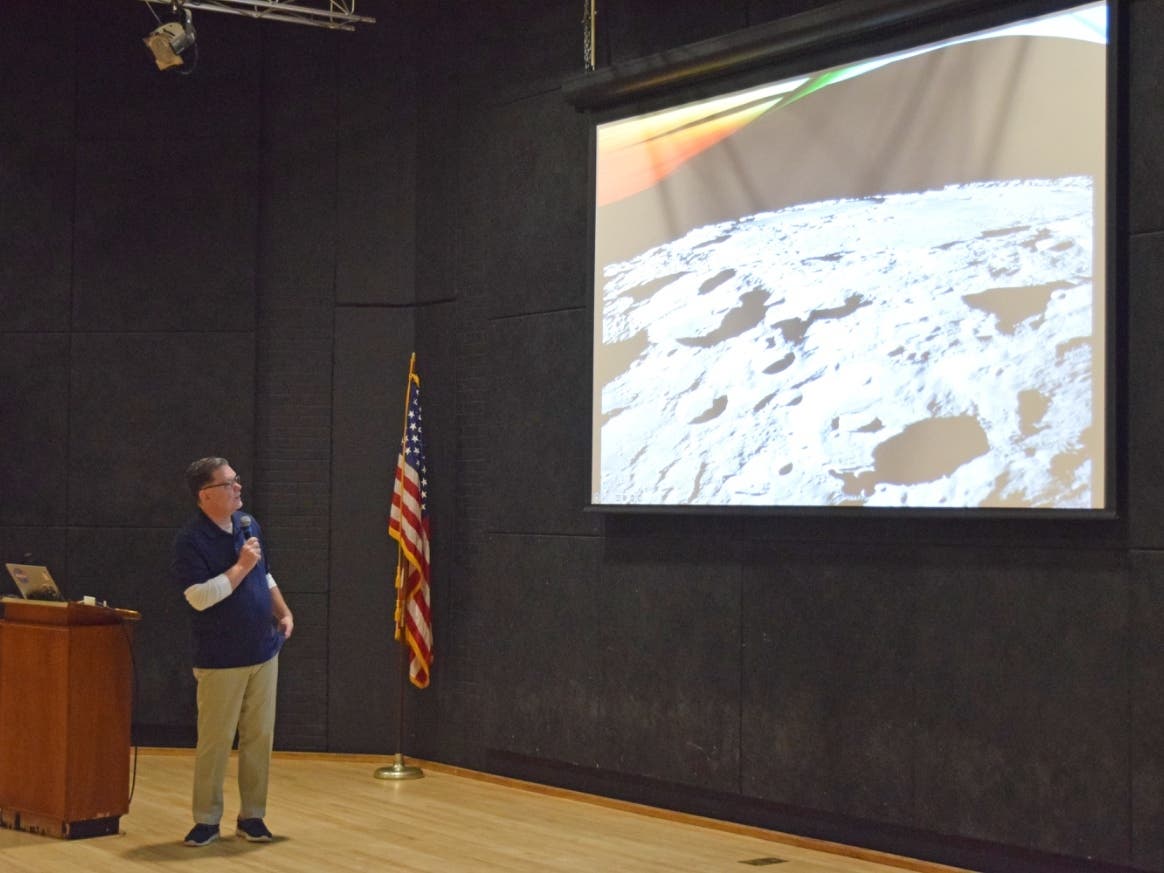
At a recent public hearing, public officials, including town board member Peter Chryssos, residents, and environmental group leaders gathered to hear a representative of Chesapeake Energy answer questions and describe the company's process of drilling for natural gas on the Marcellus Shale, and its potential impact on the environment.
Find out what's happening in Bedford-Katonahfor free with the latest updates from Patch.
The hearing came after a decision last month by the New York state Department of Environmental Protection that they would not issue a blanket permit for drilling in the Catskill Watershed region, but rather the company would have to seek a separate permit for each well.
The Chesapeake Energy representative, Michael Brownell, explained the process by which natural gas is extracted, known as hydraulic fracturing, or hydro-fracking.
Find out what's happening in Bedford-Katonahfor free with the latest updates from Patch.
Currently, Bedford gets its drinking water from wells. In recent years, the wells have shown an increased amount of nitrates from septic tanks and chloride from road salts, encouraging the switch to using the New York City aqueduct system. The project is slated to begin later this summer, and is predicted to take 18 months, according to Commissioner of Public Works, Kevin Winn.
Currently, the Catskills watershed is the water source for 8.2 million people in Dutchess, Putnam, Westchester counties and New York City. The more stringent, well-by-well review process is expected to diminish interest in drilling in the watershed.
"We'll be part of the New York City system, so DEC's effort is welcome by Bedford," said Winn, in an interview after the hearing.
Geoscientists at Pennsylvania State University and the State University of New York suggest the entire formation could contain between 168 trillion to 516 cubic feet of natural gas, and that 10 percent might be recoverable using advanced techniques such as hydro-fracking and horizontal drilling.
Hydro-fracking involves breaking the rock with a high-pressure spray of water and other chemicals. Horizontal drilling involves boring a hole to where the gas pockets are located and then going in at a horizontal angle, matching the shape of the pocket, making for more efficient drilling.
The Department of Environmental Conservation's website says that it is not yet known how much can be extracted from the Marcellus Shale in New York, but explained that New York State alone consumes 1.1 trillion cubic feet of natural gas each year.
The cumbersome permitting process is expected to reduce drilling the Catskill Watershed. Environmental groups are still concerned about the environmental effects on the rest of the state.
At the May 6 hearing, environmental leaders expressed concerns about incidents involving leaking, spillage, and surface contamination that have happened during hydro-fracking operations in the past.
"Fractures can and may lead to pollution two miles away, twenty miles away, or twenty years away, but this process does not create an impermeable lid, and that is a very essential thing to understand and take into account," Sierra Club member Susan Leifer said.
Brownwell acknowledged that surface spill contamination can be a problem, but explained that "secondary containment" and ground liners are used to reduce the chances of the probable.
State Assemblymen Robert Castelli and Greg Ball convened the meeting, concerned about making sure that adverse environmental effects would be avoided.
"After today, I have more questions than answers", said Castelli. "We can use the energy—yes, but we'll have to work together, across the aisle, in a bipartisan manner, to ensure it's done safely. The gas has been there for more than a million years, it can stay there for a little longer, I see no problem with that."