Politics & Government
Making Bronxville A Walkable Village Benefits In Many Ways: Mayor
Sidewalk maintenance is important for the community


BRONXVILLE, NY — In the spirit of spring, we are also heeding the advice of many planners/advisors who encourage us to further capitalize on our Village as a premier walkable community. To do our part, we are repairing Village-owned sidewalks, crosswalks and ask our residents to do the same.
With the goal of making Bronxville more walkable, we are exploring areas that may be suitable for additional sidewalks and marked crosswalks. Per sidewalk maintenance, homeowners are responsible for the repair and maintenance of sidewalks that abut their property — be they concrete, stone, composite or even dirt with the goal of uniform safe passage. If you notice a sidewalk needing attention, contact the Village Building Department 914-337-7338, and staff will issue a “notice to cure.” No monetary penalties attach unless the notice is ignored.
With the warmer weather, more pedestrians are out and about, especially youngsters. With that in mind, our police department, will be stepping up enforcement of texting and cell phone use while driving as well as speed laws and the crossing of double yellow lines. As a reminder, the areas adjacent to all of the schools in the Village, including our nursery schools, are school zones with a 20 mph speed limit.
Find out what's happening in Bronxville-Eastchesterfor free with the latest updates from Patch.
[Get Patch’s Daily Newsletter and Real Time News Alerts here.]
Most importantly, we want our “walkability” initiatives to encourage our youngsters to walk to all of our schools.
Find out what's happening in Bronxville-Eastchesterfor free with the latest updates from Patch.
Verifiable scientific data reinforces these initiatives as study upon study confirms that a morning walk to start one’s day increases alertness and positively correlates with improved academic performance, greater self-esteem and sense of independence.
In a recent UK study, nine of 10 teachers felt the children who walked to their school had less stress, increased creativity, better test scores and, most importantly, arrived much more ready to learn. Studies in Denmark and Scotland correlated walking to school with responsible thinking, less obesity, personal independence and a calmer state of mind. In addition, the children who walked to school demonstrated more positive physical movement/activity throughout the school day and their level of concentration was even higher than those children who consumed a healthy, balanced breakfast.
More than any other nation, the US trend is to rely more than ever on transportation to school by car. According to government statistics, the number of children driven to school within a one mile radius of their home was 20 percent in 1969 and is now upwards of 50 percent and growing. As a consequence, we are perpetrating a vicious cycle — the more students that are driven to school, the greater congestion and concomitant safety issues so walking becomes more dangerous for those who opt to walk.
Concurrent with this change is a rise in childhood obesity, traffic congestion and air pollution. In a Center for Disease Control study it was found that less than one in five American students walk to school even once a week. During a full school week, 12 percent of American students walk every day versus 50 percent in England.
All of the studies cite statistical data but emphasize as equally important the demonstrative intangibles.
By walking, young people can realize a sense of adventure, see friends and neighbors, hear sounds of nature that are often missed and enjoy the company of their mom, dad or caregiver without distraction.
Young people also learn valuable safety rules — the safe way to walk and drive, and the rules of road safety which are a lifelong need.
The spring also sadly brought a proliferation of store closures on the Eastside of the Village. In contrast, our Westside is at 100 percent occupancy.
To address the issue, the Trustees and I have convened a committee of building owners, landlords, merchants and residents to work as a team to find solutions.
Many of you have asked if the Village had any recourse as to the negative effect of perpetually empty storefronts.
Not seeing a solution within my purview, I reached out to the Counsel to the New York State Conference of Mayors who responded as such, “regarding the vacant property, this scenario is one of the most intractable issues to deal with. You can try more rigorous property maintenance code enforcement and even establish a vacant property registry to nudge the property owner to do something with the property. But if the owner is maintaining the property and paying taxes, your options are extremely limited.”
In a very interconnected scenario, the Trustees also passed the 2017-2018 budget resulting in a tax increase of 1.35 percent or $99 for the median house value price of $2.2 million.
Three line items drove the modest increase: scheduled pay raises for our employees per labor agreements, a 12 percent increase in health care premiums and a very flat sales tax revenue line.
As point of fact, if our brick and mortar local stores cease to be profitable and more purchases are transacted on line, our loss of sales tax revenue will result in a 12-13 percent tax increase in our next budget cycle as every expenditure of $82,000 or loss of revenue of same has a monumental impact on our local bottom line.
In a very interesting sidebar, Morristown New Jersey’s Green Committee, one of the nation’s oldest, has a very far reaching visionary approach to environmental stewardship. Their mission statement emphasizes the balance of economic development, environmental protection and community inclusion leading to a sustainable municipality.
Their initial approach included a 10-step pledge which they asked all residents to sign committing them to environmental initiatives. Number one on their list was to ask residents to buy something locally that they would normally buy at the mall or a big box store. Their rationale being that keeping purchasing local keeps money local, saves on fuel and ancillary transportation costs, encourages a walking environment, fosters a human connection between customer and merchant, increases home values and supports those who directly support their community. I believe we should adopt the same well-reasoned approach.
I close with a warm thank you to our Police Benevolent Association for partnering with the Bronxville School’s Autism Awareness Club during the month of April. Police cars proudly displayed the ribbon and our officers are selling magnets and sending 100 percent of the donation to fund local initiatives. Please stop by the Station and support this worthy cause.
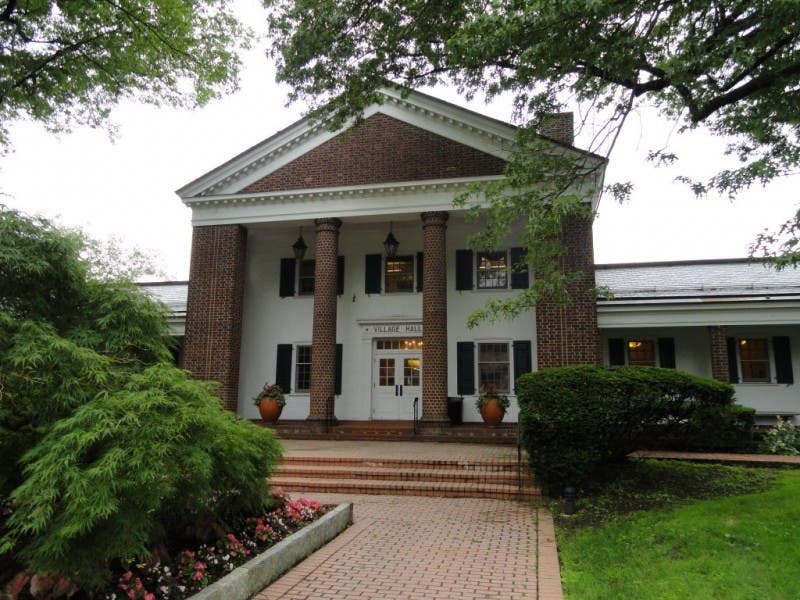
Photo credit: Google Maps.
Get more local news delivered straight to your inbox. Sign up for free Patch newsletters and alerts.