Community Corner
Mayor Marvin: The 'Disincentives' to Fixing Our Crumbling Infrastructure
In this edition of her regular column, Bronxville Mayor Mary Marvin discusses how the state does not do enough to repair its infrastructure.


Written by Bronxville Mayor Mary Marvin
Our nation’s aging infrastructure has been in the news of late, most recently with a major piece on “60 Minutes.” The disaster of Hurricane Sandy and the consequent rebuilding efforts served to highlight the weakness in the infrastructure systems in our older states along the east coast. Sadly, it takes a major catastrophe for our government to focus on the often unseen, non-sexy needs.
Once every four years, the American Society of Civil Engineers conducts a comprehensive assessment of the major infrastructure categories such as roads, bridges, water transfer and water treatment. In the recent report, the U.S. received a D+ with an estimated $3.6 trillion needed to get us nationally up to code. As illustration, 1 in 9 bridges has a major structural defect, 27% of our bridges are functionally obsolete and over 30% of our road system is rated mediocre or poor. Our roads are so congested that the typical American commuter loses 34 hours a year sitting in traffic with the hour number doubling near major cities. It is estimated, that due to poor road conditions, Americans spend $4.5 billion yearly in extra vehicle repairs or $403 per motorist. Most importantly, it is estimated that poor road conditions play a significant role in fully one-third of vehicular fatalities and the number is rising.
Find out what's happening in Bronxville-Eastchesterfor free with the latest updates from Patch.
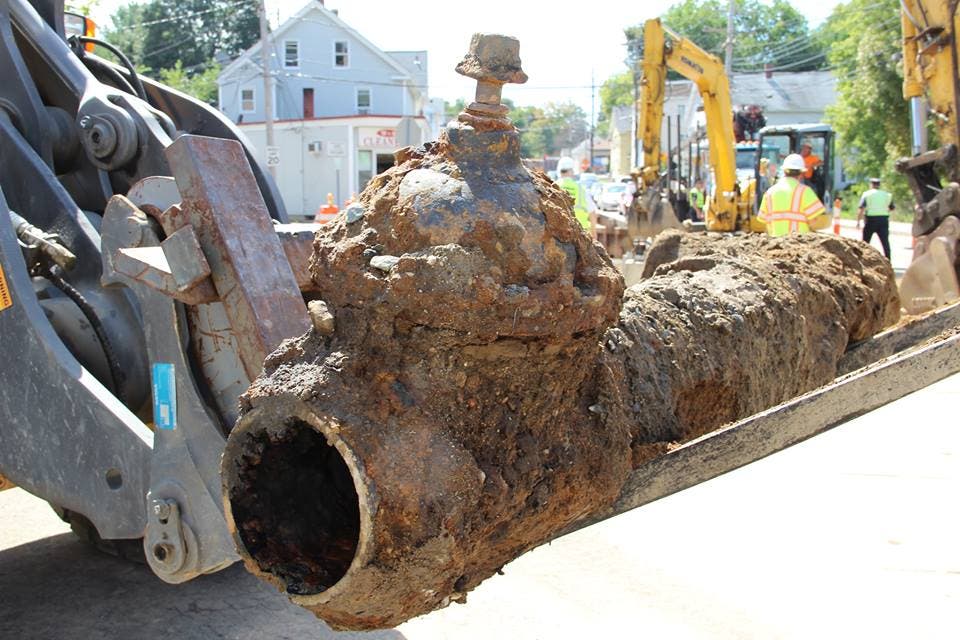
As to our water transport infrastructure, many of the pipes are clay and now over 100 years old. As a consequence, the city of Baltimore now averages 1,000 burst pipes every year, Houston losses fully a quarter of their fresh water supply yearly to leaks and bursts, and just a few months ago, a 93 year old water main under Sunset Blvd burst sending 10 million gallons of drinking water onto the streets.
In 2012, the United Stated spent less than 1.5% of our Gross Domestic Spending on our nation’s infrastructure. In contrast, China spends 7.5% of GDP on infrastructure while India spends 5%. Not surprisingly, the US went from #1 globally in this category to #14.
Find out what's happening in Bronxville-Eastchesterfor free with the latest updates from Patch.
A former president of the Civil Engineering Society lays the blame directly at the feet of our elected. “When you turn to politicians, they’re not looking to the future, they’re looking to get re-elected.”
Bringing the issue closer to home, only serves to further magnify the problem.
More than 60% of New York State’s roads are rated in poor or mediocre condition and 12% of the bridges are structurally deficient. The forecast for our water system is even more dire. Fully one quarter of the waste water facilities in New York are beyond their useful life and the New York State Department of Environmental Conservation (NYSDEC) said the quality of our drinking water is actually decreasing due to outmoded technology in most of our plants after decades of improvement.
It is estimated that in the next two decades, over $60 billion will be needed to repair our water systems.
Even now, old sewers flooded by stormwater release more than 27 billion gallons of untreated sewage into our beautiful New York Harbor annually.
Yet despite all of this as a backdrop, and a recent statement in Governor Cuomo’s 2014 treatise, “Moving New York Forward,” stating that, “Sustaining New York’s infrastructure will remain a key pillar of Governor Cuomo’s second term,” local governments are not only not encouraged but actually disincentivized to do any infrastructure repairs. Unlike school districts, capital improvements monies are not exempted from the 2% tax cap legislation.
This results from a profound misunderstanding of the legislation by some of the electorate. Some voters think that capping their government from adding 2% extra of “fat spending” every year is the net result and quite a good thing so candidates don’t get re-elected if they overrode the tax cap.
In actuality, no one in local government is adding 2% of anything as the unfunded mandated expenses billed from Albany exceed 2% every year. No one is fixing pipes, rather than are laying off police, fire, and sanitation workers.
To no one’s surprise in the local arena, Comptroller DiNapoli stated in his report entitled, Growing Cracks in the Foundation, “Over the past several years, New York’s local governments have reported that they are falling behind in meeting their responsibilities to adequately maintain sewer and transportation.”
Logic dictates that local governments need to be incentivized, not punished, to do the right thing and not be forced to balance short term financial concerns with long term sustainability.
The current 2% tax cap bill sunsets in 2015, and I urge every reader to contact our local legislators and our Governor and point out the illogic in the current bill and encourage them not to renew at least in its current form. As written, it does a grave injustice to our essential responsibility to pass down to our children and future New Yorker’s a sustainable state.
Patch file photo.
Get more local news delivered straight to your inbox. Sign up for free Patch newsletters and alerts.