Politics & Government
Mayors Lay Out Priorities at Conference: Bronxville Mayor
The 2 percent tax cap was discussed.


Written by Mayor Mary Marvin.
This week, I had the privilege of serving on the New York State Conference of Mayors Legislative Priorities Committee.
We convened in Albany to discuss issues and find common ground that would provide strength in numbers when we present our legislative slate to the newly configured Albany government.
Find out what's happening in Bronxville-Eastchesterfor free with the latest updates from Patch.
Sadly, many of our priorities play like a familiar tune repeated year after year, but hope springs eternal that with the evolving change in Albany leadership, something may strike a chord.
As our Mayors’ Conference President and Mayor of White Plains Tom Roach stated so succinctly at our session’s opening, “We keep fighting because that’s what we do.”
Find out what's happening in Bronxville-Eastchesterfor free with the latest updates from Patch.
The following are listed macro to micro in scope, but the passage of any one would benefit Bronxville.
Increased Unrestricted Aid Directly to Communities
Despite living under a 2% tax cap provision that due to its tie in to an inflation index is actually .68%, municipalities have suffered through eight straight years without an increase in local funding. It remains stagnant at $715 million for the entire state while school districts have received yearly increases of over $1.5 billion making the program clearly inequitable.
Remember under the AID to Communities program, municipalities are not seeking a gift, a handout, rather we are asking that more of our state tax dollars be directed back home.
Quite frankly, as seasoned politicians have candidly admitted, the program involves unrestricted funds so there are no ribbon cuttings or “recognition” moments, thus not terribly compelling.
Modification of the 2% Tax Cap Legislation
The cap, successful in its political traction, has resulted in significant unintended consequences in execution. The primary modification needed is an amendment to provide an exclusion for municipal capital expenditures on public infrastructure projects similar to what the State accords school districts and itself.
As a consequence of the legislative language, the cap has turned into the single most powerful disincentive to undertaking infrastructure repairs in one of the most “crumbling states” in the Union. (In a recent report, the State Comptroller estimated that over $65.7 billion is needed to get New York back to minimum standards.)
As a demonstration of how ludicrous the provision is, in order to stay under the tax cap last year, our Village would have had to turn down the $5 million plus in FEMA grant monies as our local 25% copay put us above the .68% spending cap.
At this moment in New York State, a staggering 48% of the state and local roads were deemed in “poor to fair condition” and the Department of Transportation rated more than one-third of local bridges as structurally deficient. (Our Parkway Road Bridge appearing on that list two years ago.)
Authorize Municipalities to Charge for Services Provided to Tax Exempt Properties
Far and away, this was my municipal colleagues’ No 1 priority.
Gannett Newspapers recently completed an eight-part series on tax exemptions in New York State and their effect on local governments, and the magnitude was staggering. The number of wholly exempt parcels has risen from 179,420 in 1999 to 219,602 last year, a 22% increase. The value of these properties have doubled from $276 billion to $567 billion over the same time period.
My colleagues support legislation that would permit municipalities, at local option, to impose charges on tax-exempt properties to defray the cost of services provided including lighting, road paving, sewer and sanitary systems, sanitation and the even more costly fire and police protection to defray the tax burden on the remaining taxpayers.
Currently, may peer communities are recouping funds by creating “improvement districts” and assessing lighting and street and sewer services on a cost per linear foot. However, the most costly services — police and fire — are expressly prohibited under current law from being assessed to tax exempt entities. With cities such as Albany having 61% of their property off the tax rolls and Rome having 43%, the problem is at a critical juncture. Even our small Village has 23% of our properties designated tax exempt and the financial burden escalates. As example, we spent $3,500 in police overtime on one night due to an altercation in our Hospital’s Emergency Room.
Restructure and Reform the Gross Receipts Tax
Under current law, cities and villages have the local option of imposing a gross receipts tax (GRT) on the gross operating income of utility companies located within their boundaries at a rate of 1%. (A 3% rate was carved out for Buffalo, Rochester and Yonkers.) The GRT is one of the few sources of non-property tax revenues we have to access.
The Mayors support a 3% option as it is a tax spread fairly among all utility users, not just property tax payers. In addition, New York City and the state itself had legislation passed to allow include cellular phone service in recognition of the predominance of wireless technology and to promote equity in the tax treatment of all types of telecommunication providers. Smaller municipalities would like the legislation broadened to include the New York City provisions.
Post the November election, the makeup of the New York State Senate and Assembly changed very little with incumbents ruling the day so the jury is out as to whether we will see any change in philosophy toward local governments.
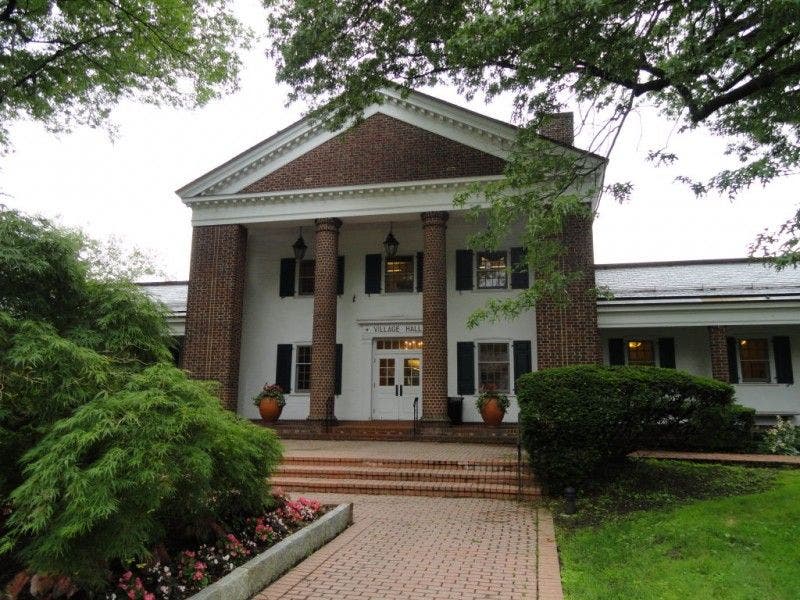
Photo credit: Google Maps.
Get more local news delivered straight to your inbox. Sign up for free Patch newsletters and alerts.