Politics & Government
Municipal Governments Need, Deserve Yearly Increases In State Aid: Mayor
Local governments are too diverse to be a "special interest group."


Written by Mayor Mary Marvin.
The recently passed State budget had minimal effects on our Village. The provision most important to small communities like our own is AID or State Aid to municipalities. The fund, a revenue source to cover the cost of the over 200 unfunded state mandates, has been level or reduced every year since 2008, creating a $133 million reduction in funds delivered to local governments statewide. Just as the annual increases in school district aid have helped districts comply with the tax cap or maintain certain services, municipal governments need and deserve comparable yearly increases.
Other legislation our bipartisan New York State and Westchester County Mayors’ Associations advocated for were either ignored or grossly underfunded.
Find out what's happening in Bronxville-Eastchesterfor free with the latest updates from Patch.
So as to not have to rely on the whims or sometimes beg for direct financial aid from Albany mentioned above, we continue to support legislation which would prohibit the enactment of statutory or regulatory mandates which impose a direct or indirect local financial burden unless an appropriation is made sufficient to hold each local government harmless from any part of a new fiscal burden. In addition, all current unfunded mandates should be required to sunset in two years unless they both prove their existence as an essential service and a funding source is allocated to offset the expenditure.
[Get Patch’s Daily Newsletter and Real Time News Alerts here.]
Find out what's happening in Bronxville-Eastchesterfor free with the latest updates from Patch.
In New York, unfunded mandates cost in the hundreds of millions of dollars and have become the “go to” back door way of increasing local property taxes, the most regressive form of government taxation. It is particularly important to stem these in Westchester as we live in the highest taxed county in the country.
Further, to decrease the burden on the local property tax payer, the Conference of Mayors urged that the State, at local option, allow us to impose charges on tax-exempt properties to defray even a portion of the cost of the services local governments provide. While municipalities currently have limited authority to impose user fees to cover some of the expenses incurred — hence the trend in many communities to create lighting, paving and curbing districts which can then charge all beneficiaries of the improvements through a usage formula — we are prohibited from charging for the most costly services including police and fire protection.
This past October Gannett papers conducted an expansive study on tax exemptions in New York State and the effect on local governments.
Approximately $866 billion in property value is exempt from school and municipal taxes and the number of wholly tax-exempt parcels in New York has grown from 179,420 in 1999 to 219,602 in 2016, a 22 percent increase. The values of those properties have also more than doubled from $276 billion to $567 billion over the same time period. For Villages, including our own, the average amount of tax exempt property is one quarter of the land within municipal boundaries.
As an interesting aside, in his very recent State of the City Address, Yonkers Mayor Michael Spano asked his colleges and hospitals to voluntarily contribute 25 percent of what would be their tax obligations to help defray the cost of essential services provided.
Since local revenue streams are the only way to offset the financial burden on the local taxpayer, Mayors also continually ask for permission to levy gross receipts taxes on utilities at a uniform rate. Currently, Yonkers, Buffalo and Rochester have the ability to impose a 3 percent tax while the rest of the State is capped at 1 percent. In addition, though New York City and the State of New York itself have recognized that most telecommunications is now wireless and have amended their statutes accordingly to include cellular phone service for taxable purposes, local governments are prohibited from doing the same for even the 1 percent we are allowed to collect from utilities. It is not only a major financial loss but patently unfair.
I write often about the 2 percent tax cap and the unintended but deleterious consequences that have already manifested themselves. The major disincentive is the impetus to repair our aging infrastructures, most notably water and sewer systems, since expenditure on them is “non-deductible” from the tax cap which due to an inflation tie-in is actually closer to a 1 percent cap.
Net-net, if a politician wants to garner good press, get elected or re-elected, they often opt to stay under the cap by neglecting the unsexy underground repairs of a community.
In the recent state budget, an additional $200 million was earmarked for water infrastructure. Though an admirable start, the number is woefully short of statewide needs. The State Comptroller’s Report of 2014 cites three separate studies estimating a combined water/sewer infrastructure funding deficit of $10.7 billion. Infrastructure is critical to both a community’s economic stability and improved quality of life and must be funded by a formula remotely tied to need.
Disappointed but not deterred, the New York State Conference of Mayors continues to lobby our electeds on the issues that help to sustain our local communities.
Unfortunately, local governments to some politicians represent too many disparate types of people, so we are not a “special interest group” or voting block that gets needed attention. We don’t have membership dues, political action committees and funds or drive folks to the polls. We are just the private property taxpayer who in the end funds it all! I urge you to reach out to all of our electeds, me included, and express your views, suggestions and displeasures. The accepted understanding is that a personal letter or phone call to your representative at the district office level is most noticed. The hope is that if enough of us begin to actively engage in the process, change is possible.
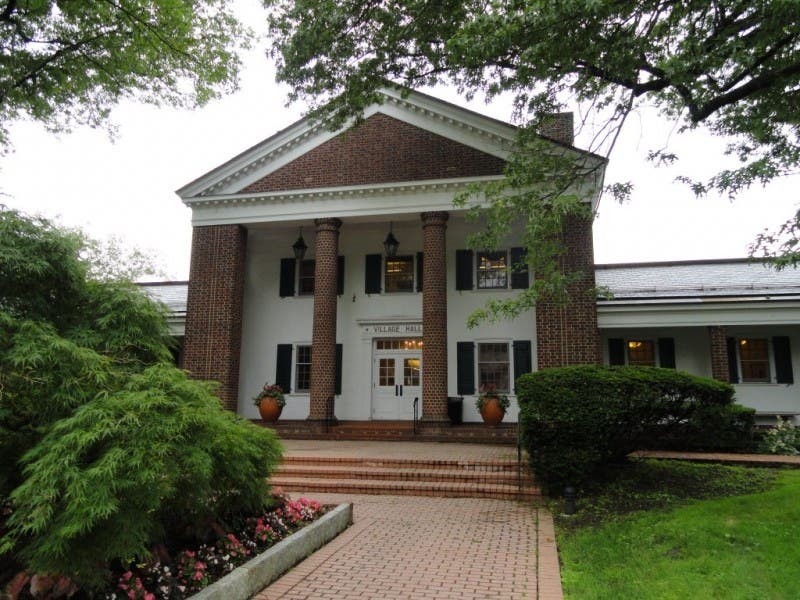
Photo credit: Google Maps.
Get more local news delivered straight to your inbox. Sign up for free Patch newsletters and alerts.