Politics & Government
Spring Leads to Thoughts of Making Bronxville Premier Walkable Village: Mayor
Homeowners are responsible for sidewalks that their properties abut.


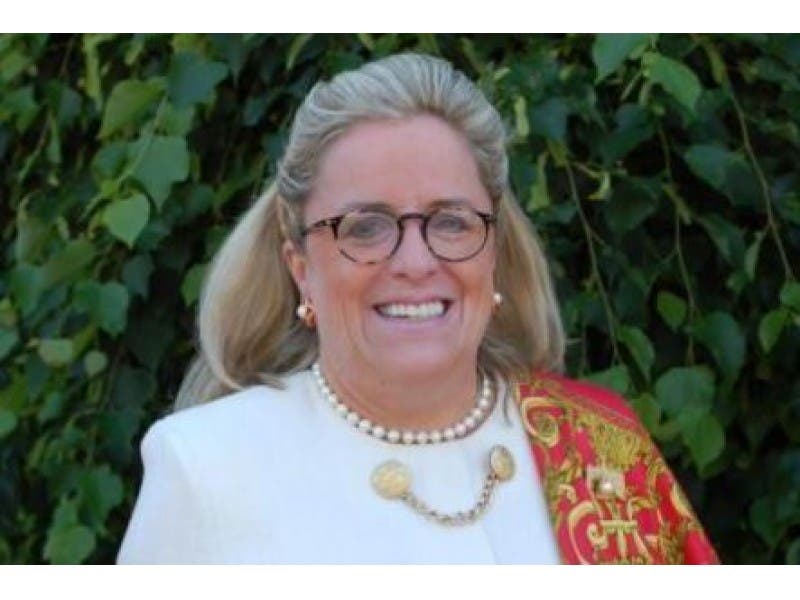
Written by Mayor Mary Marvin.
With spring thankfully just two weeks away, Village Hall is turning outward as we welcome a new season.
Our plans for the repair and improvement of the entrance to Village Hall will be open for public bid March 18. We have also applied for all municipal street tree purchase collaborations in hopes of adding to our inventory. Our municipal trees are still fewer in number than pre-storms Sandy and Irene and we are playing catch up.
Find out what's happening in Bronxville-Eastchesterfor free with the latest updates from Patch.
In the spirit of spring, we are also heeding the advice of many planners/advisors who encourage us to further capitalize on our Village as a premier walkable community.
To do our part, we are repairing Village-owned sidewalks, crosswalks and ask our residents to do the same. With the goal of making Bronxville more walkable, we are exploring areas that may be suitable for additional sidewalks and marked crosswalks. Per sidewalk maintenance, homeowners are responsible for the repair and maintenance of sidewalks that abut their property – be they concrete, stone, composite or even dirt, with the goal of uniform safe passage. If you notice a sidewalk needing attention, contact the Village Building Department (914) 337-7338, and staff will issue a “notice to cure.” No monetary penalties attach unless the notice is ignored.
Find out what's happening in Bronxville-Eastchesterfor free with the latest updates from Patch.
In the same spirit, residents have asked about bike riding and the possibility of designated bike lanes. Unfortunately, given the Village topography, the vast majority of our streets are not wide enough for regulation bike lanes. Ones acceptably wide – Pondfield Road and Midland Avenue – either have continuous parking areas or a traffic calming hedge divide. Even if wide enough, Police Chief Satriale is not a proponent of designated bike lanes because they serve to complicate bicycle and car turning movements at the involved intersections.
According to Village Code, bicycles may be ridden on sidewalks throughout the Village only if the rider is under the age of 11. Due to pedestrian traffic, no one can ride bikes or skateboards on the sidewalks in our business districts.
So many communities, especially in New England and the Chicago suburbs, have actively undertaken walking initiatives, particularly involving their schools.
Verifiable scientific data reinforces these initiatives, as study upon study confirms that a morning walk to start one’s day increases alertness and positively correlates with improved academic performance, greater self-esteem and sense of independence.
In a recent UK study, nine of 10 teachers felt the children who walked to their school had less stress, increased creativity, better test scores and, most importantly, arrived much more ready to learn. Studies in Denmark and Scotland correlated walking to school with responsible thinking, less obesity, personal independence and a calmer state of mind. In addition, the children who walked to school demonstrated more positive physical movement/activity throughout the school day and their level of concentration was even higher than those children who consumed a healthy, balanced breakfast.
Additionally, the State of California Department of Education found a direct link between academic achievement and overall physical fitness. And most importantly, 51 percent of students in California would prefer walking to school, even given some significant travel distances.
More than any other nation, the U.S. trend is to rely more than ever on transportation to school by car. According to government statistics, the number of children driven to school within a 1-mile radius of their home was 20 percent in 1969 and is now upwards of 50% and growing. As a consequence, we are perpetrating a vicious cycle – the more students that are driven to school, the greater congestion and concomitant safety issues so walking becomes more dangerous for those who opt to walk.
Concurrent with this change is a rise in childhood obesity, traffic congestion and air pollution. In a Center for Disease Control study it was found that less than one in five American students walk to school even once a week. During a full school week, 12 percent of American students walk every day versus 50 percent in England.
All of the studies cite statistical data but emphasize as equally important the demonstrative intangibles.
By walking, young people can realize a sense of adventure, see friends and neighbors, hear sounds of nature that are often missed and enjoy the company of their mom, dad or caregiver without distraction.
Young people also learn valuable safety rules – the safe way to walk and drive, and the rules of road safety which are a lifelong need.
The Village is ready to be a partner with the school and to continue to enforce speed limits in the school zone, educate students to be safe pedestrians and add pedestrian-friendly walkways and signs where appropriate.
Many school districts have “walking school buses” where parents take one turn per week to lead and caboose a “train” of youngsters. In addition, competitions, awards, prizes, etc., have proved to be positive incentives to stimulate walking programs.
A recent study concluded with a prophetic observation so relevant to Bronxville and our community aspirations: “Walking is a reflection of how we feel about the environment in which we live. Children learn to love their hometowns more if they get to know them on foot.”
Get more local news delivered straight to your inbox. Sign up for free Patch newsletters and alerts.