Politics & Government
Why Do Americans Not Take Advantage of the Ability to Vote?
In her latest column, Bronxville's Mayor Marvin takes a look at the reasons to vote and the reasons Americans don't.


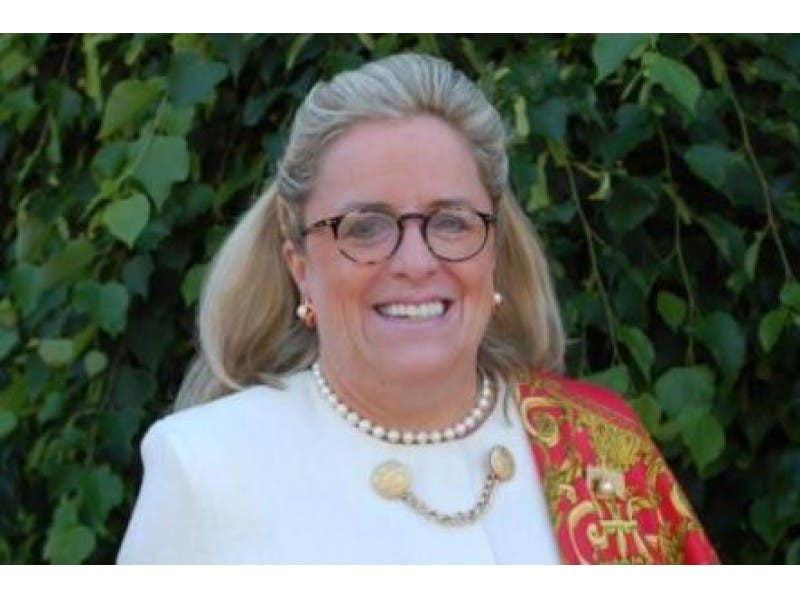
Written by Mayor Mary C. Marvin.
By the time this column is published the much ballyhooed Iowa primary will be over and the talk will turn to New Hampshire.
The saturation of the airwaves analyzing demographic voting for each candidate got me to thinking about all aspects of the way we vote (or don’t) as Americans.
Find out what's happening in Bronxville-Eastchesterfor free with the latest updates from Patch.
As a nation, we have a dreadful voting record as judged by the eligible voters who actually cast a ballot. We rank 31st out of 34 when compared with the other most highly developed countries.
A Presidential election brings out the most voters, yet only 53% of those eligible cast a vote for President Obama or Governor Romney.
Find out what's happening in Bronxville-Eastchesterfor free with the latest updates from Patch.
By contrast, recent national elections in Belgium, Turkey and Sweden brought out above 80% of the voting public. To be fair, Belgium and Turkey are two of the 28 nations where voting is compulsory. Though not at all strictly enforced, with many excuses accepted, the law does have a dramatic effect on participation. As example, Chile switched to voluntary voting and the percentage of voters plummeted in one year from 87% participation to 42%.
High voter turnout in Germany and Sweden is credited to automatic registration by the government when one reaches voting age. Registration, a personal responsibility in the U.S., only results in 65% of those eligible doing the paperwork required.
The date of voting seems to have a great correlation with participation. In Australia, Brazil and Belgium, where voting is always on a weekend or national holiday, participation is above 80%.
Our Tuesday voting is anachronistic, dating to a Congressional decision back to 1845. As a predominantly agrarian society with travel by horse and buggy, voters needed a day to reach the county seat, a day to make their voting selections and then a day to travel back home, all without interfering with the three days of the week dedicated to religious worship. That left only Tuesday and Wednesday and Wednesday was the tradition Market Day, so Tuesday was chosen.
Since every survey points to inconvenience as the number one reason Americans do not vote and Congress has managed to move Columbus Day, Martin Luther King Day and carve out a Presidents’ Day, the precedent is there, if not the inclination to move from Tuesday voting.
Midterm elections and local elections, bring out far less than the 50% plus Presidential participation.
In the recent congressional elections only 36% of those eligible turned out, marking the lowest percentage since World War II.
In 2010, despite contests for every statewide office in New York for the first time in decades, New York ranked last in voter participation at below 40%, close to our other non-voting colleagues in Utah and Texas. Governor Cuomo won his recent re-election with just 32% of eligible voters casting ballots. When Mayor DiBlasio was elected, a record low 24% of eligible city dwellers participated.
On the very local level, with the exception of this past December when residents came out to vote, our Fire District Commissioners often get elected with less than 4% of the eligible Town voters participating, despite their hugely important role of overseeing a $16 million plus budget.
According to national surveys, Americans don’t vote for the number one reason of inconvenience. Following closely behind are reasons ranging from lack of interest, too busy, can’t miss work, think their vote has no impact, illness, dislike of the candidates, out of town or simply forgot.
The data reveals that if you are young, a minority, less affluent and less educated, you vote in record low numbers.
Financial security in particular is strongly correlated with nearly every measure of political engagement. Citizens earning over $100,000 vote in double the numbers of those with incomes below.
As to the correlation with education, 44% of eligible voters without a high school diploma voted in the 2012 Presidential Election vs a 77% turnout rate by those with a college degree.
Sadly, the surveys uniformly confirm that our young people do care about politics, a majority of them just dislike it! Less than a third of eligible voters aged 18 to 30, think running for office is a “honorable thing to do”, and 75% of them didn’t even vote in the most recent Presidential election.
The time consuming caucus system as practiced in Iowa brings out substantially less voters than even the low numbers when voting machines and absentee ballots are used in primaries.
Further muddying the waters, voters in the Iowa caucuses can change party affiliation the night of the caucuses and Democratic caucus voters have no secret ballot.
In Iowa, one goes into different rooms of a house based on candidate preference. It had to put a damper on free choice if one saw his boss or shop steward heading into a different room…yet the media will attach great significance to the final tallies.
As the voting season continues, the timeless words of Daniel Webster certainly ring true.
“Impress upon children the truth that the elective franchise is a social duty of as solemn a nature as man can be called to perform.”
Get more local news delivered straight to your inbox. Sign up for free Patch newsletters and alerts.