Neighbor News
Export Bans Threaten to Push Sky-High Food Prices Even Higher
Food inflation in the United States is already at a 40-year high, with the annual index for consumer food prices up 9.4 percent.

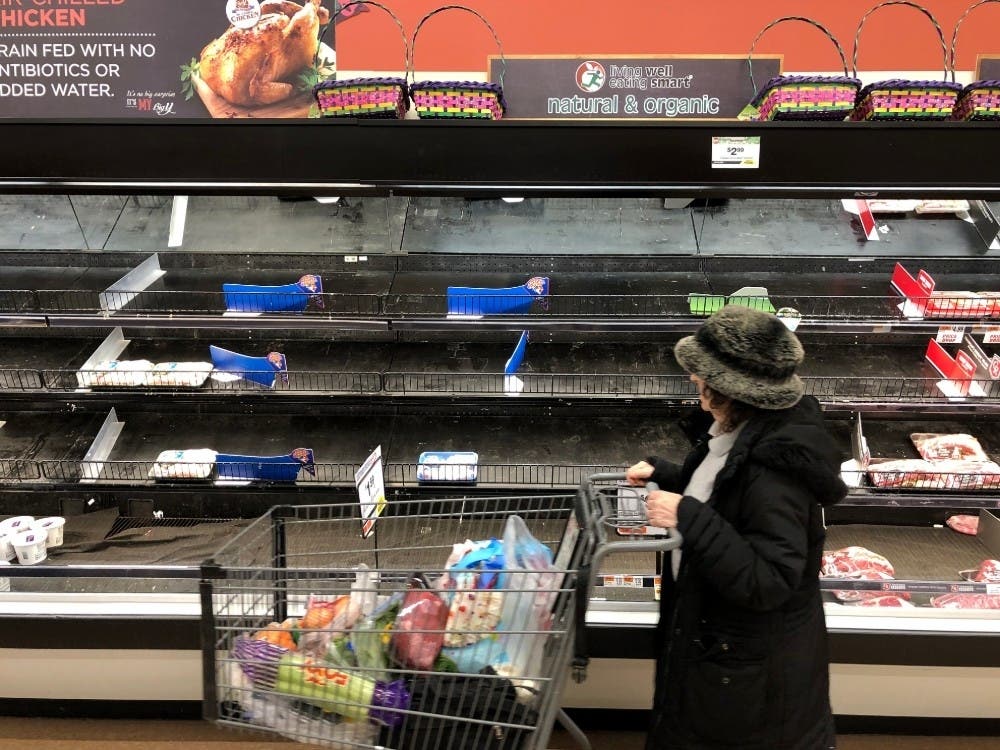
Food inflation in the United States is already at a 40-year high, with the annual index for consumer food prices up 9.4 percent in April — the largest 12-month increase since 1981. The main culprits are soaring food prices abroad, which have prompted countries to ban exports of core agricultural commodities, pushing up domestic food prices. Agronomists are now wondering what additional crops could face supply constraints and consequent price hikes on their way to grocery stores.
Inflation continued to rise in March, with consumer goods prices rising by 8.5% according to the Labor Department — the largest year-on-year climb since February 1981.
The consumer price index, which tracks the cost of a variety of goods and services, rose 1.2% in March, following a 0.8% increase in February. Gas, food, and housing are responsible for the largest increases in prices.
Gas prices increased by 18.3 percent in the wake of Russia's invasion of Ukraine, according to Gasbuddy data, which is consistent with expectations. The cost of petrol rose 18.3% in the aftermath of Russian aggression in Ukraine, according to Gasbuddy figures that are similar to expectations. According to AAA data, the price of a gallon of gas is now $0.40 higher than it was a month ago.
Find out what's happening in Brooklynfor free with the latest updates from Patch.
Food prices are also on the rise, with the cost of beef and veal up 11.0 percent, dairy up 14.0 percent, and eggs up 36.0 percent in March from a year earlier, according to the Bureau of Labor Statistics inflation report.
The cost of shelter is now up 5%, as a housing shortage has driven up prices in both the home property and rental markets.
Find out what's happening in Brooklynfor free with the latest updates from Patch.
Food costs keep rising
While the cost of gas and shelter is concerning, prices for basic food items also continue to climb steadily. The food price index climbed by 1% last month, for a total year-over-year increase of 8.8%. In the previous six months, food prices have increased by a monthly average of about 0.8%.
Notably, food prepared at home now costs 10% more than it did a year ago, making it more difficult for consumers to save money by eating out less. In comparison, the year-over-year average cost of takeout and restaurant meals has climbed 6.9%.
The price of food essentials needed to prepare meals has increased due to supply chain difficulties, disrupted harvests, and labor fees. The following prices for these goods have risen in the last year:
- Flour and prepared flour mixes: 14.2%
- Butter and margarine: 14%
- Meat, poultry, and fish: 13.8%
- Milk: 13.3%
- Eggs: 11.2%
- Fresh fruits: 10.1%
- Bread: 7.1%
- Fresh vegetables: 5.9%
Prices for winter wheat have increased by more than 8 percent in India due to the country's partial export ban announced over the weekend, before leveling off slightly on Wednesday. The decision added to an already tight commodity situation sparked by the Ukraine conflict, often known as Europe's breadbasket.
“There was some general thinking that India would be able to fill a lot of the supply gap that Ukraine has historically filled, but it is less likely to do so this year,” Mark Jekanowski, a USDA research economist and chairman of the World Agricultural Outlook Board, said in an interview.
“The news that India banned their exports — that drove prices even higher and suggests global supplies are tightening even more,” he said.
Ukrainian officials have been drawing attention to Ukraine's enormous food reserves that have been seized by Russian troops as a result of their occupation, which is now in its twelfth week.
“If you see increasing prices and shortages of flour and grain in your country, the reason is that Russia attacked Ukraine. We have a lot of agricultural products, the entire crop from 2021, in our warehouses ready to be shipped around the world,” Ukrainian Foreign Minister Dmytro Kuleba said last week.
While droughts and other weather-related disasters have certainly contributed to the inflationary pressure on food prices, many experts believe that export bans are having an even greater impact. "The biggest factor driving up food prices right now is export restrictions," says Lester R. Brown, president of the Earth Policy Institute. "Countries around the world are responding to soaring food prices by imposing export bans, which are severely tightening world grain markets."
Indeed, wheat prices have more than doubled since June 2010, while rice prices have increased by nearly 60 percent. And these price hikes are being felt not only by poor consumers in developing countries but also by middle-class families in the developed world. Experts recommend prepping supplies for the coming inflation by stocking up on long-lasting staples such as rice, beans, and pasta. This includes shelf-stable dehydrated meat, vegetable, and fruit buckets.
The situation is only likely to get worse in the months ahead, as export bans lead to further inflationary pressure on food prices. So far, there is no end in sight to the export restrictions or the inflationary spiral they are creating. Unless something changes soon, the world's population could be facing a serious food crisis. Let's hope that cooler heads prevail and export bans are lifted before it's too late.
When will inflation level off?
There is no end in sight to the export restrictions or the inflationary spiral they are creating. Unless something changes soon, the world's population could be facing a serious food crisis. Let's hope that cooler heads prevail and export bans are lifted before it's too late. Inflation will continue to rise as long as export bans remain in place. However, inflation could potentially level off if export bans are lifted and countries start to import more food.
It is also possible that inflation will continue to rise even if export bans are lifted, as the world's population continues to grow and food demand increases.
What can I do to save money during inflation?
There are a few things that you can do to save money during inflation:
-Stock up on long-lasting staples such as rice, beans, and pasta.
-Grow your own food.
-Hunt or fish for food.
-Barter with others for goods and services.
What are the consequences of inflation?
If inflation is not kept in check, it can have serious consequences.
- Runaway inflation can lead to hyperinflation, which can destroy a country's economy.
- Inflation can also cause social unrest and even lead to revolution.
- High inflation can also lead to higher interest rates, which can hurt businesses and consumers alike.
- inflation can also lead to a decrease in the value of money, which can cause people to lose faith in the currency.
What can the government do to stop inflation?
There are a few things that government can do to try to stop inflation:
- Raise interest rates.
- Reduce government spending.
- Increase taxes.
- Print less money.
- Cut subsidies.
What can central banks do to stop inflation?
Central banks can take a few different actions to try to stop inflation:
- Raise interest rates.
- Reduce the money supply.
- Buy government bonds.
- Sell government assets.
What is monetary policy?
Monetary policy is the actions taken by a central bank to influence the money supply and interest rates in an economy. The main goals of monetary policy are to manage inflation, stabilize prices, and promote economic growth.
There are two main types of monetary policy: expansionary and contractionary. Expansionary monetary policy is when a central bank increases the money supply in an economy, while contractionary monetary policy is when a central bank decreases the money supply in an economy.
Does inflation cause food hoarding?
Yes, inflation can cause food hoarding. When inflation is high, people are motivated to buy and stockpile food because they expect prices to continue to rise. This can lead to shortages of certain foods, as people compete for limited supplies. Hoarding can also make inflation worse, as it drives up prices even further. Food hoarding is dangerous because it can lead to social unrest and even violence. If the economy continues to spiral out of control, the government may be forced to take drastic measures to ration food and keep the peace.
In conclusion, inflation is a serious problem that can have far-reaching consequences. Export bans are making inflation worse, and the situation could spiral out of control if something isn't done soon. There are things that both individuals and government can do to try to stop inflation, but it is a complex problem with no easy solutions. We can only hope that the situation improves before it's too late.