Neighbor News
Uncommon High School Students Work with Top Architecture Firm
Students at two Uncommon high schools in Brooklyn got the opportunity to work with the world's largest design firm, Gensler.
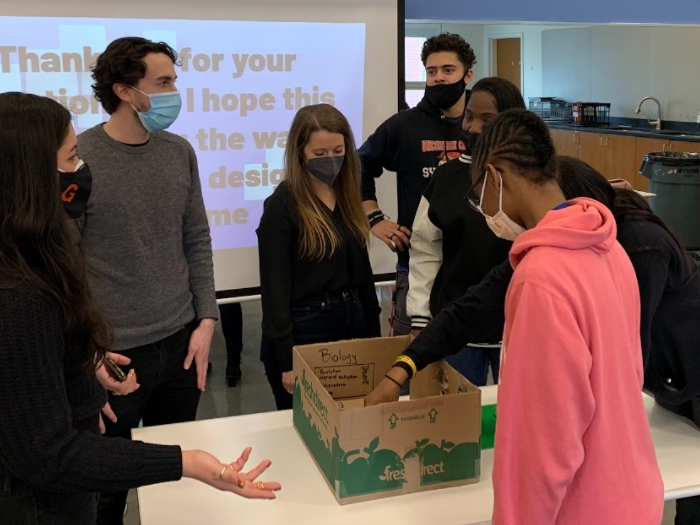


It’s not often that high school students get asked to reimagine the design of their classrooms.
It’s even more unusual when those students get the opportunity to work with the world’s largest design firm, Gensler. But that’s exactly what happened when students at Uncommon Charter High School in Crown Heights and Uncommon Collegiate in Bedford Stuyvesant collaborated with the team of designers and architects.
Gensler began working with students after conducting research in 2020 in New York City high schools.
Find out what's happening in Brooklynfor free with the latest updates from Patch.
The team consists of Sara Silvestri, civic, culture, and education designer; Phillip Redpath, arts and culture designer; and architect Margot Kleinman who also serves as a visiting assistant professor at Pratt Institute.
Together, they have been working on an ongoing research project called Understanding the Complexities of Urban Education. Funded by the Gensler Research Institute, the goal of the research is to develop an understanding of what supports the feeling of safety and belonging in an educational environment, specifically for Black and Brown students.
Find out what's happening in Brooklynfor free with the latest updates from Patch.
The six-month program was part of an extracurricular offering at Uncommon called Senior Year 2.0, Uncommon’s efforts to ensure its seniors work on projects that expose them to their potential passions and interests outside of core academic subject areas.
The design program at Uncommon Schools grew out of a two-day virtual charrette Gensler hosted over the summer of 2021 with the firm’s summer interns pursuing degrees in architecture and design.
The Uncommon students each chose a space within the school that they felt strongly about, and worked with Gensler to produce a new design for the space.
Silvestri, Redpath, and Kleinman worked closely with the Uncommon students and said students learned about the design process and were able to use their experiences and ideas to create spaces that had a greater sense of safety and belonging.
The 12th graders, who were called Gensler Design Research Scholars, presented their designs at the end of the program in a similar format to a college architecture class.
Student Alexus Rowe used Legos to represent a library she designed and surveyed her classmates to include more voices and perspectives.
Tiffany Barnes made a more traditional cardboard, 3D model of a biolab which included plants for the students to take care of, giving them a sense of ownership.
Nicolette Medford made walk-through videos of her library spaces using Sims, which she felt strongly about because her school did not have one, while Matthew Santiago used a 3D modeling program and made a digital collage, paying attention to technical details to make the space physically comfortable. As a result of the program, Matthew decided he wants to pursue a degree in architecture and has been accepted to two college programs.
“Each of the students developed these methods themselves and developed their own presentation styles after working through a series of journal entries reflecting their school experiences,” Redpath said.
Mike Taubman, a teacher and instructional leader at Uncommon Charter High School who directs the Senior Year 2.0 program, said the experience gave the students a chance to explore architecture as a possible career, not just by researching the field but by actually doing the work of the field.
“This opportunity also showed our students that their voices matter and that they have the power to shape the world around them,” Taubman said. “This wonderful collaboration with Gensler provided our seniors a springboard into their futures.”
“It was rewarding to watch students’ eyes open to the world of design, and how they each developed their own style and initiative. My architecture career also started in high school and knowing that this is opening a career ahead, for at least some of them, is an added bonus,” Kleinman said.
“I don't think we could have predicted the success of this program. It was incredible to see the students grow throughout the course and build confidence in their voices. We are entering our third year of research and we are excited to continue working with students to ensure their voices are heard,” Silvestri said.