Neighbor News
At Uncommon Schools, Students Solve Pandemic Problems
Students in an extracurricular medical science class at Uncommon Collegiate Charter High School have been solving COVID problems.
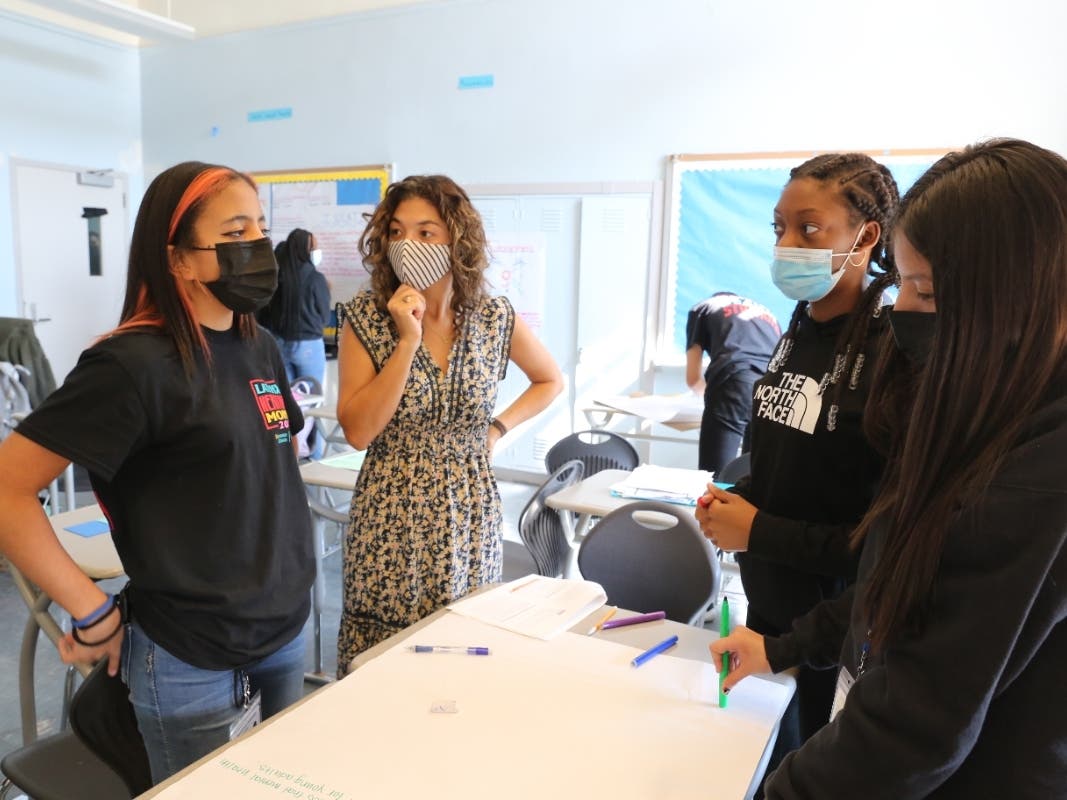


Since the beginning of the school year, students enrolled in an extracurricular medical science class at Uncommon Collegiate Charter High School have been solving the world’s COVID-19 problems.
While they learned about virology and the variants of the COVID-19 virus, they also delved into national pandemic policy, vaccine science and hesitancy, social and economic consequences of COVID-19, public health and the role of the media in spreading health misinformation.
One of their guest lecturers was Jay Varma, a physician, epidemiologist, infectious disease specialists, professor at Weill Cornell Medicine and senior advisor for public health for the City of New York who appeared alongside former Mayor Bill de Blasio during his daily COVID-19 press conferences.
Find out what's happening in Brooklynfor free with the latest updates from Patch.
“Students in high school don't usually get exposed to this kind of overview,” said Abbey Novia, a life-sciences instructor with the American Museum of Natural History, who taught the class. “It's not just chemistry or biology. It's a lot of different subjects that are coming together in one course that they don't typically get in high school.”
The multidisciplinary course is unusual for high school, but that's what Uncommon’s High School 2.0 program is all about. Uncommon offers project intensive enrichment classes for students in a wide variety of subjects, from medical science to fashion design and podcasting to coding. The classes are free and open to any Uncommon high school student.
Find out what's happening in Brooklynfor free with the latest updates from Patch.
“These courses give our students the opportunity to explore subject matter that they wouldn’t typically get to do in high school,” said Shraddha Nunziata, director of experiential learning for Uncommon Schools. “It’s content that you don't really explore until college or graduate school. It’s designed to open a new world of possibilities to them.”
The six-week medical science class is a first of its kind program being piloted by the American Museum of Natural History in Manhattan, which received a grant from the New York City Department of Health to teach youth about the pandemic.
Novia traveled twice a week from Manhattan to the Bedford Stuyvesant high school for the hour-long sessions.
“The idea is to empower youth to have some sort of influence over pulling their own communities out of the pandemic,” Novia said. “In addition to the science, we really wanted to focus on societal effects and how teens are affected.”
For the last class, students were divided into groups and asked to develop a plan addressing a problem caused by the pandemic. One group selected universal health care, two others chose mental health and a fourth selected a vaccine awareness campaign.
During the first half of the class, they met amongst themselves, standing before blank poster-sized sheets. They discussed the objectives, worked on strategies and developed tactics to achieve their goals.
Perhaps without even knowing it, students were developing skills highly valued in the workforce of today – collaborative problem solving, critical thinking, time-management, communication and writing, and analysis and research methodologies.
During the second half of the class, the students presented their plans to the full class, which had the opportunity to ask questions of the presenters. The students had arranged their desks in a U-shaped formation to simulate sitting around a table, as if they were in a boardroom.
Novia said the goal of the course was not only teach the science behind viruses and vaccines, but empower students understand what the pandemic has done to society and their role in making change.
“They now have the ability to navigate living through a pandemic world a little bit better,” Novia said. “They also have the ability to seek out information and have a better sense of their role in their communities.”