Community Corner
Metro-North Breaks Ridership Record
Metro-North reached an all-time high and the LIRR hit a high it hasn't seen since 1949, MTA officials said.


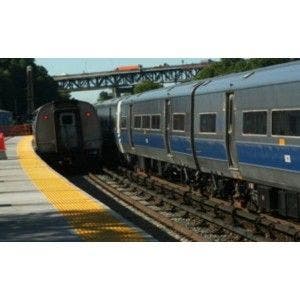
The Metropolitan Transportation Authority announced Monday that Metro-North Railroad and the Long Island Railroad are seeing record ridership numbers.
Metro-North Railroad carried approximately 86.5 million in 2016, the highest ridership in its history.
Metro-North’s ridership for 2016 surpasses the previous record of 86.3 million, set last year. Metro-North’s total ridership has more than doubled since the railroad was founded in 1983.
Find out what's happening in Chappaqua-Mount Kiscofor free with the latest updates from Patch.
The ridership figures come at a time when Gov. Andrew M. Cuomo has announced the re-envisioning of Penn Station, which is expected to host Metro-North New Haven Line service, via four new stations in the Bronx to be built in the coming years.
“The ridership figures underscore the importance of the LIRR and Metro-North capacity expansion projects that are underway or proposed,” said MTA Chairman and CEO Thomas F. Prendergast.
Find out what's happening in Chappaqua-Mount Kiscofor free with the latest updates from Patch.
Ridership Records on Metro-North’s Harlem, Hudson and New Haven Lines
All three of Metro-North’s East of Hudson Lines surpassed records. The Harlem Line and the Hudson Line beat last year’s record by over 125,000 each, with 27.7 on the Harlem Line and 16.6 million rides on the Hudson Line. The New Haven Line, Metro-North’s busiest, had another exceptional year, with 40.5 million annual rides, surpassing last’s year’s record by approximately 20,000.
East of Hudson ridership numbers are strong for both customers commuting to and from work and non-commuters. Annual commutation ridership is 0.6 percent above 2015. Non-commutation ridership for 2016 remains consistent with 2015’s increase of 2.3 percent West of Hudson annual ridership, which was negatively impacted by September’s Hoboken Terminal train accident, dipped to 1.7 million, down 61,368 from last year.
More customers took advantage of Metro-North’s connecting services in 2016. Combined ridership on the Railroad’s three connecting services – the Hudson Rail Link, Haverstraw-Ossining Ferry and the Newburgh-Beacon Ferry – grew by about 577,000, up 3.8 percent from 2015. Ridership increased by 10.8 percent on the Haverstraw-Ossining Ferry, by 4.3 percent on the Newburgh-Beacon Ferry, and by 1.5 percent on the Hudson Rail Link.
“We’ve worked diligently to improve service for our customers by providing more frequent train service and enhancing service reliability, and we’ve accomplished these goals while maintaining the highest safety standards,” said Metro-North President Joseph Giulietti. “We’ve delivered technological advancements that make service even more convenient, including eTix and the expanding availability of real-time information. We’re pleased and grateful that customers are responding to our efforts. But this record isn’t an end point for Metro-North, and we’ll continue to strive to improve service for our customers.”
Changing Economic Patterns Point to Further Growth for LIRR
The LIRR carried 89.3 million customers in 2016, a 1.9 percent increase over last year and the highest ridership since 1949.The LIRR’s growth continues recent trends in which the LIRR has registered a 1.97 percent average growth per year over the past 5 years. The railroad’s ridership has grown 10.2% over five years, from 81.0 million in 2011.
Underlying economic and demographic trends portend ridership growth continuing into the future, as a generation now entering the workforce shows a greater reliance on the railroad than older generations. A detailed demographic and travel analysis of LIRR customers shows an increasing reliance on the LIRR on the part of younger generations, and the beginnings of a reverse-travel market segment that the MTA expects would be expanded if Cuomo’s proposed Main Line Expansion project is built as expected.
The study showed that millennials, defined as those born between 1981 and 1997, have lower levels of access to automobiles than older New Yorkers, and are more likely to reach their local station by walking, bus, or being dropped off by others.
Get more local news delivered straight to your inbox. Sign up for free Patch newsletters and alerts.