Schools
Ocean, Space, Sight: 3 Research Topics for 3 Byram Hills Regeneron Semifinalists
The competition was formerly called the Intel Science Talent Search.


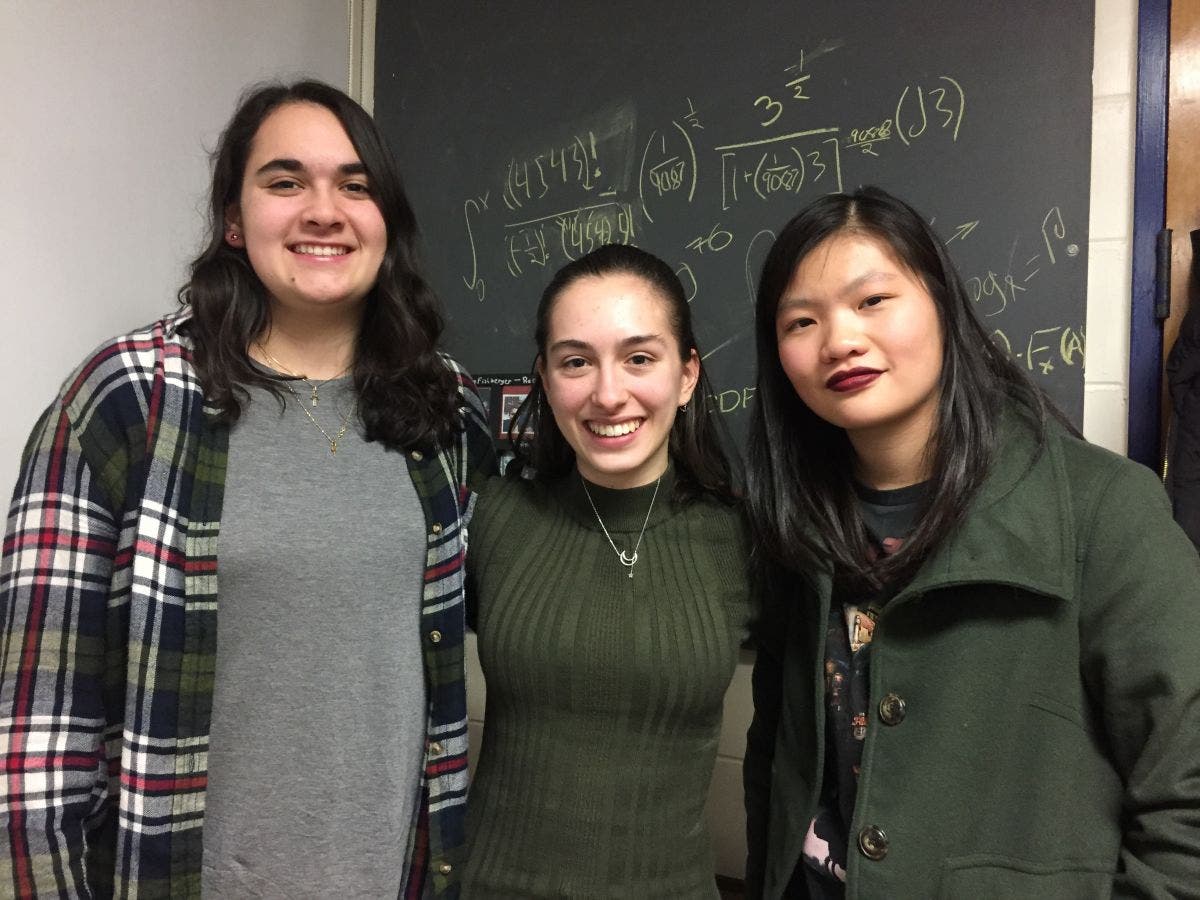
ARMONK, NY — The Three Byram Hills High School seniors who were named semifinalists in the prestigious Regeneron Science Talent Search worked on projects that delved into the ocean, peered thousands of light years into space and found a way to help blind people detect objects in front of them.
Audrey Saltzman, Yasamin Bayley and Isabelle Chong were among 300 high school seniors chosen in the competition, formerly called the Intel Science Talent Search.
The young scholars are chosen “based on the scientific rigor and world-changing potential of their research projects,” according to the Regeneron website. Later this month, 40 finalists will be chosen to receive an all-expenses-paid trip to Washington D.C. for the final round of the competition, where they will compete for a top prize of $250,000.
Find out what's happening in Chappaqua-Mount Kiscofor free with the latest updates from Patch.
“It’s really nice for all of our hard work to be recognized and to know that people will see it,” Audrey said.
Their work was widely varied.
Find out what's happening in Chappaqua-Mount Kiscofor free with the latest updates from Patch.
Yasamin studied two species of single-celled marine organisms called coccolithophores, which cover themselves in calcite plates, and showed an indirect result of climate change. As ocean surface water warms, it stratifies – splits into levels – making it more difficult for the organisms to move up and down in the water column. That forces the organisms to spend more time near the surface, exposed to more light. Under such conditions, one of the species Yasamin studied, Coccolithus pilagicus, showed a drop in growth rate that led to the reduced production of calcite, a nutrient that many other organisms need.
“It’s so much lower than in the low level of light that there is a high possibility that the amount of calcite in the areas where pilagicus is most abundant will significantly decrease,” she said.
She chose the topic because she is fascinated by the relationships between things that are very small and very large.
“When I came across biogeochemistry, which involves the cycles of microscopic organisms in these billions of gallons of ocean water, that’s exactly where I went,” she said. To conduct the research, she spent four weeks last summer at The Marine Biological Association in Plymouth, England.
Audrey, long fascinated with neutron stars because they are “one of the most extreme things in the universe,” used X-ray and ultraviolet data from NASA to study one of the bodies 19,000 lightyears away that had “gone into outburst” in 2012. She made progress toward determining its radius and also examined the source of ultraviolet light that came from a phenomenon known as “reprocessing.”
“My study is one of the clearest detections of photons being absorbed and re-emitted by the disk of a neutron star to date,” she wrote in her description of the project.
Isabelle developed a hand-held device she calls a “laser cane” to help blind people detect objects around them. A fan of science-fiction and spy shows, she got the idea for her device from one used by the character Augie on the show Covert Affairs. Using an inertial navigation system because it is more precise than sonar, she fashioned an instrument that vibrates when it senses an object.
About the size of a 2-liter soda bottle, the metal-framed device glows with blue lights (just to add a sci-fi flair). As with all new technology, the early version is larger and less sleek than later models will be. Isabelle is already planning ways to reduce its size.
It has a range of about four meters, much farther than a typical cane used by the blind.
“Having an increased range increases the amount of information that a person who uses the cane can gain about their environment,” Isabelle said.
Entrants in the competition compete for more than $3.1 million in prizes annually. Each of the semifinalists receives $2,000, with another $2,000 going to the student’s school.
Those chosen for the final round will travel to Washington D.C. in March, where they will publicly display their projects and meet with noted scientists as part of the competition. Alumni of the program hold more than 100 of the world's most coveted science and math honors, including the Nobel Price and National Medal of Science, the society reports.
David Keith, the director of the Authentic Science Research Program at Byram Hills High School, praised the school’s three semifinalists for their accomplishment. He worked with the students along with teachers Stephanie Greenwald, James Gulick, and Megan Salomone.
“These students are three of the smartest, kindest, and most capable young women you will find,” he said. “All of them are going to do remarkable things in their time.”
PHOTO: From l. Yasamin Bayley, Audrey Saltzman and Isabelle Chong/ contributed
Get more local news delivered straight to your inbox. Sign up for free Patch newsletters and alerts.