Community Corner
Pavilion Likely To Be Pulled Down For Battery Park Flood Defense
The project is expected to involve demolishing a beloved pavilion building in Wagner Park.


BATTERY PARK CITY, NY — The Battery Park City Authority is moving ahead on its resiliency pitch to protect the neighborhood from the future impacts of climate change.
But, the Authority said Tuesday the southern portion of its plan will require demolishing a beloved pavilion building at Wagner Park in order to build a future flood wall to protect the neighborhood, which is currently vulnerable to storm surges and sea level rise.
"The Authority has determined that we believe that the best approach is going to be to replace that building," Gwen Dawson, the Authority's vice president of real property, told Patch.
Find out what's happening in Tribeca-FiDifor free with the latest updates from Patch.
The update comes nearly a year after outrage over the possibility of replacing the building when conceptual designs were revealed. At a Tuesday evening update, the Authority stuck to its defense that the building would have to go.
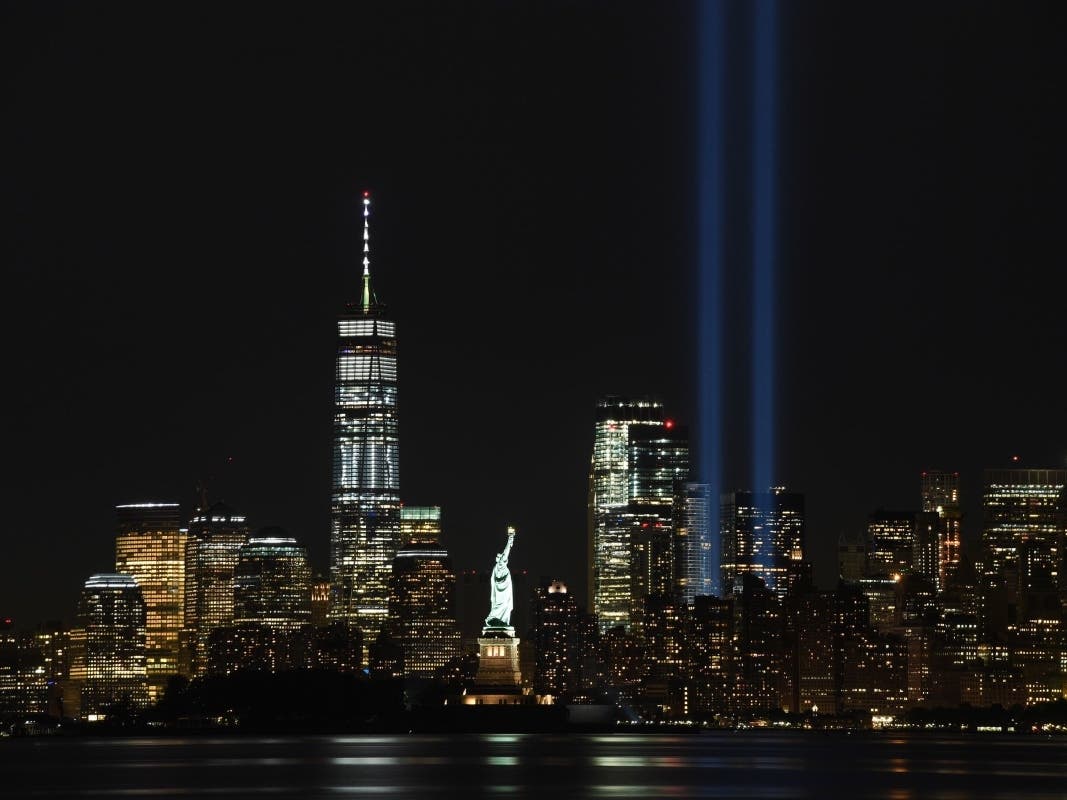
The pavilion has become a fixture in the neighborhood, known for its open views of the Statue of Liberty.
Find out what's happening in Tribeca-FiDifor free with the latest updates from Patch.
"There's not a lot of history in our community in terms of historical buildings," said Jeffrey Mihok, a Community Board 1 member. "That's why you're encountering resistance. ... We don't want to lose the ones that we have."
Interested in more news about Lower Manhattan? Subscribe to Patch's daily newsletter here.
Dawson insisted she understands that sentiment, but said she hopes to recreate a new community process for the space's future.
"It's not done in a way to dishonor what's there now," Dawson said. "We love the building. We love the park. It's what can we do now given the hand we’ve been dealt with climate change.”
Repairing or remediating the existing building would be costly, block views of the Statue of Liberty and situate the building lower than the flood elevation levels required, Authority reps said.
The Authority is still considering whether to elevate the building, move it closer to the street, or even demolish the building with no replacement at all — the latter which would be the cheapest.

Project area for the Battery Park City Authority's southern resiliency project presented March 12, 2019. Courtesy of BPCA.
Heather Morgan, sustainability and risk management lead at AECOM, emphasized that, ultimately, protecting from future risks of climate change is a critical point of the project.
The Authority's flood elevation design will be built to flood levels expected in the 2050s under a 100-year-storm, which is a storm that has a one percent chance of occurring each year.
These types of severe storms are expected to become more frequent due to climate change.
"Sandy is one storm," said Morgan, noting the 2012 storm the devastated Lower Manhattan was smaller than storms the project is designed to protect from. "We are not designing this project for Hurricane Sandy."
The Authority's resiliency scheme is broken into four parts: the north, west, south and a smaller portion to protect the Battery Park City ballfields.
A series of flood walls and berms for the southern portion, where Wagner Park is, would run from the Battery through the Museum of Jewish Heritage. The project will break ground sometime in 2020, the Authority said.
The Museum of Jewish Heritage is expected to be "dry-proofed," or entirely sealed from flooding whatsoever. The building, according to Authority reps, would be reinforced to act as a flood protection measure itself.
Wagner Park — where the pavilion would be demolished — could be built with a permanent flood wall concealed with a berm, which would largely require ripping up the park to build some type of gradual sloped surface or terraces to conceal a flood wall, Dawson said.
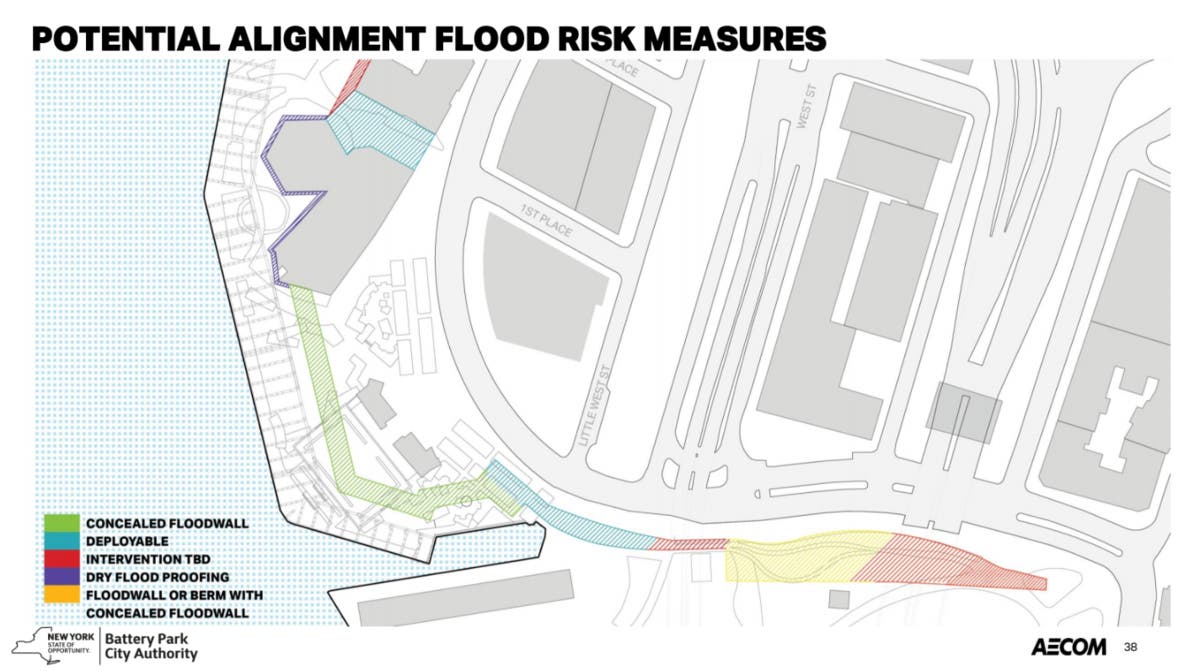
Flood protection proposals for BPCA's southern resiliency project presented March 12, 2019. Courtesy of BPCA.
The city-level projects east of Battery Park City are also in the works.
The Financial District could reportedly involve building new land into the East River. Two Bridges is expected to be protected with a series of flood walls beneath the FDR Drive. East River Park is mostly to be buried and rebuilt with 8 to 10 feet of soil.
The coordination between the city and Authority projects has been unclear — considering project changes and delays.
“I think that’s an evolving relationship," Dawson said. “There are going to be more frequent opportunities for us to interface with each other on our resiliency projects."
Get more local news delivered straight to your inbox. Sign up for free Patch newsletters and alerts.