Community Corner
Suffolk Faces 'Catastrophic' $1.5B Budget Hole In Next 15 Months
"Our immediate need is $1 billion in federal relief. This is not a handout. We send billions more than we get back every year."


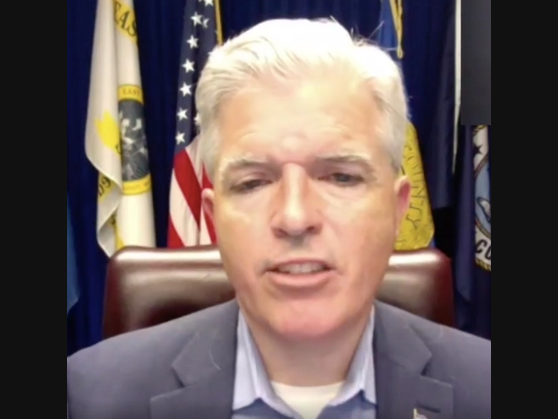
SUFFOLK COUNTY, NY — Suffolk is facing a staggering $1.5 billion budget gap over the next 15 months, and the time for federal help is now, County Executive Steve Bellone said Wednesday.
During his press briefing, Bellone said a meeting of the legislative budget committee was held Tuesday and a report given by the non-partisan budget review office that "laid out, in stark detail, the emergency this county is facing from the impacts of COVID-19."
The report, he said, indicated that Suffolk County is facing an $800 million budget hole over the next three months, echoing what an earlier report from an independent COVID-19 fiscal panel, made up of municipal and independent financial experts, stated. That first report said that in a "best case scenario," the county would see an $829 million budget gap over the next three months.
Find out what's happening in East Hamptonfor free with the latest updates from Patch.
The news yesterday, Bellone added, only looked at what needed to be done for the budget due in September.
Over the next 15 months, he said, the county is staring at a gaping $1.1 billion to $1.5 billion budget hold.
Find out what's happening in East Hamptonfor free with the latest updates from Patch.
It's time, he said, for the federal government to act.
"Our immediate need is $1 billion in federal relief," he said.
While that amount won't solve all the problems and tough choices will need to be made, along with efforts to transform government and make it more "productive, effective and efficient," the funding "will prevent the worst impacts from COVID-19 from happening."
Those impacts, Bellone said, will be borne by taxpayers, essential employees and first responders, who will have to cover the cost of the pandemic response.
The federal government, through the Centers for Disease Control and Prevention, Bellone said, stated "quite clearly that the response to this virus was to effectively shut down the economy in order to reduce transmission of the virus. We did that, and it worked. We flattened the curve here. I have no doubt that we saved countless lives — but there was a cost to this."
He added that it's important to remember: "This was a declared national emergency."
For the federal government, at this point, to tell residents and first responders to foot the bill for the pandemic response, Bellone said, would be "absolutely outrageous."
And, Bellone reminded that every year, Suffolk County gives billions more to the federal government than it ever gets back. "This is not a handout," he said.
Suffolk County, he said, was one of the hardest hit regions in the country and is one of the largest counties in the nation. "This pandemic that struck us here is really no different than if we were hit by a Category 5 hurricane. It's just a natural disaster of another kind," Bellone said.
And so, he added, Suffolk County is just asking the federal government to "give us back a little bit of our money, just a fraction of what we sent to Washington, every single year – just one time. This is not only the right thing to do, it's the smart thing to do."
If the federal government does not step up to the plate, he said, the region's recovery could drag on for more than decade. "The devastation we have faced in this region will be longer, deeper and wider than it otherwise would be or should be and that is unacceptable," he said.
Bellone thanked federal representatives fighting for Suffolk County in Washington at a moment "when the stakes could not be higher." If the federal government does not provide relief, Bellone said, it would be akin to saying, "We are okay with hollowing out, or gutting, the level of government that provides public safety, public health and social services, critical in dealing with this virus and even more critical in recovering from all the impacts from this that will reveal themselves over time."
Immediate steps
At Tuesday's meeting, a list of mitigation measures were presented that could be implemented, including layoffs, lag payrolls, raising energy and sales taxes, and amortizing pensions.
And those mitigation measures — with all the hardships they would mean to taxpayers and first responders — would only add up to $150 million, Bellone said, when $829 million is needed. "That's why we need federal relief," he said.
Action still needs to be taken soon, Bellone said.
To that end, he said, the county's budget office has put aside and embargoed $29 million in funding from various departments; resolutions have also been forward to mitigate impacts totaling $77 million.
Tax stabilization funding streams would be used to help mitigate impacts, as well, Bellone said. None of the measures he presented, two of which would be voted on by the public, would impact employees or substantive police, including environmental policy.
"This is what we call a no brainer," Bellone said, adding that the resolutions should be put to a vote before any of the other measures laid out Tuesday are even discussed.
Police department cuts?
When asked if cuts could impact the Suffolk County Police Department, Bellone said: "We are looking at everything."
When he first discussed the budget crisis, Bellone called the situation "cataclysmic."
"This is a crisis far beyond anything we've ever faced," he said. "If there were ever a time when the local community needed their federal representatives to deliver for them, that moment is right now."
First responders, healthcare heroes, and taxpayers should not have to bear the weight, Bellone said. "The COVID-19 crisis is not a burden that should be borne by taxpayers here on the local level," he said, adding that police officers, nurses, 911 dispatchers and others who have stepped up in the time of crisis "shouldn't have to worry about whether we can meet payroll or not."
He added: "This is a declared national emergency, not a local event. Now is the time for the federal government to step in and say, 'We have your back.'"
Numbers consistent
The number of positive coronavirus cases climbed by 32 to 40,770 Wednesday, with 129 individuals hospitalized countywide. The number of patients in ICU decreased by two to 35.
Hospital capacity stands at 3,045, with 1,097 beds available, or 64 percent; of 576 ICU beds, 230 are available, or 60 percent, Bellone said.
A total of 10 patients were discharged over the past 24 hours. And one patient died.
Get more local news delivered straight to your inbox. Sign up for free Patch newsletters and alerts.