Health & Fitness
Charting a New Course for Nurse and PA Graduate Education
There will be a new Hofstra North Shore-LIJ School of Graduate Nursing and Health Professions.

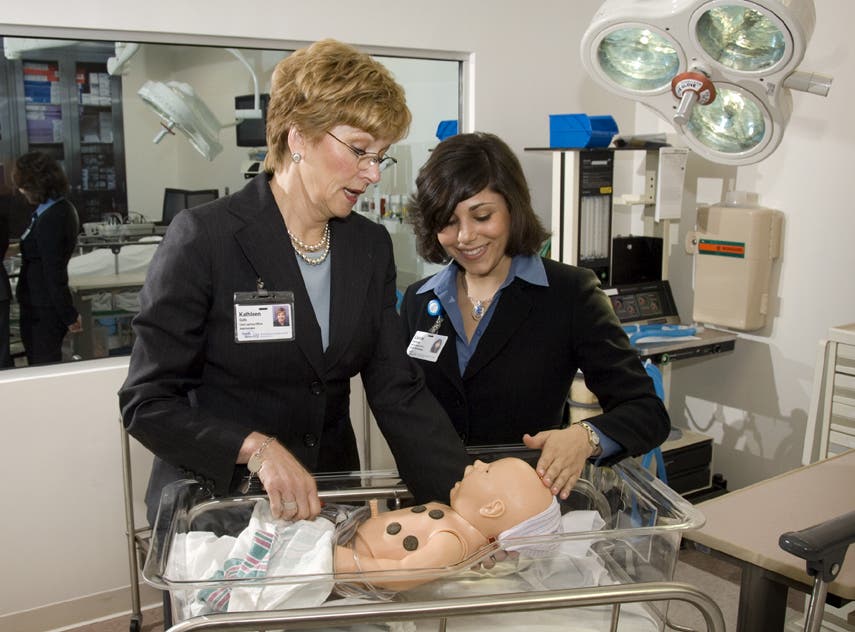
As senior vice president and chief learning officer, Kathleen Gallo, RN, PhD has created and implemented a comprehensive education strategy at the North Shore-LIJ Health System via the Center for Learning and Innovation (North Shore-LIJ’s corporate university) and the Patient Safety Institute.
Now, Dr. Gallo will serve as the founding dean of the newly formed Hofstra North Shore-LIJ School of Graduate Nursing and Health Professions. The new program addresses the need for health care access among a graying population and increased health insurance enrollees. In this new installment of our Health Care Leadership series, Dr. Gallo discusses the practical basis for this innovative new program. Video highlights are included at the conclusion of today’s post.
Q: You were recently named the founding dean of the new nursing school that will be established at Hofstra University. Tell me about the new school and its programs.
Find out what's happening in East Meadowfor free with the latest updates from Patch.
Dr. Gallo: When the Hofstra North Shore-LIJ School of Medicine was founded, we knew that we would need a school of nursing to align with it.
The Hofstra North Shore-LIJ School of Graduate Nursing and Health Professions is different. First, we are a graduate school and we will be graduating nurse practitioners [NPs]. Second, we have moved the Physician Assistant [PA] Program under the umbrella of the new graduate school.
Find out what's happening in East Meadowfor free with the latest updates from Patch.
We will have the School of Graduate Nursing and the Physician Assistant Program under that school structure. Now we have the opportunity between the School of Medicine, the Graduate School of Nursing and the PA Program to do interprofessional education.
Q: You talked about the nursing program being different. Do you eventually go to an undergraduate school of nursing?
Dr. Gallo: Our plan is to offer a doctorate in nursing. There is no desire to have an undergraduate program. There are schools on Long Island that offer wonderful undergraduate nursing programs, and we don’t think that we need to be in that space at this time.
Unique Take, Unique Tactics
Q: How will you approach the programs differently than other nursing schools across the nation?
Dr. Gallo: With the School of Medicine, the School of Graduate Nursing and the Physician Assistant Program, we have the opportunity to respond to the Institute of Medicine with their sentinel document around patient safety, as well as the Carnegie document that came out several years ago about integrating the health professions in education before they become employees. It is critical to patient safety and quality.
We have no legacy. The School of Graduate Nursing and the School of Medicine are brand new, so we have no minds to change about anything. We’re very fortunate to have a Physician Assistant Program ready, willing and able to move into this new type of model. So that is one difference--the interprofessional education. They will learn together at certain points in time.
Another difference is around the pedagogy that we will use. When we set up the School of Medicine, we set the foundation up for how learners learn, not how teachers teach, so it will be a very learner-centric model. No multiple choice exams, no lectures, but very much evaluating and assessing critical thinking using deliberate practice.
Q: When will you have your first enrollment class?
Dr. Gallo: Our inaugural class will begin September 2015. Our program is part-time, three years, which is not unusual for nurses going for a master’s degree to be able to accommodate family and work responsibilities. So, our first graduating class would be spring of 2018.
Q: What degrees will you grant at that time?
Dr. Gallo: We will grant a Master of Science with a major in nursing. Our students will be specialized in two different patient populations.
The first year we will have family nurse practitioners and adult gerontology acute care nurse practitioners. The second year, we will add psychiatric mental health nurse practitioners and a post-master’s certificate in acute care.
The Advanced Practice Advantage
Q: As you look at nursing over the next five to 10 years, you are obviously focusing on a graduate level because there is a larger need. What are the actual needs for these advanced nurses over the next five to 10 years, and are there other institutions that are competing with you to do this?
Dr. Gallo: There is a tremendous need for advanced practice nurses. We have 10,000 people a day retiring, and we also have insurance for everybody in the country. To be able to have access to health care, additional advanced practice health care providers need to enter the marketplace. Nurse practitioners have a very long history in the country of providing high-quality, safe, efficient and effective care.
There is plenty of research, particularly in primary care, that nurse practitioners provide exceptional care at a lower cost just in terms of the models that they work in and the efficiency. There is also research that patients actually have a preference in dealing with and getting care from Nurse Practitioners because of their communication skills, as well as, the time that they spend with the patient.
Q: In addition to these advanced degrees, and in addition to doing more within the medical community, how will nursing change over the next three to five years?
Dr. Gallo: The numbers of advanced practice nurses will grow extraordinarily. Advanced practice nurses can work in a number of different areas in ambulatory settings or they may choose to have their own practices. They may work in the Minute Clinic at CVS. They will have the opportunity to join physician groups and be part of that team, along with physician assistants. As the models of health care delivery change and it is moving to outpatient, the nurse practitioner is actually right in the center and is necessary for those models to be successful.
Q: What is the distinct difference between a physician’s assistant and a nurse practitioner?
Dr. Gallo: There are differences. A nurse practitioner is an independent practitioner who does not need the collaboration of a physician any longer. Depending on the state that you are licensed in – [it] depends on your scope of practice. They also can write prescriptions--including narcotics--in all 50 states, so there is much less limitation to the nurse practitioner with respect to caring for patients and having their own practices.
Q: How big will your first class be and how big do you expect that class to be in five years?
Dr. Gallo: Our first class will be 30. We are looking for 15 students for our family nurse practitioner track and 15 for our adult gerontology acute care tract. The next year it will be 50 and then we will move to 65 each year.
Those are the numbers now but because of the marketplace demands and the interest in nurses to become advanced practice nurses, I imagine we will have more students than that in the future.
Q: How many applications are you receiving for the 30 to 65 spots? Is there a geographic split of where those applications are coming from?
Dr. Gallo: Our health system is quite large and we have an enormous amount of applications coming from within North Shore-LIJ. However, we do want to have a diverse student body. We receive applications from other hospitals on Long Island, as well as New York City, Westchester and Connecticut. Of course, you have to be licensed when you go back to your state so there is some complication around that, but certainly in the tri-state area.
To see more of this post, click here: http://bit.ly/1FxgQf1