Community Corner
Long Island Husband Gets Kidney, Wife In Cancer Remission: 'Blessed'
"I felt like God sent me angels down to help me with this process," said Madeline Moritz, who was to give her kidney before her diagnosis.


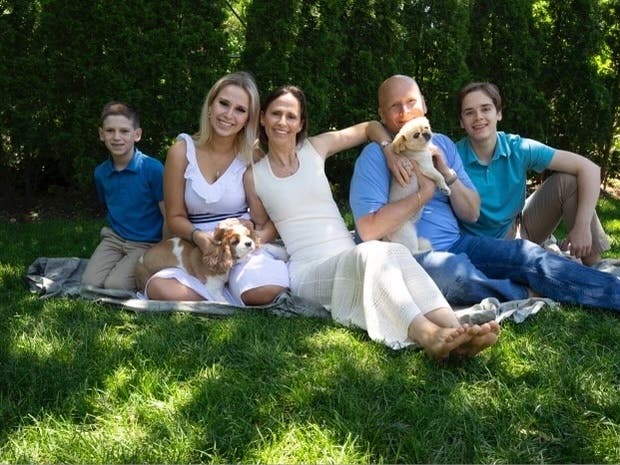
FARMINGDALE, NY — Last year, Madeline Moritz was saying goodbye to her husband, children and family.
She was on "death's doorstep" during a six-day ICU stay, and her doctors told her they didn't think she would survive her acute myeloid leukemia diagnosis. Her children, a 20-year-old daughter and sons, ages 19 and 10, weren't just in danger of losing their mother, either: Their father, Bill, was facing the possibility of kidney failure after fighting disease for more than a decade.
Madeline, 49, was preparing to donate her kidney to Bill, 53, when cancer struck.
Find out what's happening in Farmingdalefor free with the latest updates from Patch.
More than a year later, and the Farmingdale couple is doing well. Madeline is in remission and Bill has a new kidney.
"By the grace of God, I made a turnaround with the help of my physicians," Madeline told Patch. "I’m just thankful every day that I’m alive. I’m thankful not to be in pain and not to be suffering, because some of the effects of the cancer can be very difficult to manage. So I’m just grateful every day that I’m here, that I feel well, and I can be as present as I possibly can."
Find out what's happening in Farmingdalefor free with the latest updates from Patch.
Bill was diagnosed with kidney disease around 12 years ago.
Anna Mortiz, the couple's oldest child, said she was too young to realize what her father's diagnosis meant at the time. While Bill explained it to her and her brother, William, Anna said she couldn't fully grasp the severity of what was happening.
"However as I got older and my dad needed his transplant more desperately, I started to understand how serious the situation was," Anna said. "After finding out that my mom was willing to donate her kidney to him, I was relieved and amazed at my parents' love for one another. This relief was short-lived, as I later discovered my mom's own health diagnosis."
Anna dealt with anxiety surrounding her parents' health, as she navigated being a caretaker for her youngest brother, Christian, while worrying about her parents' health.
"Although at some points the severity of their health was overwhelming, their strength is something I’ve grown to admire and I am truly inspired by," Anna said.
After Madeline fell ill, the family took to social media to find a donor.
The family was waiting to see how much longer Bill could keep his natural kidneys before it became apparent he was going to need a transplant or face dialysis.
"For anyone who wants to know about dialysis, it’s definitely not something you, your family, children or anyone wants to go through," Madeline said.
Someone stepped up, and things were "going well," Bill said. But this summer, the donor contracted a disease that prevented them from giving a kidney.
"At that point, it was back to square one again," Bill said. "It didn’t really feel good mentally."
However, that person was just one of two prospective donors. Jen Kaiser, a friend and co-worker of Madeline's, was always willing to donate her kidney. The Moritzes had gone with the other person originally because of the hospital's preference, but Kaiser was approved.
Bill got his new kidney from Kaiser in September.
"The only way to repay her is to show her the effects of what donating her kidney is actually doing for Bill, his whole family and anyone who knows and loves him," Madeline said. "She was really on a mission to make sure Bill was going to stay healthy and my family was going to have a great quality of life. She really succeeded with that. If she didn’t donate her kidney, right now, probably we would be in a very grave situation dealing with dialysis."
Kaiser did not hesitate when the family asked her about donating a kidney.
"When Maddy got sick, I couldn’t do anything to help her ... I knew that I can’t cure cancer or can’t treat cancer."
She also knew Madeline was Bill's first prospective kidney donor.
"It was devastating for her to know that she couldn’t donate to him, and it could potentially lead to his death," Kaiser said. "And so the first thing I said was, 'What are we doing about Bill?' And so, absolutely. He’s an amazing man. That’s all I can say. I have no doubt he’s going to live life to his fullest."
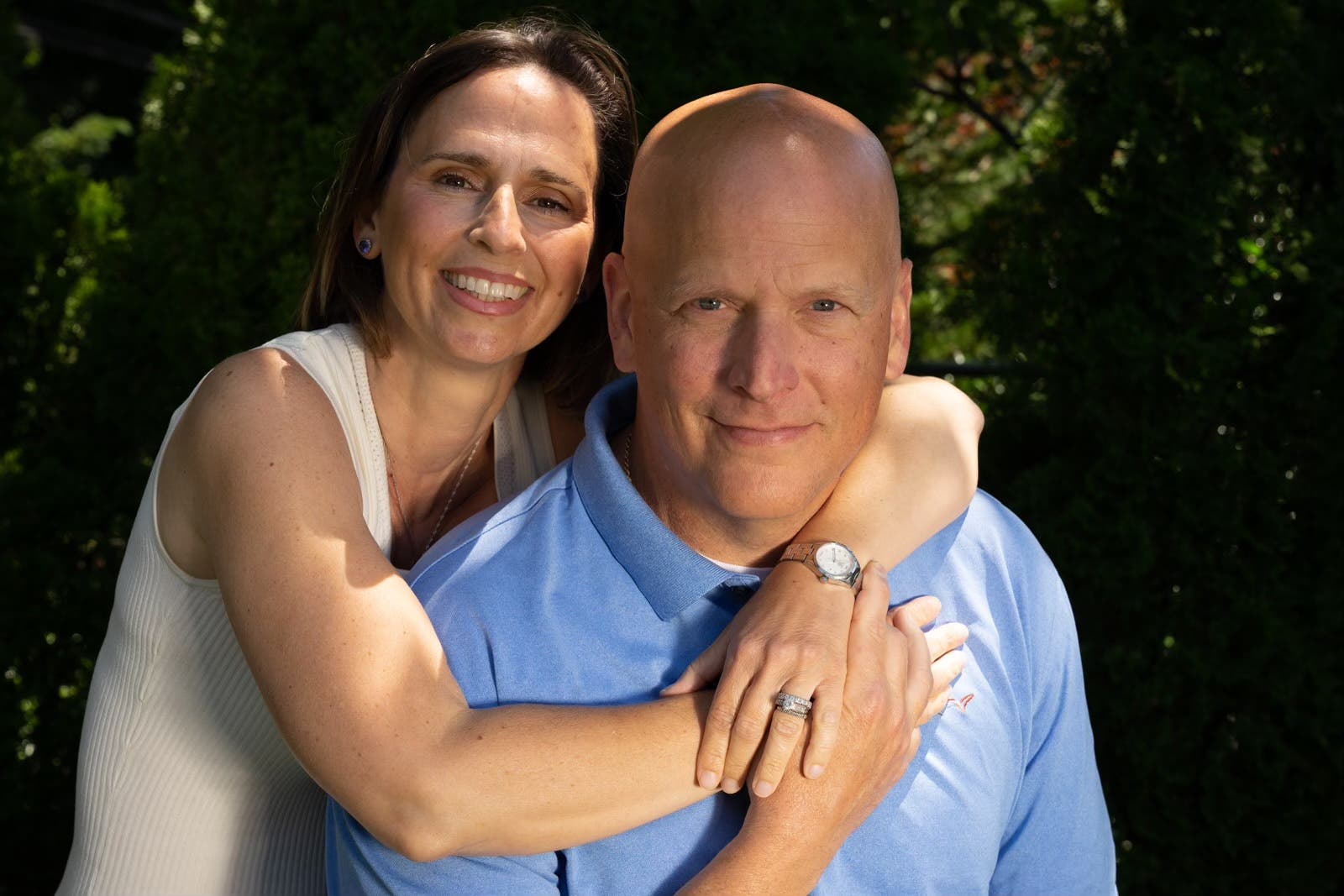
Madeline was declared in remission after going into the hospital from June through part of August. She received a blood and stem cell transfusion from her sister and said she is doing "very well."
"I’m very blessed at the moment," Madeline said. "Every day is a different challenge, but I’m feeling pretty good. I’m just trying to meet whatever those challenges are head on but not letting them bring me down in a psychological aspect."
Madeline even started going back to work for the first time since her diagnosis.
While she is dealing with graft versus host disease — common in stem cell transplant patients — she is on medication sparing her from the worst side effects.
"I’m grateful for modern medicine and the brains that my physicians have," she said.
Anna said she is "extremely relieved and grateful" that her mother is in remission and her father successfully received his kidney.
"Every day, I'm thankful for my family's strength and resilience," she said. "It's a reminder that we can overcome even the toughest challenges."
Bill said things are going "pretty fantastic" for himself. He said Dr. Ernesto Pompeo Molmenti and his team at North Shore University Hospital believe Kaiser's kidney could be the only one he needs.
Bill said Kaiser and the other potential donor kept him strong knowing there were people out there who wanted to keep him alive.
"You think, 'OK, this person just gave me a kidney, and how can I ever repay this person? What can I do?' The bottom line is, the way you can repay this person is to live and show this person that you really appreciate it," Bill said. "For that person to see you with your family. That’s what a donor wants to do. A donor wants to help you and wants to see you be healthy. That’s the way you repay them."
Kaiser said a lot of people have since told her she saved a life. She said she doesn't look at it that way.
"I feel like anybody can do this. I’m not a hero for doing this. Anybody can donate a kidney. Ten percent of the population is born with one kidney and some of them don’t even know it. So I don’t really see myself as a hero for doing this. I see myself as somebody who became educated and did something that was very easy to do."
Kaiser called her kidney donation the "easiest surgery" she's ever had. She went back to work nine days later after working from home for a week. She also went to Disney with her family for a vacation three weeks after the operation. She hopes to educate other people on how easy a kidney donation is.
"And by me doing this for Bill, hopefully, I can be a catalyst for other people doing it and it keeps paying forward," she said.
Anna thanked Kaiser for donating her kidney to her father.
"Your kindness and compassion for my family is incredibly appreciated," she said. "Your generosity has not only saved my dad’s life but impacted our entire family."
She also thanked her mother's doctors.
"Your hard work and dedication to my parents' well-being is so gratefully appreciated. Your care has had a big impact on our lives, and I am grateful for your compassion and expertise. Thank you for being a positive force in our family's journey."
With the worst of their health concerns resolved, Madeline and Bill can refocus their efforts on parenting. Madeline said it was "hard to put into words" knowing she will be around for her children, calling it a relief.
"I can be with them, they can be with me, and I can continue to be a mom. It’s almost like the elephant is off your shoulders and you can take a breath."
While Madeline and Bill battled health woes, Anna's grandparents, her "Nonna and Nonno," supported her and her brothers.
Madeline said with her diagnosis, "anything can happen," but she prefers to just take each day as it comes.
"I’m just happy to be here for the day, to care for [my kids], be with them, love them. That’s the best I can do for any given day. It’s really what any of us can do on a given day, right? Tomorrow is not promised to anyone. It sounds cliche, but at the end of the day, it’s really a true fact. I was very healthy and active, and in about one blood test, my life was changed forever. You never know when things are going to happen, so you have to make sure the people you love know you love them. And if there’s anything you want to tell them, now is the time. Don’t wait until tomorrow."
While Bill battled kidney disease for years, the first thing he thought about when Madeline was diagnosed were his children.
"'Are you going to be there for them? If not, who is going to be there for them?' You start scrambling to do things and scrambling to think of things that will help out," he said.
Bill now feels "relaxed" to be returning to a normal life.
Madeline and Bill agreed they drew their strength from wanting to be there for their children.
"I wasn’t so afraid of dying," Madeline said. "I was more afraid of not living and not being here for my children and the psychological impact that would have on them. It’s something that comes into your mind, and definitely in those very dark days, especially when it was touch and go for me, it was at the forefront of my mind that that’s what I was fighting for."
Fighting cancer can "really bring you down physically and emotionally," the mother said, but having something to focus on and keep fighting for was "instrumental."
"You could very easily say, 'This is too much,'" she said. "Rightfully so. It is too much. It is too much for people to bear. Unfortunately, we had no choice. To have that to focus on and climb toward is huge. The amount of support that you have from your family and friends is invaluable. Without that support, you could go down into those dark places. When you’re fighting something like this, depression, anxiety and all these negative things that are going to affect your mood are not going to help. Being positive, having positive support and having people around you are the things that you need in your arsenal to fight this horrible disease."
Anna herself also realized the importance of mental health during difficult times.
"To anyone facing similar challenges it is important to know that you're not alone, and reaching out for help is crucial," she said.
Bill said thinking of his children made him the strongest he could be mentally when it came time for him to go into surgery and receive his kidney.
"Just thinking of them and what I want to do for them," he said. "It made it very easy for me to face this. If there weren’t children involved, I don’t know how I would have handled this. It may have been a little different. This one was a no-brainer. The support and just wanting to be there with them, wanting to show them how strong we are, it was all about them."
Bill said there were "two teams" that helped him through his ordeal. One team was family and friends who called him, texted him, donated items or food. The second team was the medical professionals at North Shore University Hospital, led by Molmenti.
"My surgeon was the best," Bill said. "He made me so comfortable from the first day I met him before I knew I was getting a transplant to the point where he gave me the transplant and after, and the support I get now. Without people like that, it would make this journey much harder."
Madeline said she had an excellent medical team, too.
"When you’re in the hospital and you’re sick and you need help, they’re the ones to come and help you and hold your hand and get you what you need and encourage you so you don’t lose hope," she said. "It’s unbelievable. They’re unbelievable people. I felt like God sent me angels down to help me with this process. Especially when I was at my weakest points. Really just amazing, beautiful people."
Get more local news delivered straight to your inbox. Sign up for free Patch newsletters and alerts.