Community Corner
Efforts Renewed To Landmark Walt Whitman's Clinton Hill Home
Activists hope Whitman's 200th birthday and the 50th anniversary of the Stonewall riots will be the final push to protect the poet's home.


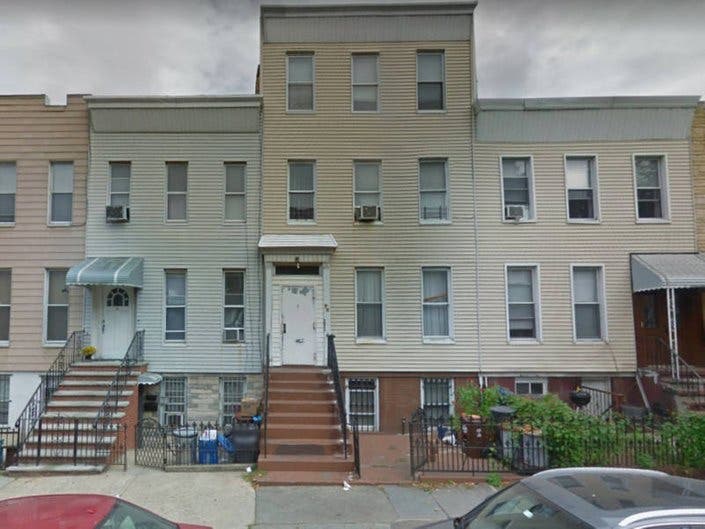


CLINTON HILL, BROOKLYN — As his 200th birthday approaches in May — along with a long list of events throughout the borough to celebrate — a local group is hoping Brooklyn's Walt Whitman-fever can be the final push they need to landmark the poet's Clinton Hill home.
The Walt Whitman Initiative, along with a coalition of local organizations, has recently renewed its efforts to have the city officially designate the 99 Ryerson St. home as a city landmark. The group, originally formed back in 2017, had their initial application turned down by the Landmark Preservation Commission, but plan to reapply in time for Whitman's 200th birthday on May 31.
The bicentennial celebration and the 50th anniversary of the Stonewall Riots this year — since Whitman was an early voice for the LGBTQ community — might just bolster enough support to push that application through, said Karen Karbiener, one of the leaders of the initiative. A petition to do so has garnered about 5,300 signatures.
Find out what's happening in Fort Greene-Clinton Hillfor free with the latest updates from Patch.
"It's kind of now or never," said Karbiener, a Whitman scholar at New York University who teaches courses about the poet there and at Columbia University. "There's never that much Whitman support as with those two events, which are colliding this year. We're trying to spread the word about this."
The Ryerson Street home, nicknamed the Leaves of Grass House, was one of more than 30 houses Whitman and his family lived in as they bounced around New York City in the early-to-mid 19th century. But, because all those other houses have been demolished over the years, it is the last one standing in New York City where the poet lived.
Find out what's happening in Fort Greene-Clinton Hillfor free with the latest updates from Patch.
And, even more significantly, the group argues, it is where Whitman lived when he finished perhaps his most famous poem "Leaves of Grass."
"That one fact alone should make this building a landmark," said Jay Shockley, a former senior historian with the LPC who now has become an activist for the cause. "Not only is it the only one that survived, it is where he was living when Leaves of Grass was published."
Shockley originally started his efforts to landmark the home while he was on the commission and it landed on a list of significant sites in LGBTQ history that members wanted to consider. But, he said, those members ran into roadblocks from others who leaned more toward the belief that landmark status should be reserved for buildings that are architecturally interesting.
The Ryerson Street home is a more ordinary-looking house that has been altered over the years, including the addition of vinyl siding on its exterior.
Shockley contends, though, that its cultural and historical significance is still relevant to the commission's broad mandate to preserve the history, culture and architecture of New York.
Karbiener adds that the ordinary look of the home is actually one of the reasons why it is significant, instead of a reason that it is not. It is a tangible symbol of how Whitman, who dropped out of school at age 11 and faced a dysfunctional childhood, overcame a life of adversity.
"This house is an emblem of how one can rise from the streets of Brooklyn and do something great," she said. "It is a neighborhood house, it is not a fancy house, and yet this became the home of the greatest book of American poetry."
The commission also contended that Whitman's connection to the home was not strong enough since he only lived there for about a year in 1855. The group argues that using a period of time is somewhat of an arbitrary determination, especially given how often Whitman and his family moved and that the house is the only one left.
The Whitman Initiative's new application will also face a different Landmarks Preservation Commission chair than their original push in 2017.
Should the Ryerson Street house be landmarked, the coalition has discussed raising money to help return it to the way it was when Whitman lived there. But the main goal, Karbiener said, would be to ensure it does not face a wrecking ball as Whitman's other homes have.
With Brooklyn's development and gentrification boom, there is a threat that it could be torn down should the current owners sell it, she said.
"We don't want to tell anyone what to do or kick anyone out, but we want to make sure that the house remains a symbol for (generations)," she said. "We just want to get this landmarked, and that requires people supporting it."
Get more local news delivered straight to your inbox. Sign up for free Patch newsletters and alerts.