Neighbor News
SAFE GC Coalition Encourages Seniors to Continue to Lock Up Their Meds
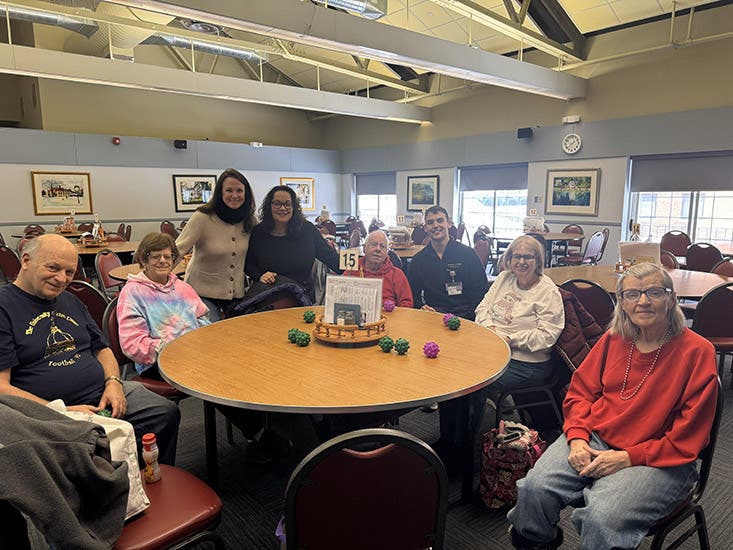
SAFE collaborates annually with the Senior Center to continue educating its members on keeping their medications safe from unwanted use.

Lock Your Meds is a national, multi-media campaign designed to reduce prescription drug abuse by making adults aware that they are the "unwitting suppliers" of prescription medications being used in unintended ways, especially by young people.
Annually, SAFE collaborates with Christine Rice, Executive Director of the Senior Center and Eric Shuman, the Activity Coordinator of the Senior Center, to continue educating its’ members on keeping their medications safe from unwanted use. On February 27th, a presentation was conducted by Brenda Lopez, SAFE bi-lingual Community Outreach worker regarding the Lock Up Your Meds campaign to members of the Glen Cove Senior Center. This year’s presentation welcomed valuable input from Mr. Anthony Cretella, Pharmacy Resident and Ms. Nicole Albanese, Patient Experience Specialist from Glen Cove Hospital-Northwell Health.
According to 2025 data from the Monitoring the Future (MTF) Survey on Adolescent Drug Use, youth Prescription Opioid Use prevalence increased from 2024 to 2025 for past 12-month and past 30-day use, and this increase was statistically significant for past 30-day use. The MTF survey is given annually to students in eighth, 10th, and 12th grades who self-report their substance use behaviors over various time periods, such as past 30 days, past 12 months, and lifetime. The survey also documents students’ perception of harm, disapproval of use, and perceived availability of drugs. The results were gathered from a national representative sample, of 23,726 surveys from students enrolled across 270 public and private schools nationwide from February through June 2025.
Find out what's happening in Glen Covefor free with the latest updates from Patch.
In 2025, the percentage of youth who used the specific opioid OxyContin without a medical professional’s orders in the past 12 months was little changed from 2024. Use levels are low at 1% or lower in all grades.
Prescription drugs are the most abused substances by teens after marijuana and alcohol. When teens abuse prescription drugs and take them in different amounts or for other reasons than as they are prescribed, they affect the brain and body in ways very similar to illicit drugs.
Find out what's happening in Glen Covefor free with the latest updates from Patch.
When prescription drugs are abused, they can be addictive and have harmful health effects such as overdose (especially when taken along with other drugs or alcohol). An overdose is when a drug is swallowed, inhaled, injected, or absorbed through the skin in excessive amounts and injures the body. Overdoses are either intentional or unintentional. If the person taking or giving a substance did not mean to hurt themselves or others, then it is unintentional. Some teens use Adderall® or Ritalin® to try and boost their test performance to improve their grades. Studies show that these stimulants do not help learning when used by people who do not have ADHD.
Ms. Lopez went on to discuss “Generation RX” and the reasons why young people take prescription medication- from their parents or grandparents medicine cabinets Some reasons are psychological- Pleasure seeking; Wanting to fit in with groups of friends and are in search of acceptance and bonding; Youth do not realize the risks of taking medicines that have not been prescribed specifically for them or the danger of not following a prescription’s directions; Prescription medication is easier to obtain than illegal drugs. Other reasons are misperceptions about the drug and its negative health consequences- Lack of information and a carefree attitude toward the risks involved in using prescription medicines properly; Belief that prescription medicines are much safer to use than illegal drugs; Prescription pain relievers cannot be addictive; There is nothing wrong with using prescription drugs without a doctor’s prescription. These impacts can be particularly harmful to a developing adolescent brain and body as the human brain continues to develop into early- to mid-twenties.
Mr. Cretella explained that every year, two million people end up in the hospital due to drug-related injuries. This might include medication errors, adverse drug reactions, allergic reactions, or overdoses and that safe and secure storage of prescription medicine can help avoid accidental injuries. He went on to state that many people store medications, both prescription and over-the-counter at home in a designated location which could pose some convenience for the ease of use and access. However, this could pose risks to other people accessing your medications. Medications should not be stored on countertops (as they can be accessed by others), in bathrooms or in direct exposure to sunlight as this can effect the stability & efficacy of the medications. To properly store medications Mr. Cretella advised to store in a cabinet, away from heat/moisture and out of reach from children, labeled and separated. Lastly, check expiration dates as medications lose activity beyond their storage date.
According to the National Institute on Drug Abuse (NIDA), research shows that kids who continue to learn about the risks of drugs at home are up to 50 percent less likely to use drugs than those who are not taught about the dangers. Only 22 percent of teens report discussing the risks of abusing any prescription drug without a doctor’s prescription with their parents.
Senior Center members were encouraged to speak with their grandchildren about this important issue. They were advised to keep their medications out of sight like kitchen counters and bedside tables and to be aware of what is in their medicine cabinets in case something goes missing.
Members of the Senior Center, and all Glen Cove residents are encouraged to dispose of unwanted prescription medications at the Police Department year-round or attend the SAFE Glen Cove Coalition’s annual Shed Your Med’s event on May 18th at the Glen Cove Police Department to properly dispose of prescription medications and medical supplies that are no long needed or have expired. The safe disposal of unused and expired drugs supports the need to eliminate the risk of these drugs getting into the hands of young people.
SAFE, Inc. is the only alcohol and substance abuse prevention, intervention and education agency in the City of Glen Cove. Its Coalition is conducting an opioid prevention awareness campaign entitled, "Keeping Glen Cove SAFE," to educate and update the community regarding prescription drug use and its consequences. To learn more about the SAFE Glen Cove Coalition please follow us on www.facebook.com/safeglencove or visit SAFE’s website to learn more about prescription drug use and the Opioid Epidemic at www.safeglencove.org.
For more information about the Lock Up Your Meds campaign please visit www.drugabuse.gov. or www.lockyourmeds.org.