Neighbor News
SAFE GC Coalition: Encouraging the Community to Shed Meds
More than 150 pounds of unwanted medications were collected on April 13th.

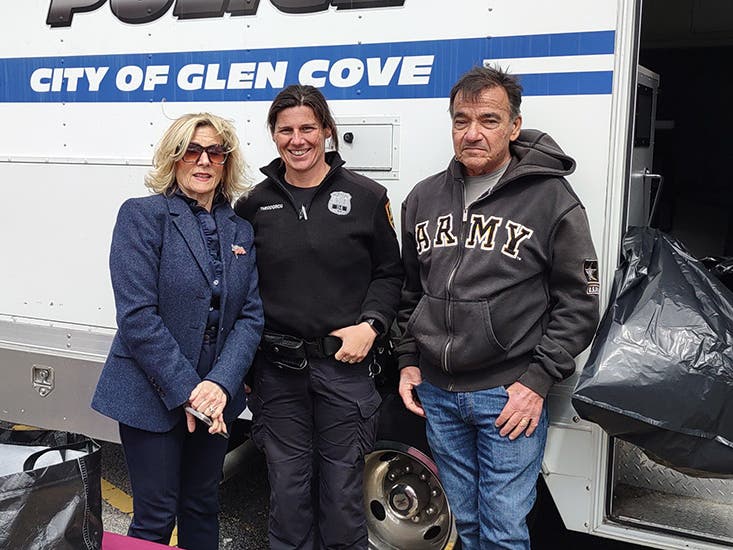
On April 13, SAFE, The City of Glen Cove Mayor’s office, the Glen Cove Police Department and Glen Cove EMS partnered for “Shed Your Meds.” This prevention program follows the Drug Enforcement Administration’s (DEA) National Prescription Drug Take Back Day – a day that addresses abuse of controlled prescription drugs and safely allows their disposal to avoid youth misuse.
This year over 150 pounds of unwanted medications were collected. Additionally, Deterra bags were provided by the New York State Office of Addiction Services and Supports (OASAS) and given to all those who came to dispose of their unwanted medications. The kit allows individuals to safely dispose at home in between Shed Your Meds event. Kits are available at the SAFE office.
According to the 2022 National Survey on Drug Use and health, among people aged 12 or older 3.2% (or 8.9 million people) misused opioids (heroin or prescription pain relievers) in the past year. Among the 8.9 million people who misused opioids in the past year, 8.5 million people misused prescription pain relievers compared with 1.0 million people who used heroin. These numbers include 587,000 people who both misused prescription pain relievers and used heroin in the past year.
Find out what's happening in Glen Covefor free with the latest updates from Patch.
In 2022, 991,000 people aged 12 or older (or 0.4%) misused prescription fentanyl or used illegally made fentanyl (IMF) in the past year, including 686,000 people (or 0.2%) who used IMF in the past year.
Abuse of prescription medication has become a crucial public safety and public health issue. Every day, 2,000 teenagers use a prescription drug to get high for the first time. They’re primarily accessing these drugs in homes. It can be as easy as opening a cupboard, drawer or medicine cabinet. Two-thirds of teens who misused pain relievers in the past year say that they got them from family and friends, including their home’s medicine cabinets which is their drug supplier.
Find out what's happening in Glen Covefor free with the latest updates from Patch.
Prescription drugs are not exempt from causing harm to youth. 12 to 17-year-olds abuse prescription drugs more than they abuse ecstasy, crack, cocaine, heroin and methamphetamine combined.
Drugs commonly used by youth are:
- Stimulants -have side effects in common with cocaine, and may include paranoia, dangerously high body temperatures, and an irregular heartbeat, especially if stimulants are taken in large doses or in ways other than swallowing a pill.
- Opioids- which act on the same parts of the brain as heroin, can cause drowsiness, nausea, constipation, and, depending on the amount taken, slowed breathing.
- Depressants -can cause slurred speech, shallow breathing, fatigue, disorientation, lack of coordination, and seizures upon withdrawal from chronic use.
These impacts can be particularly harmful to a developing adolescent brain and body. The human brain continues to develop until early- to mid-twenties. During adolescence, the pre-frontal cortex further develops to enable us to set priorities, formulate strategies, allocate attention, and control impulses. The outer mantle of the brain also experiences a burst of development, helping us to become more sophisticated at processing abstract information and understanding rules, laws, and codes of social conduct. Drug use impacts perception—a skill adolescent brains are actively trying to cultivate—and can fracture developing neural pathways. Additionally, as our brains are becoming hardwired during adolescence, the pathways being reinforced are the ones that stick. If those pathways include addiction, the impact may lead to life-long challenges.
As with any type of mind-altering drug, prescription drug misuse and abuse can affect judgment and inhibition, putting adolescents at heightened risk for HIV and other sexually transmitted infections, misusing other kinds of drugs, and engaging in additional risky behaviors.
Shed Your Meds is a helpful way to decrease youth risk of prescription medication misuse.
Learn more about National Prescription Drug Take-Back Day at https://wwwdeadiversion.usdoj.gov/drug_disposal/takeback/index.html.
The SAFE Glen Cove Coalition is conducting an opioid prevention awareness campaign entitled. “Keeping Glen Cove SAFE,” to educate and update the community regarding opioid use and its consequences. To learn more about the SAFE Glen Cove Coalition please follow us on www.facebook.com/safeglencovecoalition or visit SAFE’s website to learn more about the Opioid Epidemic at www.safeglencove.org.