Neighbor News
SAFE: Seniors Educated About Problem Gambling
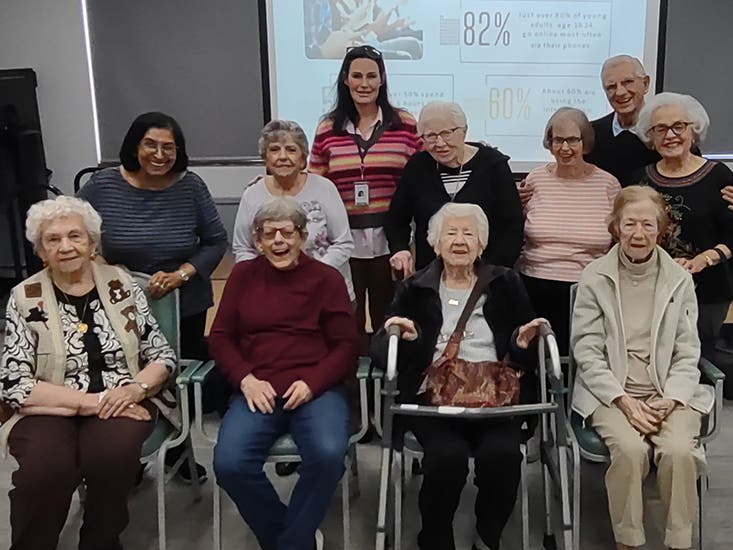
SAFE conducted a presentation on March 26th at the Glen Cove Senior Center on problem gambling.

March is National Problem Gambling Awareness Month, created by the National Council on Problem Gambling. This year’s theme, “Seeking Understanding,” focuses on increasing awareness of problem gambling as a serious but often misunderstood mental health condition. By fostering a deeper understanding of the issue, awareness, empathy, reducing barriers to treatment, and providing support to those affected by gambling-related harm is critical.
Annually, SAFE presents new information regarding the risk factors of problem gambling and provides resources for those who are seeking treatment for a gambling addiction. In collaboration with Christine Rice, Executive Director of the Glen Cove Senior Center and Eric Shuman, Activity Coordinator, Dr. Sharon Harris, Executive Director of Substance Abuse Free Environment (SAFE), Inc. conducted a presentation on March 26th to members of the Glen Cove Senior Center about this important issue.
Dr. Harris stated online gambling's popularity among youth has increased significantly in recent years, especially with the advent of mobile apps and the legalization of sports betting, which has led to a rise in gambling normalization, particularly among young male fans, who now view casual wagering as an essential part of sports enjoyment.
Find out what's happening in Glen Covefor free with the latest updates from Patch.
TikTok and YouTube influencers are increasingly promoting online gambling apps or sharing promotion codes and links, which are reaching a very young audience. During COVID, adolescents spent more time engaging in online activities due to social isolation during the pandemic, making them more susceptible to gambling advertisements and marketing campaigns.
There is increasing concern among politicians, therapists, and helpline workers as they are noticing a rise in underage and youth gamblers who are facing addiction risks as the growing acceptance of online gambling permeates universities, high schools, and even middle schools.
Find out what's happening in Glen Covefor free with the latest updates from Patch.
39.5% of New York State youth between ages 12 and 17 have gambled in the past year playing the lottery, lotto and scratch offs, betting money on raffles or charity games, betting money on sports. 30% of youth stated that they began gambling at or before age 10. In NYS the legal age for gambling is 18 years old, and even some stores that sell liquor set their legal age to gamble at 21 years old. The NYS Office of Addition Services and Supports (OASAS) reported that 98% of online problem gambling sports bettors are male and the average age of a Mobile Sports Better is 28- about 10 years younger than casual sports bettors, aged 38.
Gambling Addiction or Problem Gambling is known as the “hidden addiction” because there are no visible signs. Because of the lack of visibility, often those suffering from a gambling addiction can hide it longer than someone with an alcohol or drug problem. Usually, gambling addiction is discovered when there is a loss of accessibility to money and/or negative actions occur. Gambling is defined as the act of risking something of value (money, food, clothes, electronics, etc.) on a game of chance (bingo, lottery, dice, slot machine, sports, etc.) for the desired result.
Dr. Harris discussed the types of gambling people engage in. Gambling responsibly is taking breaks, not using gambling as a source of income, only gambling with money that you can afford to lose and setting limits for yourself (both with time and money). Problem Gambling means gambling to a degree that compromises, disrupts or damages family, personal or recreational pursuits. Gambling Disorder is identified by a pattern of repeated and ongoing betting and wagering that continues despite creating multiple problems in several areas of an individual's life. Individuals in any age group may suffer from gambling disorder.
With increasing technology comes increased exposure to new on-line betting opportunities in the form of on-line casinos, day-trading, retail investing and e-sports betting.
Due to the random nature of the rewards and the potential for spending real money, loot boxes have been compared to gambling, leading to concerns about their potential impact, especially on children. A loot box virtual item in a video game that players can pay real money to open for randomized virtual rewards. Popular games like FIFA, Overwatch and Fortnite – popular youth games- all feature various loot box systems. Some common examples include item crates containing mystery in-game cosmetic skins, emojis or gear, card packs that players open to build collections and better compete, prize wheels offering jackpot-style rare virtual prizes and treasure chests with valuable equipment or resources inside.
The common thread is users paying upfront for a chance at digital items with unpredictable value. What exactly makes cracking open loot boxes so irresistible psychologically? Dr. Harris stated that the boxes provide randomized rewards. The key characteristic of a loot box is that the contents are unknown until you open it, adding an element of surprise and potential for rare or valuable items. The uncertainty effects brain chemistry aka “dopamine spike” in which random rewards flood the brain with the neurotransmitter dopamine which drives desire to keep playing.
According to Governor Hocul, more than $19 Billion wagered on mobile sports betting in NYS and generated 862 million over the last 2 years.
For more information on Problem Gambling please visit: NYS Office of Addiction Services and Supports (OASAS) Problem Gambling https://oasas.ny.gov/problem-gambling or the Long Island Problem Gambling Resource Center https://nyproblemgamblinghelp.org/long-island/
SAFE is the only alcohol and substance use prevention, intervention and education agency in Glen Cove and seeks to prevent addiction. Please visit SAFE’s Problem Gambling page at www.safeglencove.org to learn more about the dangers of gambling addiction.